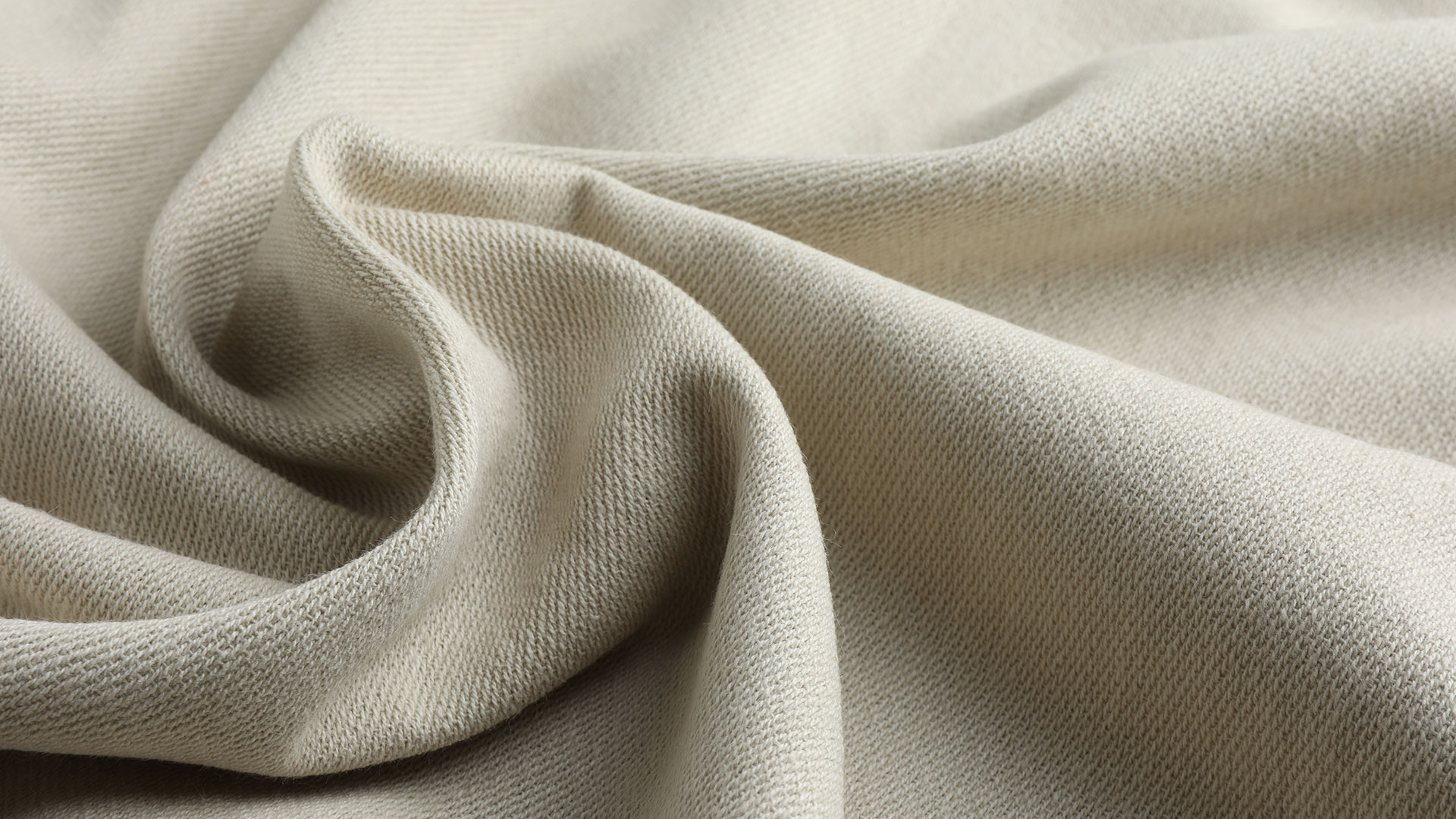

Used in apparel, home textiles & garment accessories.
Dedicated to in-depth expertise and continuous innovation in knitted textiles.
Content
The short answer is that knitted textile fabrics are the most practical choice when a garment must stretch, recover its shape and feel comfortable against the skin. A knitted fabric is made by forming yarn into interlocking loops, and that loop structure is what gives the cloth its elasticity, softness and ability to trap air. For apparel programs, the sensible way to choose is to start from the garment function, then match it to a knit construction, a fiber blend and a finishing route. This order of decisions avoids the common mistake of picking a fabric by appearance alone and discovering later that it does not hold up in wear or washing.
When buyers search for Knitted Textile Fabrics For Apparel, they are usually trying to answer one of three questions. The first is which knit structure suits a particular garment, such as a T-shirt, a hoodie, a base layer or a structured jacket. The second is how to compare constructions that look similar on a swatch card but behave differently on the body. The third is how to find a dependable knitted fabric manufacturer or supplier that can supply stable quality in repeat orders. This article is organized around those three questions, so that a sourcing manager, a designer or a wholesaler can use it as a working reference.
Textile engineering references generally divide knitted fabric into two families. Weft knitted fabric is produced when a yarn runs across the width of the cloth and forms loops row by row, and it includes single jersey, rib, interlock and many fleece fabrics. Warp knitted fabric is produced when many yarns run along the length of the cloth and loop with their neighbors, and it is common in sportswear mesh, linings and technical fabrics. Each family has its own strengths, and the rest of this article explains where each one fits.
Knitted fabric also carries a practical advantage in production. Because the cloth is built from continuous loops, it can often be knitted to a specified width, which reduces cutting waste for tubular and open-width programs. It also adapts well to small-batch and mixed-color orders, which is useful for private label brands and wholesalers who need flexible minimums. These qualities explain why knitted textile fabrics appear across casual wear, activewear, underwear, children's clothing and home textiles.
Choose the garment function first, the knit structure second and the supplier third; this order keeps knitted fabric selection practical and repeatable.
Knitted fabric is not a single material but a family of constructions, and each member has a recognizable personality. Understanding these personalities helps a buyer shortlist the right knitted textile fabrics before ordering samples. The cards below summarize the constructions that appear most often in apparel sourcing, and the sections that follow add detail on how they behave in wear.
Single jerseyThe lightest and most familiar weft knit, with a smooth face and a textured back. It is soft, breathable and widely used for T-shirts and base layers. |
Rib knitVertical ridges created by alternating knit and purl wales. It stretches widely across the width and recovers well, which suits cuffs, collars and fitted tops. |
InterlockA double-faced weft knit that looks the same on both sides. It is thicker, smoother and more stable than single jersey, and is often used for polos and children's wear. |
Fleece and terryA knit with a looped or brushed back that holds warm air. It is the usual choice for hoodies, sweatshirts and loungewear. |
Air layer knitA bonded or layered knit with an air-filled core between two faces. It gives body and warmth with moderate weight and a clean surface. |
Warp knitConstructions such as tricot and mesh, with good run resistance and dimensional stability. They are common in sportswear, linings and functional apparel. |
The first distinguishing factor is the number of needle beds used to form the cloth. Single jersey is produced on one needle bed, which makes it light and easy to roll at the edges. Rib and interlock require two needle beds working together, which produces a thicker cloth with more width stability and less edge curl. This single machine difference explains many of the behavior gaps that buyers notice between a plain jersey tee and a heavier interlock polo.
The second factor is yarn selection. Cotton gives a familiar, soft and absorbent hand. Polyester offers shape retention and quick drying. Viscose and modal types add a smooth drape, while elastane in small proportions adds recovery. Blends are common in knitted fabric for apparel because they let a designer combine comfort and performance in one cloth without relying on a single fiber.
The third factor is weight, usually expressed in grams per square meter. A lighter knitted fabric suits warm-season garments and layering, while a heavier one suits outerwear, sweatshirts and structured pieces. Because weight, stitch density and yarn count are linked, a change in one will usually change the others, and a good knitted fabric supplier will explain these links when quoting a development sample.
Every knit type trades something for something else, so the right knitted fabric is the one whose trade-off matches the garment.
The behavior of every knitted fabric comes from one idea: a loop of yarn is pulled through another loop. A single loop is the basic unit, and when thousands of loops are connected in rows and columns, they form a flexible sheet. Rows of loops running across the cloth are called courses, and columns of loops running along the cloth are called wales. The density of courses and wales per unit length is one of the main numbers that describe a knitted fabric.
A woven fabric holds yarns in a rigid crossing pattern, so it moves mainly when the yarns themselves are elastic. A loop, on the other hand, can open and close like a small spring. When the cloth is pulled, loops elongate and borrow yarn from neighboring loops, and when the force is released, the yarn tension pulls them back toward their resting shape. That is why knitted textile fabrics feel soft and give freely even when made from non-elastic fibers such as cotton.
In weft knitting, a single yarn can form a whole course, which is why weft knitted fabric can be produced on circular machines as a tube. The tube can be cut open or kept tubular, depending on the garment. In warp knitting, a full set of yarns feeds the needles at once, and each yarn loops with its neighbors along the length of the cloth. This produces a cloth that resists running and unraveling, which is why warp knits are favored when a cut edge must stay clean.
Gauge describes how many needles sit in a given length of the machine, and it limits the range of yarn counts that can be used. Fine gauge machines with fine yarns create smooth, lightweight cloth, while coarse gauge machines with thicker yarns create heavier, more textured cloth. Stitch length, which is the length of yarn in each loop, controls how tight or loose the cloth is. A longer stitch makes a softer, more open fabric but increases the chance of distortion, and a shorter stitch makes a firmer, more stable fabric.
Before looking at the chart below, it helps to understand what it is meant to show. The chart compares the relative stretch and recovery tendency of six common knitted fabric constructions. The values are an illustrative index from 1 to 10 prepared for explanation, not laboratory test results. They reflect how textile engineering references typically describe these constructions in general terms. Actual numbers will vary with yarn, gauge, finishing and elastane content.
Figure: illustrative stretch and recovery index of common knitted fabric constructions.
The chart shows that spandex-blend jersey sits at the top of the stretch range because elastane adds mechanical recovery on top of the loop structure. Rib knit follows closely, since its alternating wales can open widely across the width and then draw back together. Plain single jersey sits in the middle, offering comfortable give but less recovery than rib or elastane blends. Fleece falls slightly lower because the brushed or looped back adds bulk that restrains movement. Interlock and air layer knit sit lower, which reflects their deliberate design for stability and body. Lower stretch in these constructions is not a weakness, because it helps garments keep their outline during wear. For a fitted base layer, a buyer would lean toward the upper bars. For a structured jacket or a tailored sweatshirt, the lower bars are often the intended choice. The chart also shows why a single knitted fabric cannot satisfy every garment, since stretch and stability pull in opposite directions. Designers often solve this by combining constructions within the same collection, such as rib trim on an air layer body. Buyers who understand this trade-off can write clearer specifications and receive more accurate development samples. Reading the chart in this way also helps a wholesaler explain product differences to downstream customers in plain terms. In practice, the numbers should be confirmed by testing on the actual sample.
Loop structure explains why knitted fabric stretches, and the balance between stretch and stability is set by construction, yarn and stitch length.
Construction sets the framework, but fiber and finishing decide how a knitted fabric feels, looks and ages. In apparel sourcing, a knitted fabric supplier is usually asked to match a target hand feel, a target weight and a target performance level at the same time. That is only possible when fiber choice and finishing are planned together with the knit structure rather than treated as separate steps.
| Fiber | Main contribution | Typical use in knits |
|---|---|---|
| Cotton | Soft hand, absorbency, familiar comfort | Tees, underwear, loungewear |
| Polyester | Shape retention, quick drying, durability | Sportswear, air layer fabrics, jackets |
| Viscose and modal types | Smooth drape, cool touch | Dresses, fashion tops |
| Nylon | Strength, abrasion resistance, smooth surface | Activewear, tricot, linings |
| Elastane | Stretch and recovery in small proportions | Fitted garments, rib, performance knits |
| Wool and wool blends | Natural warmth and resilience | Knitwear, cold-season layers |
After knitting, the greige cloth normally passes through preparation, dyeing or printing, and mechanical or chemical finishing. Preparation removes natural impurities and sizing residues so that dye can penetrate evenly. Dyeing sets the color, and the choice between piece dyeing and yarn dyeing affects both the look and the lead time. Finishing steps such as heat setting, brushing, sanding and softening then fix dimensions and adjust the surface feel.
Heat setting deserves special attention in knitted fabric for apparel, because it stabilizes width and reduces later shrinkage, particularly for synthetic and elastane blends. Brushing and sanding create a softer surface and are common on fleece and warm-touch fabrics. Anti-pilling and moisture-management finishes can be added when the end use calls for them. Each additional step should be justified by a clear garment requirement, since every process also introduces variation that must be controlled in bulk production.
Fiber and finishing should be planned together with the knit structure, because the three together define how a knitted fabric behaves in wear and washing.
Knitted textile fabrics are used far beyond the basic T-shirt. They appear in everyday casual wear, in activewear, in children's clothing, in garment accessories and in several home textile products. For a manufacturer or a wholesaler, knowing which scenario drives the order is the quickest way to narrow down the construction and the finishing route. The table below places typical scenarios beside the selection points that matter most in each.
Application scenarios
|
Selection points
|
For everyday tops, a single jersey in a medium weight is a sensible starting point, because it combines comfort and breathability. When the same top must hold a cleaner outline or resist show-through, an interlock or a slightly heavier jersey is often considered. For cold-season layers, fleece and air layer knit let a designer add warmth without adding the bulk of a thick woven or heavy knit. For performance garments, a warp knit or a polyester-elastane blend can help with moisture movement and recovery.
The right fabric on paper is only useful if it can be produced consistently. Buyers should ask a knitted fabric manufacturer about available widths, weight ranges, color development routes and minimum quantities before committing to a design. A supplier that can discuss these constraints openly usually produces smoother bulk orders, because both sides know the limits in advance. Wholesalers also benefit from asking about stock programs and repeat-order lead times, as these affect how quickly they can respond to downstream demand.
Start from the end use, list the three performance needs that matter most, and let those needs narrow the knitted fabric choice.
A side-by-side comparison is the fastest way to see how knitted fabric types differ in practice. The table below lists typical characteristics of six common constructions. Weight figures are general ranges used in the trade, and they move with yarn, gauge and finishing. A development sample from the supplier should be treated as the final reference.
| Type | Typical weight range | Stretch | Warmth | Edge curl | Common garments |
|---|---|---|---|---|---|
| Single jersey | About 120 to 200 gsm | Medium | Low | High | T-shirts, base layers |
| Rib knit | About 180 to 280 gsm | High | Medium | Low | Fitted tops, cuffs, collars |
| Interlock | About 180 to 260 gsm | Low to medium | Medium | Low | Polos, children's wear |
| Fleece and terry | About 220 to 380 gsm | Low to medium | High | Low | Hoodies, sweatshirts |
| Air layer knit | About 250 to 400 gsm | Low to medium | Medium to high | Very low | Jackets, structured tops |
| Warp knit mesh | About 80 to 200 gsm | Medium | Low | Very low | Sportswear, linings |
Tables are precise, but a radar chart makes the overall shape of each fabric easier to grasp. The chart below compares single jersey, interlock and air layer knit across five attributes. Those attributes are softness, stretch, warmth, breathability and shape stability. Each attribute is scored on an illustrative scale from 1 to 10 for explanation only. A larger area does not mean a better fabric, only a different balance.
Figure: illustrative radar comparison of three knitted fabric constructions.
The radar shows that single jersey reaches furthest toward breathability and stretch, but it is pulled inward on warmth and shape stability. Interlock extends toward softness and shape stability, which matches its reputation for a smooth, firm and clean-looking surface. Air layer knit has a broader footprint because it keeps most of the softness and stability of interlock while adding more warmth. The shapes are different rather than ranked, which is the main message of this chart. A designer choosing for a summer tee would focus on the stretch and breathability corners, where single jersey leads. A designer choosing for a mid-season jacket would focus on warmth and shape stability, where air layer knit is stronger. The chart also shows that interlock sits between the other two for most attributes, which explains its wide use in garments that need a neutral all-round behavior. Because the scores are illustrative, the chart should be used to frame a conversation with the supplier, not to replace testing. Buyers can mark their own priority attributes on the radar and see at a glance which construction covers most of them. This habit reduces sample rounds, because the first sample is already close to the intended balance. It also gives the sales team a simple visual aid when explaining fabric options to retail customers. When the priorities change, the same chart can be redrawn with new values for a new product line.
No knitted fabric leads on every attribute, so comparison should be made against the priorities of the garment, not against a single overall score.
Choosing a knitted fabric manufacturer is as important as choosing the fabric itself. A well-designed sample means little if the bulk order drifts in weight, width or color. Buyers who approach supplier evaluation with a clear checklist tend to avoid the most common production surprises. The checklist below is built around what typically causes disputes in knitted fabric supply, and it can be adapted for a manufacturer, a trading supplier or a wholesaler.
The donut chart below illustrates how a typical sourcing team might distribute attention across five evaluation criteria. It is a planning illustration, not survey data, and each company will weigh the criteria differently. The five criteria are hand feel and drape, dimensional stability, color consistency, lead time and supply stability, and customization flexibility. The slices are drawn in shades of brown so that the relative size of each criterion is easy to compare. Readers can use the chart as a template and adjust the proportions to match their own priorities.
Figure: illustrative weighting of supplier evaluation criteria for knitted fabric sourcing.
In this illustration, hand feel and dimensional stability each take a quarter of the attention, which reflects how closely they connect to the final wearing experience. Hand feel is the first thing a customer notices, and it often decides whether a garment feels premium or ordinary. Dimensional stability matters just as much, because a fabric that shrinks or twists after washing leads to returns and complaints. Color consistency takes one fifth of the weight, since shade differences between lots are a frequent cause of rejected shipments. Lead time and customization flexibility take smaller but still meaningful shares. These two criteria matter most to private label brands and wholesalers, who need to respond quickly to shifting demand. The chart does not imply that lower-weighted criteria can be ignored, only that they are usually handled after the main quality factors are settled. For a fast-fashion buyer, the lead time slice would likely grow, and for a premium basics brand the hand feel slice would likely grow. A sourcing team can redraw the chart with its own numbers and use it to align internal stakeholders before talking to suppliers. Doing so makes supplier scorecards more objective and reduces disagreements after sampling. The chart also helps new team members understand why certain suppliers were shortlisted. It is most useful when it is reviewed after each season and updated with lessons from actual production. Used this way, a simple visual becomes part of a repeatable sourcing process.
A reliable knitted fabric supplier is one whose process control, communication and flexibility match the buyer's own priorities.
Among the knitted textile fabrics used in modern apparel, air layer knit has gained attention because it offers a structured, insulating cloth without excessive weight. Its layered construction creates a stable air-filled core, which gives garments body and a clean outline. This makes it a popular choice for sweatshirts, jackets, athleisure sets and other pieces that need shape retention in addition to comfort.
Shaoxing Keqiao Maozan Textile Co., Ltd. works in this area as a professional Air Layer Knit Fabric Manufacturer in China. The company specializes in the production, processing and supply of a wide range of apparel fabrics and related textile materials. As a specialized Custom Air Layer Textile Factory, it offers flexible ODM and OEM customization, so that buyers can develop fabrics to match their own garment concepts rather than choosing only from standard stock.
The products are used in apparel, home textiles, garment accessories and other textile applications. Keqiao, where the company is located, is known as the home of China Textile City, and it has a dense industry cluster with a well-established supply chain. This setting helps a knitted fabric supplier source raw materials efficiently, coordinate dyeing and finishing with nearby partners, and keep supply stable for customers around the world. For international buyers and wholesalers, a cluster location of this kind often means shorter coordination loops when a sample needs adjustment.
Customization is most effective when the buyer shares clear information at the start. A reference swatch, a target garment type, an approximate weight and a preferred fiber content give the factory enough to prepare a first development sample. From there, adjustments to hand feel, drape or color can be made in a small number of rounds. The company's stated commitment to quality, flexibility and customer satisfaction is aimed at building long-term partnerships by delivering tailored textile solutions for different market demands.
A specialized air layer manufacturer with ODM and OEM flexibility lets brands and wholesalers develop knitted fabric around their own garment needs.
Knitted fabric performs well over time when it is stored, cut, sewn and washed with its structure in mind. The same loop construction that gives the cloth its stretch also makes it sensitive to hanging weight, harsh friction and excessive heat. Good handling begins in the warehouse and continues through the garment factory to the consumer's wardrobe. The points below cover each stage in practical terms.
Rolls of knitted fabric should be stored flat or on a rack that supports them evenly, in a dry and clean area away from direct sunlight. Hanging or stacking heavy loads on top of rolls can distort the loops and create width variation that is hard to correct later. Before cutting, many garment factories allow the fabric to relax on the table for a period, because knitted cloth often holds tension from the knitting and finishing steps. Relaxing the fabric reduces later movement in the cut pieces and helps sizes stay consistent.
Knitted fabrics generally need needles and stitch types suited to stretch materials, and ballpoint needles are commonly used to avoid cutting the yarns. Stitch tension should be set so that seams can stretch with the cloth rather than snapping when the garment is pulled on. For single jersey, stabilizing tapes at shoulders and necklines can help keep shape. For air layer and interlock fabrics, which show less edge curl, cutting and sewing are usually smoother, although seam allowances should still be tested on the specific sample.
Pilling occurs when short fibers on the surface rub together and form small balls. It is influenced by fiber length, yarn twist, knit density and finishing, so it is most effectively addressed at the specification stage rather than after wear. If a snag appears, it should be pulled gently to the back of the fabric with a needle instead of being cut. A fabric shaver or comb can remove light pilling without damaging the cloth when used carefully.
Support the loop structure at every stage, from roll storage to the washing machine, and knitted fabric keeps its shape and hand feel longer.
What are knitted textile fabrics?Knitted textile fabrics are materials made by interlooping one or more yarns to form a flexible cloth. The loops allow the fabric to stretch and recover, which is why knitted fabric is widely used for T-shirts, sweatshirts, activewear and underwear. They are divided into weft knits and warp knits according to how the yarns are fed to the needles. |
Which knitted textile fabrics for apparel suit everyday casual wear?Single jersey is a common choice for lightweight tops, while interlock and rib suit garments that need more stability or fit. For warmer casual pieces such as hoodies and sweatshirts, fleece and air layer knit are widely used. The right match depends on the garment fit, the season and the wash behavior the brand expects. |
What is the difference between knitted fabric and woven fabric?Woven fabric is made by crossing two sets of yarns at right angles, which gives a firm and stable cloth with limited stretch. Knitted fabric is made from interlocking loops, which gives natural give and a softer hand. Knitted fabric is therefore preferred for comfort and movement, while woven fabric is often preferred for crisp, structured shapes. |
How can I reduce shrinkage and distortion in knitted fabric?Shrinkage and distortion are managed through yarn selection, correct stitch length, heat setting and relaxed finishing. Buyers should define shrinkage tolerances in the specification and test the sample after washing. In the garment factory, allowing the fabric to relax before cutting also helps the finished pieces stay true to size. |
Can a knitted fabric manufacturer customize fabrics for my brand?Many manufacturers offer ODM and OEM services that cover weight, fiber blend, color and finishing. Providing a reference swatch, the target garment and the expected weight range speeds up development. A manufacturer that works in a textile cluster can also coordinate nearby dyeing and finishing partners to adjust the sample efficiently. |
What should wholesalers check when buying knitted fabric in bulk?Wholesalers should check weight, width, shrinkage, color consistency between lots and the reliability of repeat supply. It is also useful to ask about available stock programs, roll lengths and how the supplier handles shade variation. Clear written specifications and an approved sample make later quality discussions much easier. |
Clear specifications, tested samples and open communication with the knitted fabric supplier answer most sourcing questions before bulk production begins.
 Related Products

Dedicated to in-depth expertise and continuous innovation in knitted textiles.
Quick Links
Products
Contact Us
Tel: (86)-15988227526
Tel: (86)-15005858876
E-mail: peng@maozante.com
Add: 2nd Floor, Building 2, Baiyang Village, Anchang Street, Keqiao District, Shaoxing City, Zhejiang Province