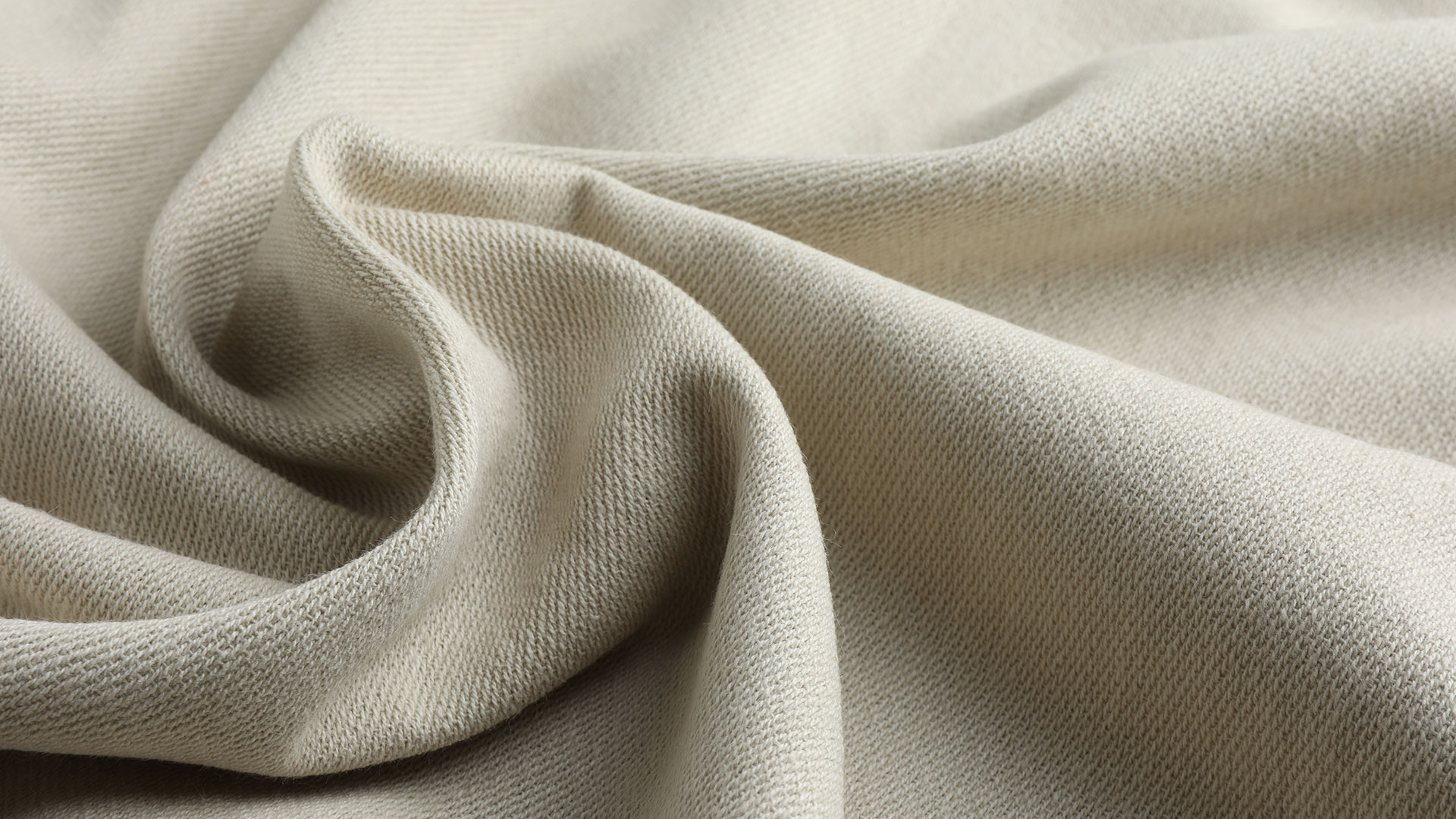
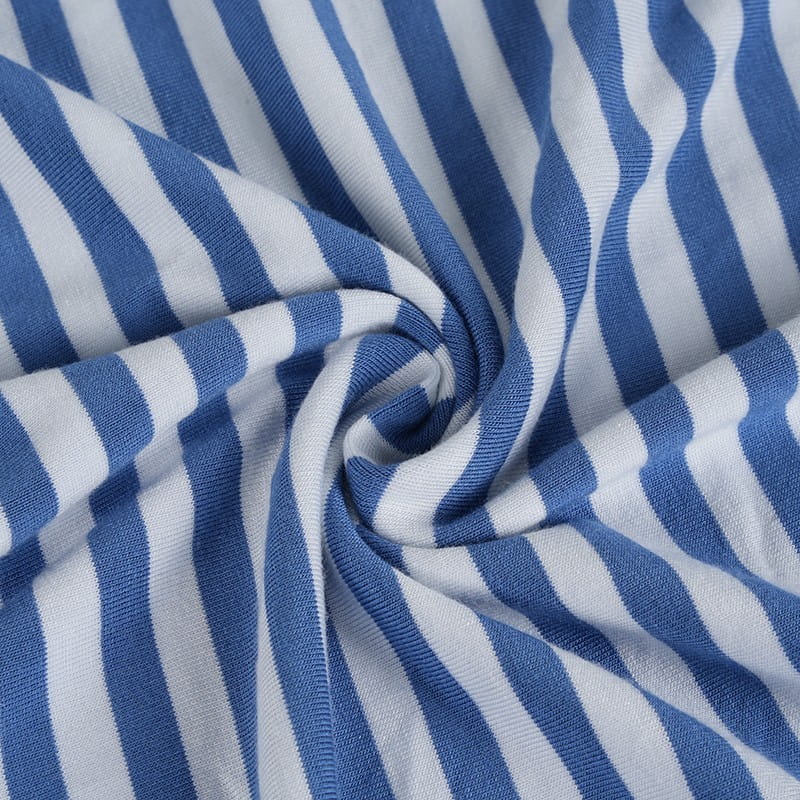
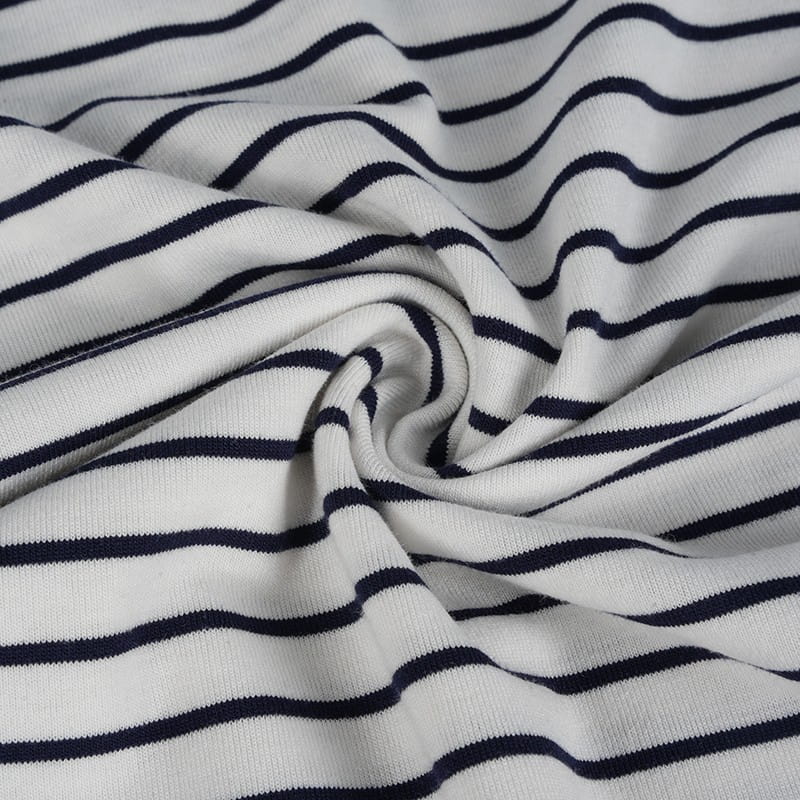
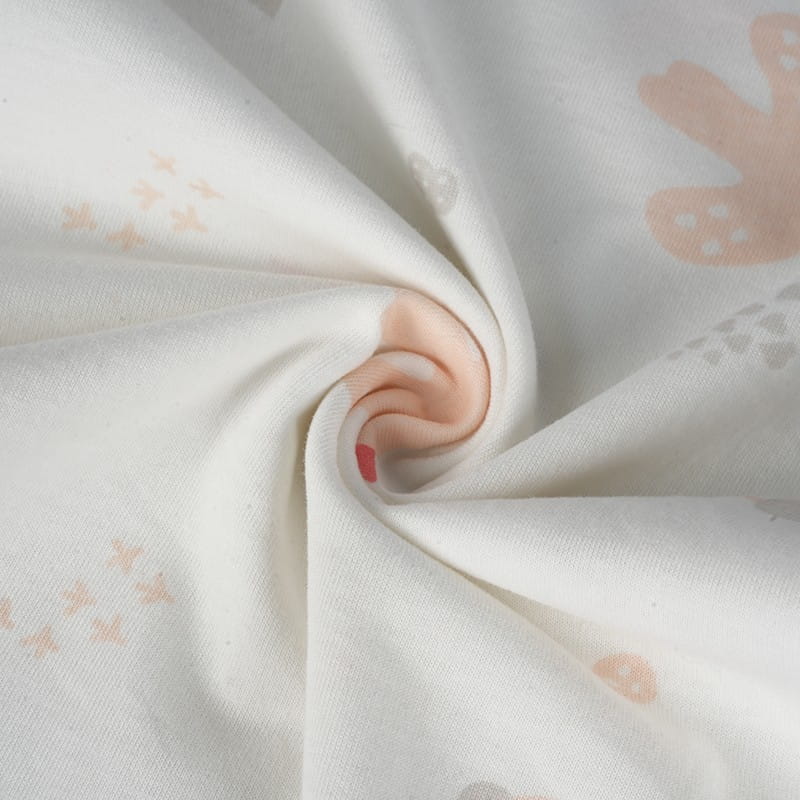
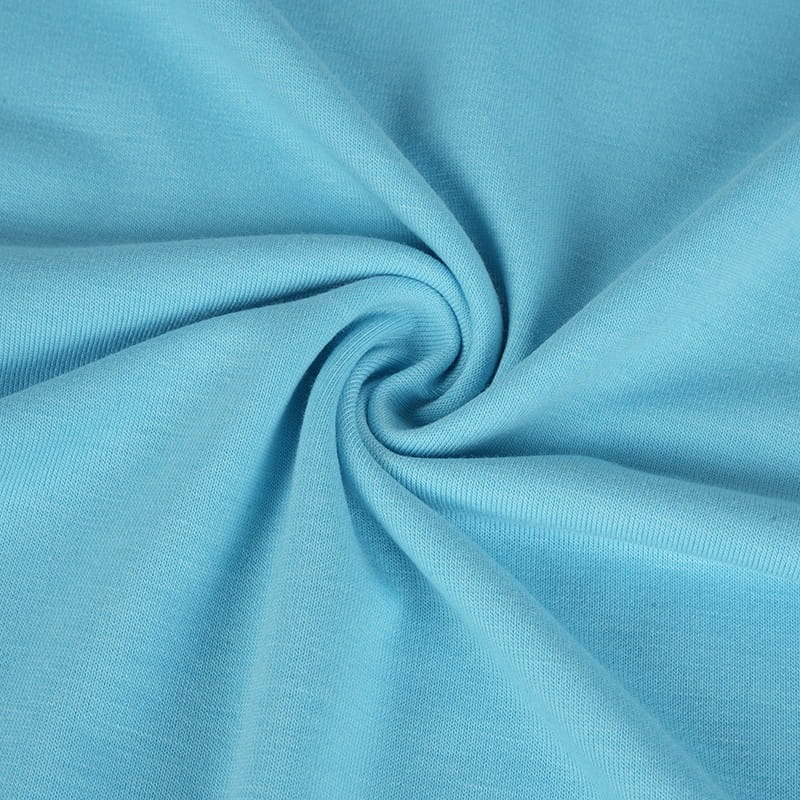
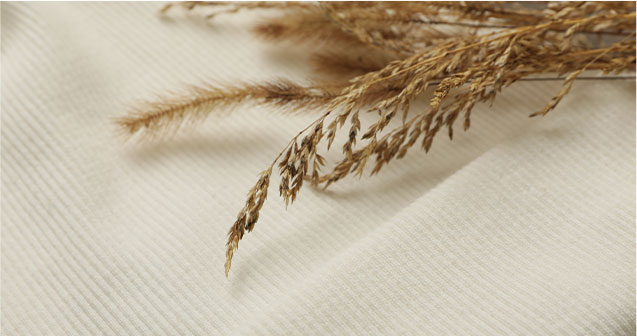
Single jersey is a common type of single-knit fabric characterized by a smooth, fine surface and a lightweight texture that offers breathable comfort. The fabric has a soft hand-feel and natural drape; garments made from it feature a relaxed silhouette without feeling bulky, making it ideal for everyday basics.
Key advantages of this fabric include its lightweight breathability, skin-friendly comfort, and versatility. Its simple structure prevents overheating, making it well-suited for spring and summer wear or for garments worn directly against the skin. The natural drape ensures a lightweight feel, while the fabric creates a clean, minimalist aesthetic when fashioned into T-shirts.
Single jersey is suitable for a variety of products, including T-shirts, base layers, loungewear, children's clothing, and casual tops. It is particularly well-suited for everyday staples—such as basic tees, graphic tees, and promotional shirts—striking a balance between comfort and practicality.
About Us
Shaoxing Keqiao Maozan Textile Co., Ltd.
We are a professional Single Jersey Knit Fabric Manufacturer in China, specializing in the production, processing, and supply of a wide range of apparel fabrics and related textile materials. As a specialized Single Jersey Fabric Factory, we provide flexible ODM/OEM customization services to meet the diverse needs of our customers.
Our products are widely used in apparel, home textiles, garment accessories, and other textile applications. Located in Shaoxing Keqiao, home to China Textile City, we leverage the region’s strong textile industry cluster and well-established supply chain to provide reliable raw materials, quality finished products, and stable supply services to customers worldwide.
With a commitment to quality, flexibility, and customer satisfaction, we strive to build long-term partnerships by delivering tailored textile solutions that meet different market demands.
Direct Answer: What Defines a Good Knitted Fabric
A good knitted fabric is defined by a controlled loop structure, a stable finished weight and a verified response to washing and stretching. The visi...
Short Answer: How to Select Knitted Textile Fabrics For Apparel
The right knitted textile fabrics for apparel are chosen by matching four variables to the garment: structure, fiber blend, weight and ...
Direct Answer: Which Knitted Textile Fabrics Work for Apparel?
Single jersey, rib, interlock, pique and fleece cover most apparel programs, and the right choice depends on three decisions: the stretc...
The company focuses on the knitted textile sector, specializing in the production and processing of various knitted fabrics as well as the sale of raw materials. Its products are widely used in appare...
1. Single Jersey Fabric Overview and Category Scope
Single jersey is a weft knitted fabric made on a circular machine with one set of needles. Every loop is formed in the same direction, which gives the fabric a smooth face with visible vertical wales and a textured reverse side with horizontal loops. Because of this simple structure, single jersey is the most widely used knit construction in apparel, appearing in T-shirts, base layers, loungewear, sportswear and children's clothing.
This category covers cotton, polyester, viscose, modal, bamboo, blended and elastane-containing single-jersey fabrics. Weight usually ranges from lightweight 120 GSM to mid-weight 220 GSM, and finishing can include combing, mercerizing, brushing, enzyme washing and moisture management treatment. Buyers who source from a Custom Single Jersey Factory often value consistent yarn lots, stable shrinkage control and the ability to adjust width, weight and hand feel to a specific garment program.
Shaoxing Keqiao Maozan Textile Co., Ltd. operates in Keqiao, a major textile cluster in China. As a single jersey fabric supplier China based brands can work with, the company supports ODM and OEM development, from yarn selection to finished roll packing.
2. How Single-Jersey Is Constructed
(1) Knitting Principle
A single-jersey machine uses one cylinder of latch needles arranged in a circle. Yarn is fed to the needles through multiple feeders, and each needle pulls a new loop through the previous one. The result is a tube of fabric that is later slit open, relaxed, dyed and finished. Machine gauge, yarn count and stitch length decide the final density, weight and opacity.
(2) Key Structural Properties
Face side shows distinct vertical loops, reverse side shows rounded horizontal loops
Edges tend to curl toward the face side when cut, which affects cutting and sewing layout
Lengthwise and widthwise stretch is moderate without elastane
Thin, breathable build suited to warm-weather and layering garments
A China ODM Single Jersey Factory controls these properties through yarn quality, stitch length settings and heat-setting parameters, so that fabric width and shrinkage stay within the range requested by the garment maker.
3. Common Types and Their Characteristics
Different fiber choices and finishing routes create distinct single-jersey grades. The table below summarizes the types most often specified by apparel buyers.
Comparison of common single jersey fabric types by fiber, hand feel and typical use
Type
Typical Weight
Main Feature
Typical Use
Combed cotton
140-200 GSM
Soft hand, good moisture uptake
T-shirts, underwear
Cotton spandex
160-220 GSM
Stretch and recovery
Fitted tops, leggings
Polyester
120-180 GSM
Quick drying, color stability
Sportswear, activewear
Viscose or modal
130-190 GSM
Fluid drape, smooth surface
Dresses, loungewear
Poly-cotton blend
150-210 GSM
Shape retention, easy care
Uniforms, casual wear
A single jersey fabric supplier China buyers rely on typically offers all of these fiber routes, along with solid, melange, yarn-dyed stripe and printed options.
4. Fiber Content Comparison Chart
The horizontal bar chart below compares relative performance ratings of four common fiber routes in single-jersey fabric. Ratings are on a simple five-point scale and reflect general industry tendencies rather than test results of a specific lot.
Cotton single jersey scores well for softness because natural fibers have a gentle surface and absorb moisture readily. Polyester leads in drying speed since the fiber takes up very little water. Modal and viscose blends offer a fluid drape that suits flowing garments. Blended fabrics balance cost of care with durability, while elastane-containing builds provide recovery after stretching. Buyers should read the chart as a starting point and confirm performance through swatch testing with the factory before bulk planning.
5. Single Jersey Compared With Other Knit Structures
(1) Structural Differences
Interlock, rib and fleece are also common in apparel, yet each behaves differently. Interlock is built from two interlocked layers and has a smoother, more stable face on both sides. Rib shows alternating wales and offers greater widthwise stretch. Fleece adds a brushed backing for warmth. Single-jersey stays the lightest and most economical structure to produce, which explains its role in high-volume basics.
(2) Radar Comparison
The radar chart places single jersey and interlock side by side across five attributes. Single jersey extends further toward lightness, drape and breathability, which suits summer garments and layered looks. Interlock extends further toward stability and warmth, so it is often chosen for garments that need more body or a firmer surface. Neither structure is better in every case, because the right choice depends on garment design, season and handling during sewing. A China ODM Single Jersey Factory can supply swatches of both so that buyers can compare them directly.
6. Application Scenarios
Single-jersey fabric is used across several apparel segments. The column chart below shows a typical distribution of how this fabric category is allocated across product programs in a general apparel sourcing portfolio.
T-shirts account for the largest portion because single jersey is the standard fabric for everyday tops. Sportswear follows, where polyester and blended constructions add moisture management. Loungewear and kidswear benefit from the soft hand of combed cotton and modal. The remaining share covers items such as linings, scarves and accessory trims. These figures are illustrative and meant to show how broad the use of the fabric is rather than to report a market survey.
7. Selection Points for Buyers
Fiber and yarn count: match the yarn type to the target garment and season
GSM and width: confirm finished weight and usable cuttable width
Shrinkage and twisting: request wash test data for length and width change
Color fastness: check rubbing and washing performance for the intended color
Surface finish: choose from combed, brushed, enzyme washed or mercerized surfaces
Order planning: agree on lead time, lot size and development sample steps
Working with a Single jersey factory in China that has an in-house development team shortens the path from reference sample to bulk production, because adjustments to stitch length, finishing and dyeing recipe can be made within one workflow.
8. Customization and Development Workflow
Shaoxing Keqiao Maozan Textile Co., Ltd. supports ODM and OEM programs for single-jersey fabric. Located in Keqiao, the company draws on nearby yarn, dyeing and finishing resources, which helps keep sourcing steps connected. The line chart below shows a typical development timeline, measured in days, from the first inquiry to bulk shipment.
The curve begins with an inquiry that includes target weight, fiber and end use. Sampling follows, where lab dips and hand samples are prepared. Approval confirms color, hand feel and shrinkage values. Bulk production then runs through knitting, dyeing, finishing and inspection before packing. The days shown are an example for planning and can change with color complexity, order volume and finishing steps. Early communication of specifications is the most reliable way to keep a program on schedule.
9. Care and Maintenance Guidance
(1) Washing
Garments made from single-jersey fabric should be washed with similar colors in warm or cool water using a mild detergent. Turning garments inside out reduces surface abrasion and helps preserve the face appearance.
(2) Drying and Storage
Low heat tumble drying or flat drying limits shrinkage. Folding is preferable to hanging for heavier or elastane-containing knits, since long hanging can stretch the shoulder area. Storing garments in a dry, ventilated space helps prevent odor and fiber stress.
(3) Fabric Handling in Production
Cutting rooms should relax rolls for several hours before laying, because knit fabric holds tension from finishing. Ball point needles and balanced thread tension help avoid skipped stitches and seam puckering.
10. Frequently Asked Questions
(1) What does a Custom Single Jersey Factory provide beyond standard stock fabric?
A Custom Single Jersey Factory develops fabric to buyer specifications, including fiber blend, GSM, width, color and finishing. This allows a brand to build a distinct hand feel and performance profile instead of selecting only from ready items.
(2) How is single-jersey different from interlock?
Single-jersey uses one needle bed and shows different faces on each side, while interlock uses two interlocked layers and looks the same on both sides. Single jersey is lighter and more flexible, and interlock is firmer and more stable.
(3) Why does single jersey fabric curl at the edges?
The loop structure is asymmetrical, so cut edges roll toward the face side. Heat setting, proper relaxation and edge handling during cutting help manage this behavior.
(4) What information should be shared when requesting a quote from a China ODM Single Jersey Factory?
Provide the target fiber content, GSM, width, color references, finishing needs, end use and estimated volume. A reference swatch or garment sample makes development faster and more accurate.
(5) Can a single jersey fabric supplier China based support small development runs?
Many suppliers arrange development lots for new programs before moving to bulk. Shaoxing Keqiao Maozan Textile Co., Ltd. works with buyers on sample stages and flexible order planning to match different market needs.
11. Working With a Single Jersey Factory in China
Selecting a partner involves more than comparing fabric swatches. Buyers look at the consistency of yarn sourcing, the range of finishing methods, the clarity of communication during sampling and the ability to adapt to seasonal changes. Shaoxing Keqiao Maozan Textile Co., Ltd. combines the textile cluster resources of Keqiao with ODM and OEM support, so apparel brands, wholesalers and garment makers can build programs around single-jersey fabric that fit their product plans. Contact the team with your specification, and a development plan can be arranged around your target garment.