Shaoxing Keqiao Maozan Textile Co., Ltd. is a knitted fabric manufacturer based in Keqiao, Shaoxing, working inside the China Textile City supply chain. We handle knitting, processing and raw material supply for knitted fabrics, and we run ODM/OEM development for buyers who need a defined composition, weight, width, colour or hand feel.
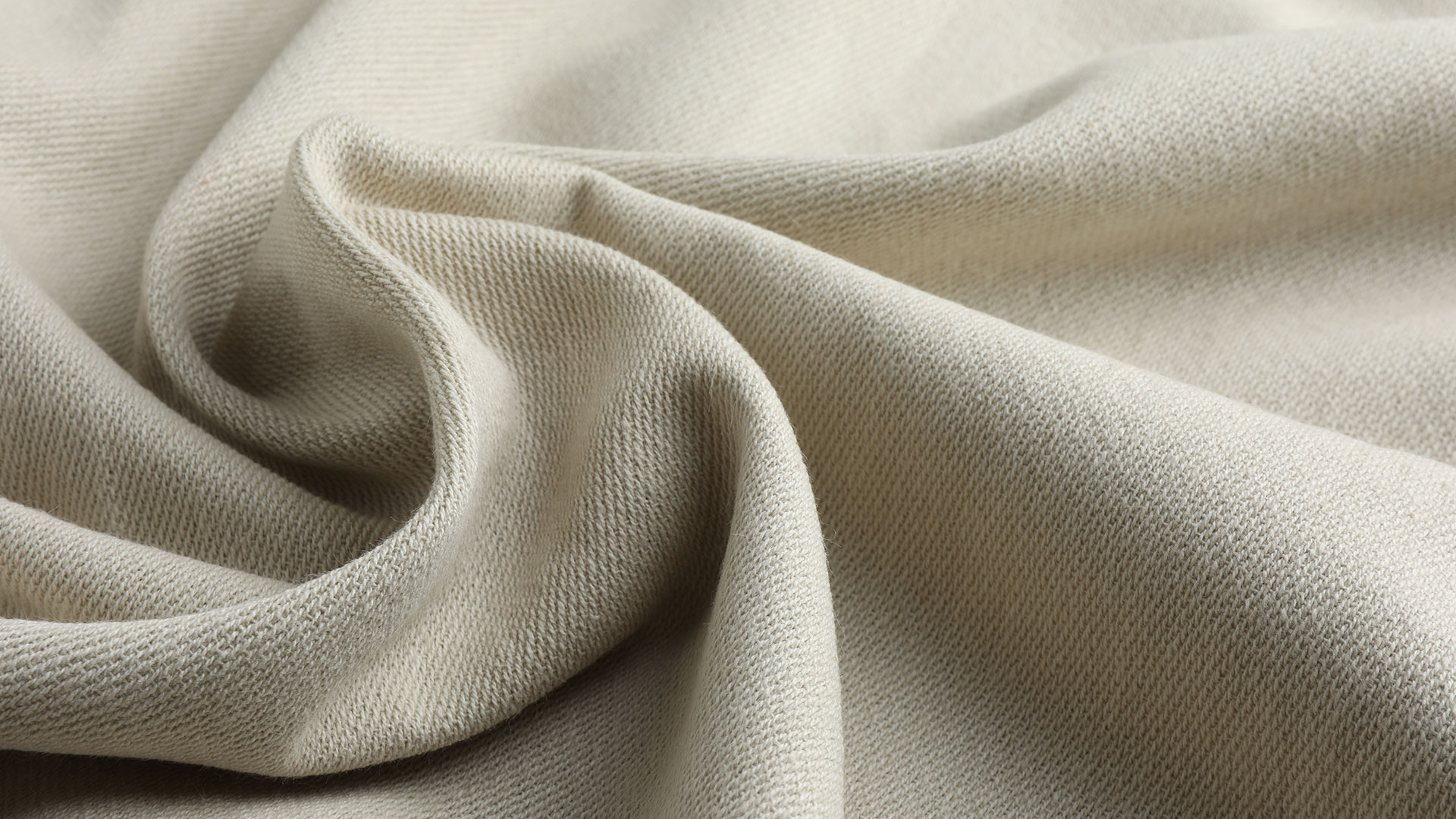
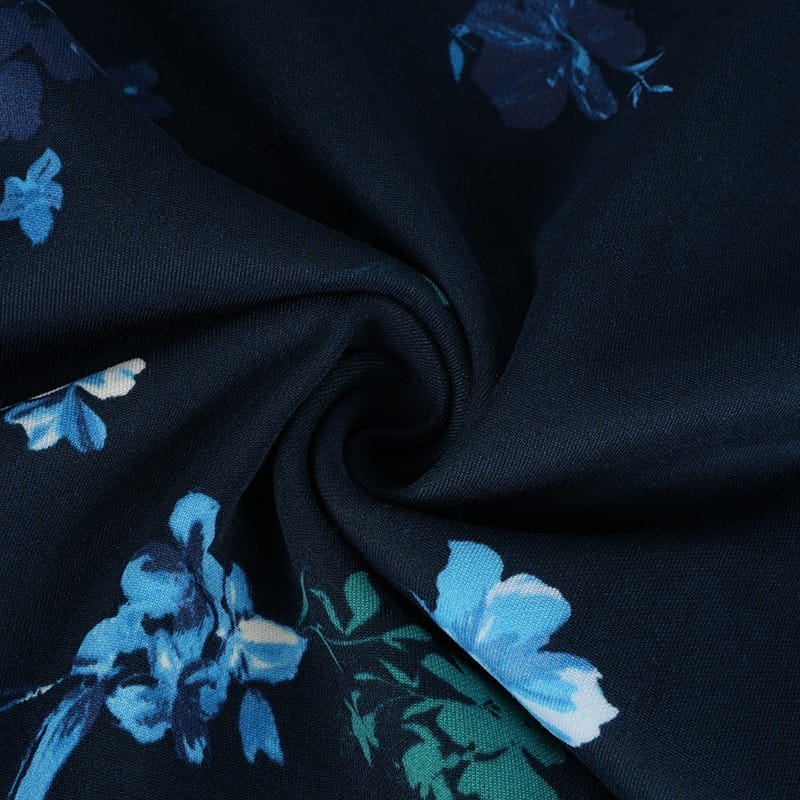
As a Polyester-Spandex Air-Layer Knit Fabric Supplier, we build the series on air-layer and double-knit structures: two knit faces connected through the fabric body so it holds shape, resists curling and keeps stretch without turning spongy. Polyester carries durability, dimensional stability and easy-care behaviour; spandex supplies elasticity and recovery. The ratio, structure and finishing are set around the end garment rather than fixed to one standard article.
What the Polyester-Spandex Air-Layer Series Covers
Air-layer knitting connects two surfaces through tuck and spacer connections, which is why this family reads as a stable, opaque fabric with a clean face and a controlled stretch direction. Depending on structure and fibre ratio, the series extends into air-layer stretch jersey and double-jersey constructions, including cotton-blend variants where a softer face is wanted.
- Air-layer stretch jersey — smooth face, bonded body, suited to cut-and-sew tops, leggings and fitted styles.
- Spandex double jersey — firmer hand and denser coverage for panels, structured garments and uniform programmes.
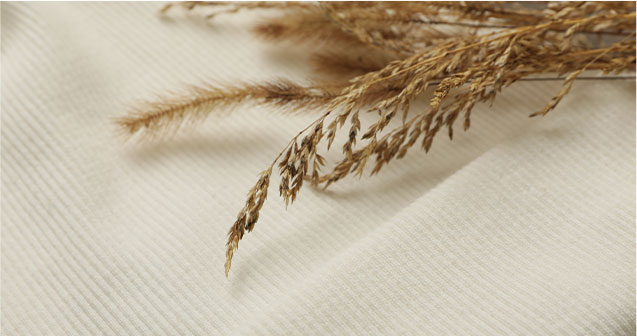
- Finished variants — brushed, peached or matte surfaces for autumn and winter casualwear.
The polyester-spandex combination dyes deeply, cuts cleanly and holds recovery through repeated wear and laundering. It is our first recommendation when a programme needs predictable shrinkage and a stable hand as much as it needs stretch.
Our Knitted Range and Where Each Option Fits
| Range |
Construction focus |
Application fit |
Main configuration variables |
| Polyester-Spandex Air-Layer Knit Fabric |
Air-layer and double-knit with spandex |
Sportswear, leggings, casual tops, stretch knitwear |
Composition ratio, grammage, width, colour, hand feel, finishing |
| Polyester-Viscose Air-Layer Knit Fabric |
Air-layer with a viscose-rich face |
Drape-led tops, dresses, soft casualwear |
Viscose ratio, surface effect, grammage |
| Tencel-Modal Air-Layer Knit Fabric |
Air-layer with cellulosic blend |
Premium basics, soft-touch loungewear |
Blend ratio, lustre, softness, shrinkage targets |
| Polyester-Tencel Air-Layer Knit Fabric |
Air-layer combining polyester and Tencel |
Casual and active styles needing a drier hand |
Blend ratio, colour depth, finishing route |
| Slub Air-Layer Knit Fabric |
Air-layer with slub yarn detail |
Textured casualwear, fashion tops |
Slub size, repeat, contrast, colour effect |
| Polyester-Spandex Interlock Fabric |
Double-knit interlock, both faces knit |
Sportswear, uniforms, structured stretch garments |
Face structure, grammage, recovery, width |
All of these sit inside our wider Air-Layer Fabric programme, so a single development can move between fibre bases while keeping the same structure logic, needle gauge and finishing route.
Application Fit
We supply this series into three broad streams: apparel manufacturing, home textiles and garment accessories. Within apparel, the polyester-spandex air-layer articles go into activewear and sportswear, casual tops and dresses, leggings and fitted knitwear where the fabric must recover after wear and hold its shape through cutting and sewing.
- Sportswear and activewear — stretch direction, recovery and colourfastness to perspiration and washing drive the specification.
- Casualwear and knitwear — hand feel, drape and surface finish come first, with grammage set by the cutting plan.
- Home textiles and accessories — stability, width consistency and shade continuity across repeat orders are the deciding factors.
Specifications We Fix Before Knitting
Each order is set on an approved specification sheet. These are the points we confirm with you before yarn is allocated, because changing any one of them shifts hand feel, shrinkage or stretch behaviour:
- Fibre composition and ratio, including the spandex percentage and yarn type.
- Structure: air-layer or interlock face, connection type and machine gauge.
- Target grammage with an agreed tolerance, and tubular or open-width form.
- Cuttable width and width tolerance for the marker.
- Stretch direction and recovery requirement — widthwise, lengthwise or two-way.
- Surface hand: smooth, matte, peached or brushed.
- Colour standard and approval route, such as a Pantone reference or a submitted swatch.
- Shrinkage and dimensional stability limits matched to the care label.
- Colourfastness requirements by end use and destination market.
- Heat-setting and finishing route, including any moisture-management or anti-pill treatment.
Colour, Structure and Finishing Customization
Composition, grammage, colour, structure and finishing are all adjustable within the series. We develop lab dips against your reference and hold the approved dip as the bulk standard; shade continuity across repeat orders is checked against retained samples rather than memory.
Structural customization covers the knit face, the connection density of the air layer, the use of slub or contrast yarns, and the choice between a smooth and a brushed surface. Our ODM/OEM service is built for this kind of development work, from a counter sample or a full tech pack through to a production-ready article with confirmed parameters.
Quality Control and Acceptance Testing
We run full-process quality management: inspection after each production step, then a final inspection on the finished roll against your requirements and the applicable international standards. Our laboratory is equipped for the routine physical and colour tests that back up each shipment, and we offer OEKO-TEX certified fabric options where the end market requires them.
- Incoming yarn and greige checks before knitting.
- In-process checks on grammage, width and surface during and after finishing.
- Shade verification against the approved dip under controlled lighting.
- Final roll inspection covering defects, roll length and packing data.
Information We Use to Configure Your Solution
| Project input |
How we use it |
| Garment type and end use |
Sets hand feel, coverage, stretch direction and finishing route |
| Target composition ratio |
Defines yarn selection and the balance between stability and recovery |
| Grammage, width and roll form |
Determines machine gauge, cutting plan and packing format |
| Colour reference or submitted swatch |
Used for lab dip development and bulk shade approval |
| Shrinkage, colourfastness and test limits |
Drives heat-setting, dyeing and finishing parameters |
| Quantity, repeat schedule and packing instructions |
Plans yarn allocation, roll length, labelling and shipment |
Sampling, Packing and Repeat Orders
Development normally starts with a counter sample or hanger sample built to the structure you have in mind, followed by a bulk trial once the parameters are approved. Our small-batch sampling and quick re-order capability keeps a running programme supplied while a new article is still being finalized.
Packing is agreed per order: roll length, inner tube, wrapping and label data such as article, shade, roll length and weight are confirmed before shipment, and repeat orders are matched against the retained standard so shade and hand stay consistent from one delivery to the next.
Frequently Asked Questions
What composition ratios can you knit in this series?
The ratio is set per article. Polyester carries dimensional stability and easy-care performance, while spandex provides stretch and recovery; the exact percentages are confirmed on the specification sheet, checked against the sample you approve, and then held as the production standard.
Can you develop a new air-layer structure from our sample or tech pack?
Yes. Our ODM/OEM service covers development from a reference sample, a construction sketch or a full tech pack. We work through the knit face, connection density, grammage and finishing, then submit a physical sample for approval before bulk knitting begins.
How do you handle colour matching and shade continuity?
We develop lab dips against your Pantone reference or submitted swatch and hold the approved dip as the bulk standard. Bulk lots are checked against that standard under controlled lighting, and retained samples are kept for repeat orders so later shipments match earlier ones.
What quality checks apply before shipment?
Inspection runs after each production step, followed by final roll inspection covering defects, grammage, width, shade, roll length and packing data. Testing is carried out in our laboratory against your stated requirements and the applicable international standards, and OEKO-TEX certified options are available for markets that need them.
How are orders packed and how do repeat orders stay consistent?
Roll length, inner tube, wrapping and label data are agreed before shipment and stated on the packing list. Repeat orders are produced against the retained approved sample and the original specification sheet, which keeps hand feel, shade and stretch behaviour stable across deliveries.
Which markets and product types does this fabric suit?
The series is used in apparel manufacturing, home textiles and garment accessories, with the strongest pull from sportswear, casualwear and stretch knitwear. We confirm the finishing and test requirements that apply to the destination market before production is scheduled.