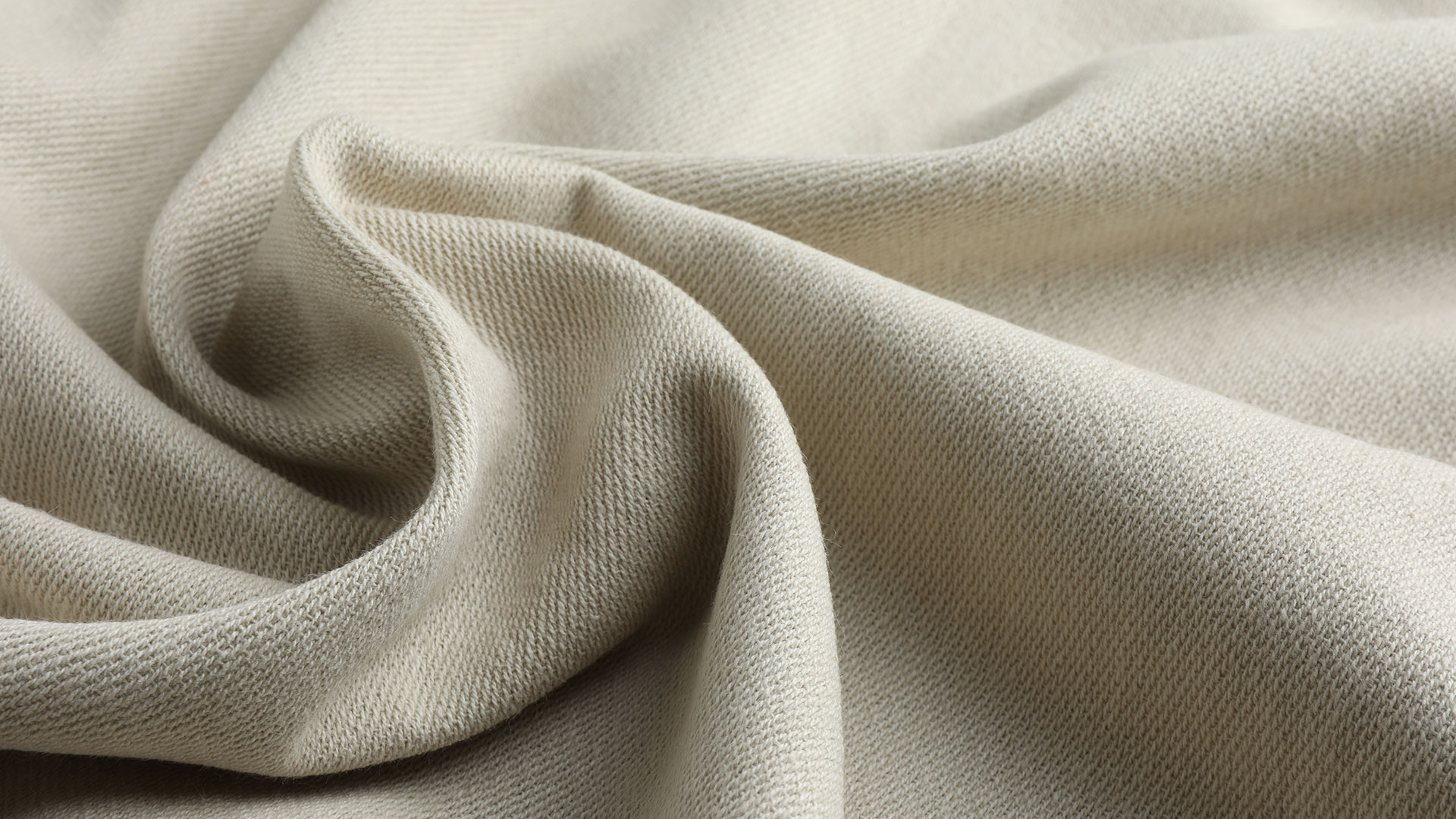
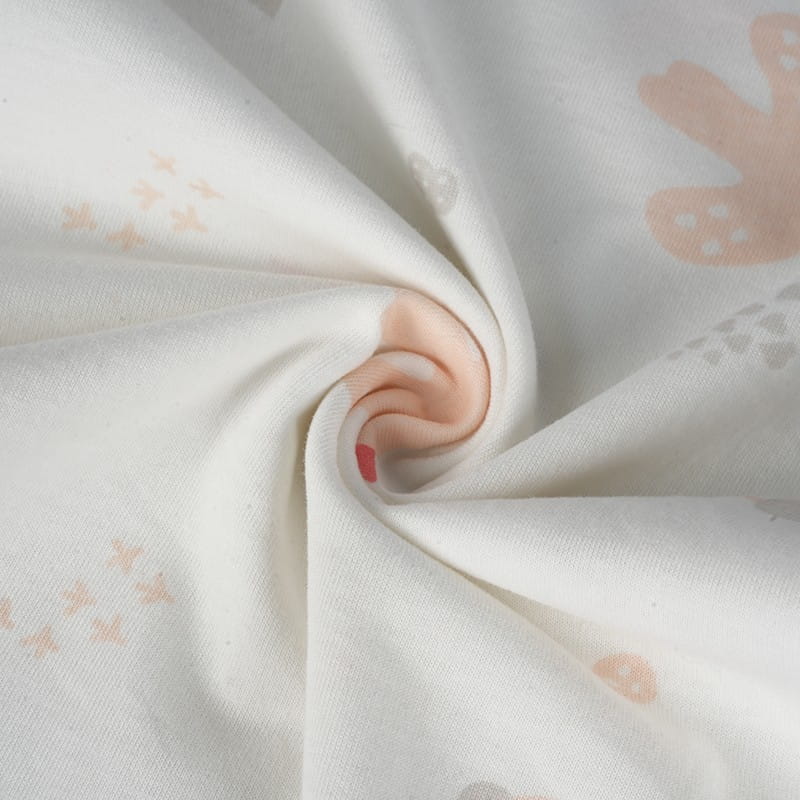
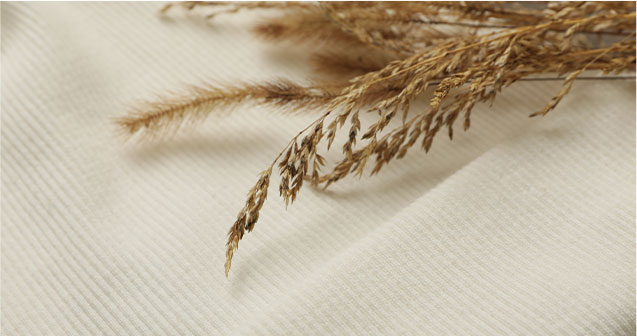
That construction defines how the fabric performs commercially — light, breathable, dimensionally calm, with a flat face and a natural hand feel. We supply it greige or finished for t-shirts, relaxed-fit tees, promotional and printed tops, loungewear and children's wear, and as a base cloth for home textile and garment accessory items. As a Non-Stretch Single Jersey Supplier, we handle development, sampling, bulk knitting, finishing and export coordination from our own premises.
Fabric Character and Where It Performs
Without elastane pulling loops back into shape, the cloth hangs rather than grips. It stays slightly away from the body, which is exactly what loose and straight-cut t-shirt blocks require, and it keeps a clean, uncluttered surface after washing and pressing.
- Plain single-knit face — even enough for screen print, transfer print, digital print and embroidery.
- Low elastic content — stable hand, predictable lay-up and cutting, less edge curl than stretch jersey.
- Open loop structure — good air movement for warm-weather and layering programs.
- Natural drape — relaxed silhouette for basic apparel, team wear and promotional ranges.
- Solid and melange looks — a neutral base for colour-blocking, trims and garment-dyed effects.
Our Knitted Fabric Range and Where Each Type Fits
Non-stretch single jersey is one line inside a broader knit program. The single jersey knit range and the families below let a program move between stretch levels, weights and surface effects without changing supply source.
| Fabric family |
Structure |
Typical program fit |
| Non-Stretch Single Jersey |
Single-knit plain loops, minimal elastic fibre |
T-shirts, promotional and printed tees, loungewear, children's tops |
|
Stretch Single Jersey
|
Single-knit with elastane |
Fitted tees, bodywear, close-fit base layers |
| Polyester Jersey Fabric |
Single-knit polyester |
Sport, uniforms, sublimation-printed panels |
| Air-Layer Fabric |
Two faces joined by connecting yarn |
Structured tops, outerwear layers, home textiles |
| Ponte Roma Fabric |
Firm double-knit with fine gauge stability |
Dresses, trousers, structured knitwear |
| Double-Knit Fabric (interlock) |
Two balanced faces, no curl |
Polos, jackets, heavier home textile panels |
| Ribbed Fabric |
Vertical rib columns, crosswise stretch |
Cuffs, collars, neckbands, body panels |
| Pique Fabric |
Textured cellular face |
Polos, sportswear, uniform tops |
| Waffle Fabric |
Raised grid texture |
Towels, robes, textured apparel accents |
| Terry Cloth Fabric |
Loop-pile surface |
Towels, bathrobes, absorbent home textiles |
| Crepe Fabric |
Crinkled, pebbled surface |
Blouses, dresses, textured separates |
Material and Construction Options We Configure
Non-stretch jersey is specified along a small number of variables. We fix each one on an approved sample before bulk knitting starts, so the production run matches what the pattern room and print floor have already tested.
- Fibre route: cotton, cotton-rich blends such as CVC, or polyester, quoted against the target hand feel and price point.
- Yarn count and fabric weight: matched to opacity, drape and the coverage the print or embroidery design needs.
- Width and fabric form: tube or open width, with slitting, edge condition and roll format agreed at sampling.
- Colour: solid dyed to an approved lab dip, or supplied in greige for customer dyeing and printing.
- Hand feel and surface: finishing targets confirmed on the approval sample rather than assumed from a description.
Colour, Printing and Conversion Notes
The flat, even face of non-stretch jersey keeps print registration clean across a panel, and the low elastic content means the print area does not open up or distort after repeated wear. That combination is why promotional and retail basic programs use it as their default base cloth.
For cut-and-sew lines, we confirm whether fabric is delivered in tube or open width, how rolls are labelled, and how colour is grouped by dye lot, so the cutting floor receives material it can lay up without re-sorting.
Quality Control and Acceptance
We work to full-process quality management: inspection after each process step, then a final inspection of the finished fabric against the customer's own requirements and the applicable international standards. Our in-house laboratory carries the testing equipment needed to check the properties agreed for the order.
- Lab dip, construction and hand-feel approval before bulk knitting.
- In-process checks on knitting, dyeing and finishing stages.
- Final roll inspection against the agreed acceptance criteria, with findings recorded.
- OEKO-TEX certified fabric options available for programs with restricted-substance requirements.
Sampling, Order Flexibility and OEM/ODM Support
Maozan Textile runs a flexible cooperation model: small-batch sampling for market testing, OEM and ODM development where a program needs its own construction, colour or finish, and quick re-orders once a quality standard is fixed. Weekday enquiries receive a response within 12 hours.
Because the company sits in Keqiao next to China Light & Textile Industry City, raw material sourcing, knitting, dyeing and finishing partners and outbound logistics are all within short reach — which shortens development loops when a sample needs to be adjusted.
Information We Use to Configure Your Solution
A quotation is only as precise as the brief behind it. These are the points we confirm before preparing a construction, price and delivery proposal.
| Project input |
How it shapes the specification |
| End product and fit |
Decides weight, drape and whether non-stretch or stretch jersey is the better base |
| Fibre route and composition |
Drives hand feel, dyeing behaviour and cost structure |
| Yarn count and target weight |
Sets opacity, coverage and print quality |
| Usable width and tube or open form |
Affects cutting efficiency and finishing route |
| Colour and colourfastness requirement |
Determines dyeing method and approval standard |
| Print, embroidery or garment wash process |
Influences surface preparation and shrinkage allowance |
| Quantity by colour and repeat potential |
Guides knitting plan and dye-lot grouping |
| Target market and compliance needs |
Selects testing and certification options such as OEKO-TEX |
| Packing, roll length and labelling |
Defines the delivery scope confirmed on the order sheet |
Frequently Asked Questions
What separates non-stretch single jersey from stretch single jersey?
Non-stretch jersey carries little or no elastane, so it hangs in a relaxed line instead of gripping the body, and it holds a steadier shape through cutting and pressing. When a program needs a closer fit with recovery, we move it across to our stretch single jersey line.
Which garments use this fabric best?
Loose and straight-fit t-shirts, promotional and team tees, printed and embroidered tops, loungewear and children's wear are the natural applications. It also serves as a base cloth for home textile and garment accessory items where a light, breathable plain knit is required.
Can the fabric be printed or embroidered?
Yes. The flat single-knit surface takes screen print, transfer print and embroidery cleanly, and because the fabric does not stretch heavily in the panel, printed areas keep their shape through wear and washing.
Do you develop fabric to our own construction or colour standard?
We provide OEM and ODM customization, including development against your construction, colour and finish targets, with small-batch sampling before a bulk commitment. Our team confirms the achievable hand feel and appearance on the approval sample.
Are certified options available?
We offer OEKO-TEX certified fabric options for programs with restricted-substance requirements. The applicable certification scope is confirmed against the fibre route and finishing process of the specific order.
What should be included in an enquiry to get an accurate proposal?
Send the end product, fibre preference, target weight and width, colour requirements, print or embroidery process, order quantity by colour, and any market compliance requirements. With those points confirmed, we can return a construction, price and delivery proposal matched to the program.