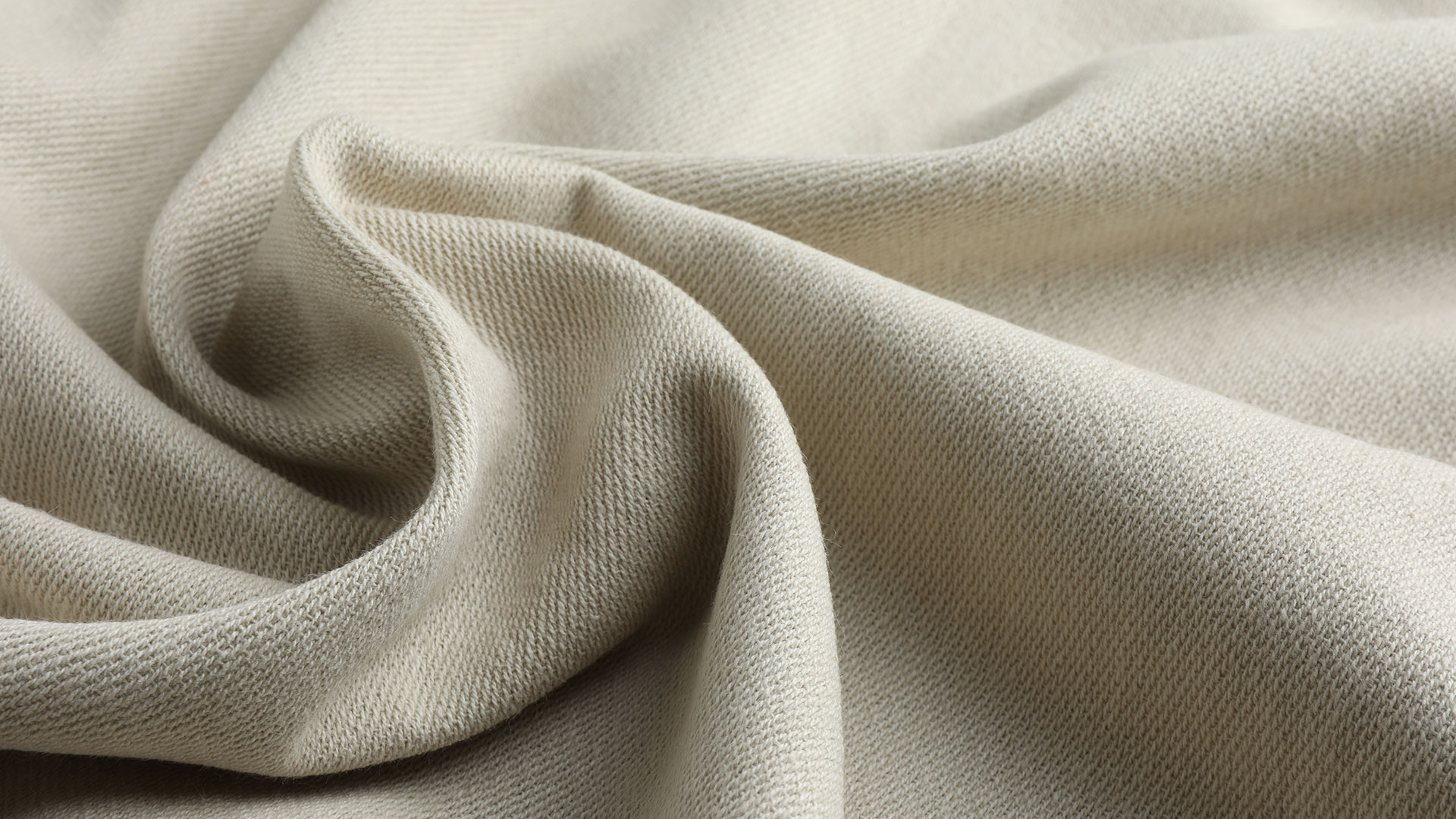
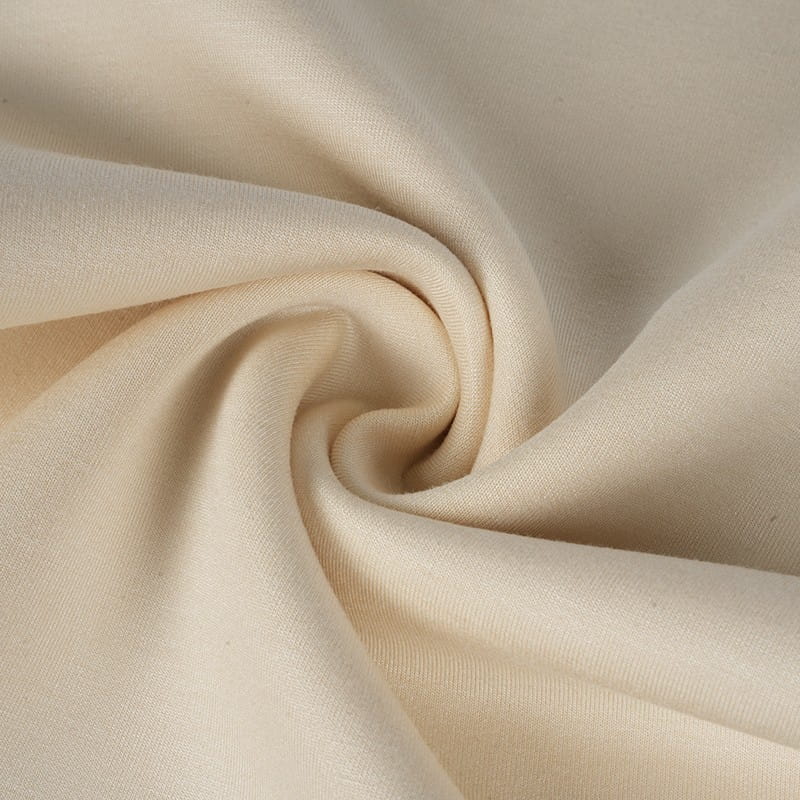
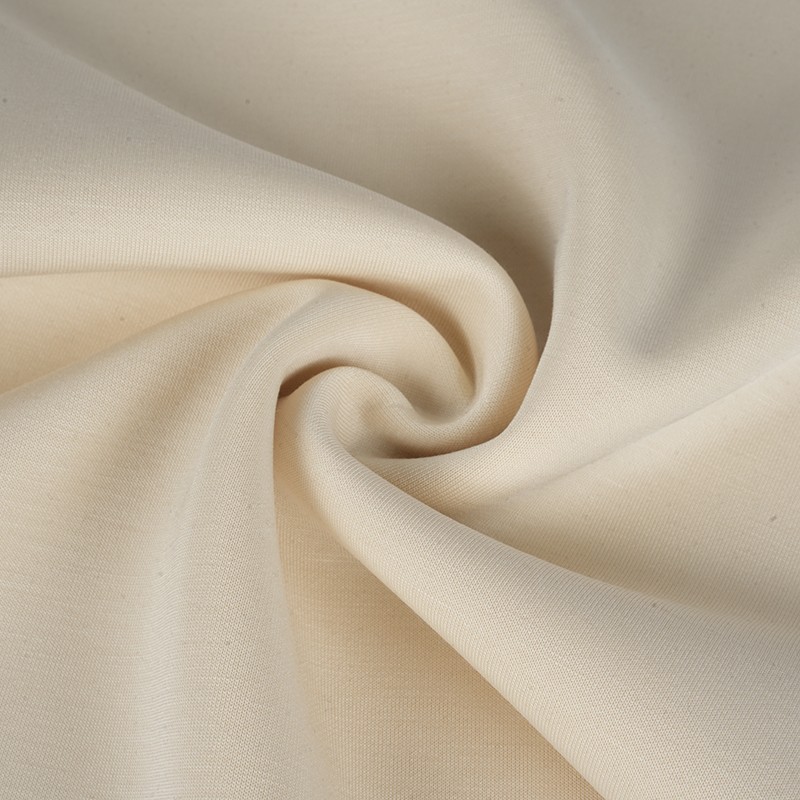
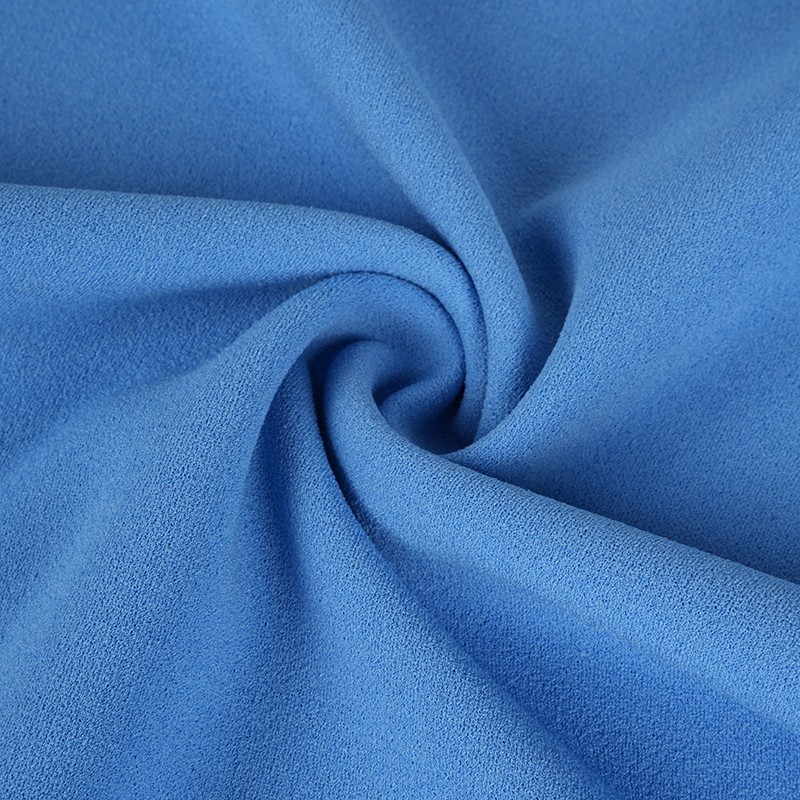
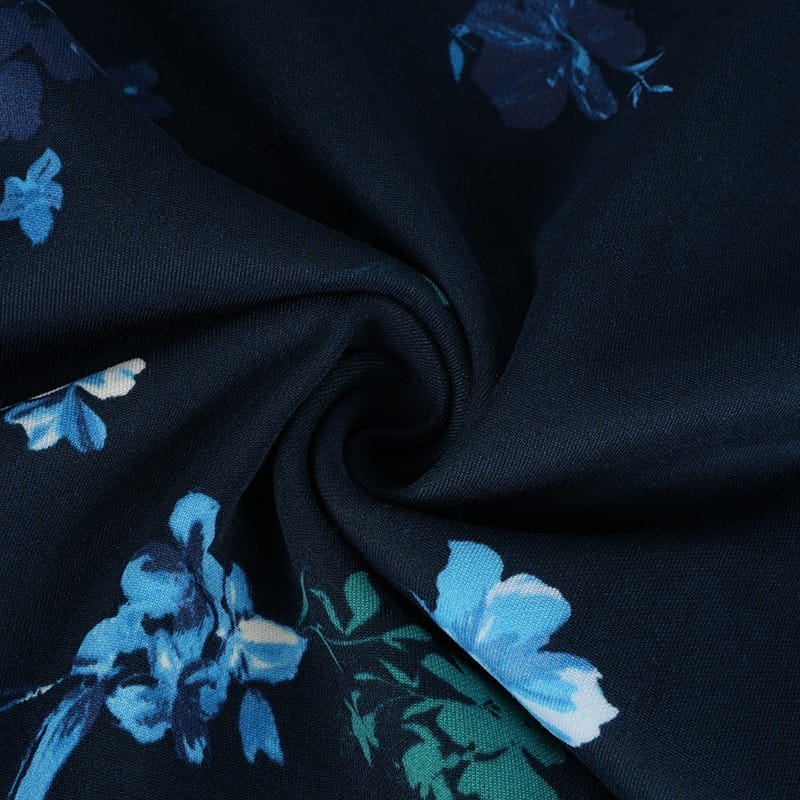
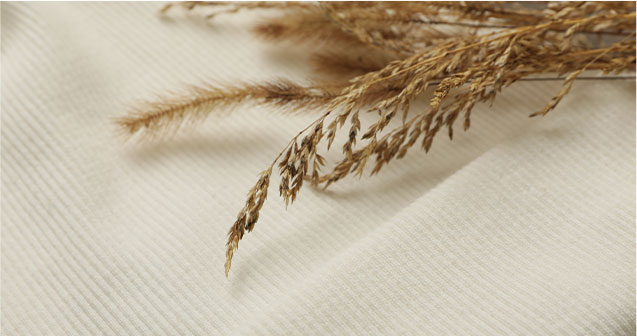
Air-layer fabric features a unique three-dimensional structure that creates stable air pockets within the material. Compared to standard knit fabrics, it offers superior structure and support, effectively enhancing the garment's silhouette; this ensures the finished piece maintains its shape without sagging or losing form, conveying a premium feel.
The fabric is soft and smooth to the touch, offering skin-friendly comfort while balancing substantiality with a lightweight feel. Its excellent resilience and shape retention mean garments resist wrinkling and deformation during daily wear, consistently maintaining a neat, well-defined appearance.
Combining comfort with practicality, air-layer fabric retains the softness and breathability of knits while delivering a more structured, crisp look—perfectly meeting modern demands for both style and comfort in casual wear.
It is widely used in garments such as sweatshirts, coats, jackets, sportswear sets, casual trousers, and wide-leg pants. When used for tops, it accentuates the silhouette and adds visual depth; for bottoms, it enhances drape and comfort. It is ideal for a variety of settings, including daily commuting, casual outings, and light athletic activities during spring and autumn.
About Us
Shaoxing Keqiao Maozan Textile Co., Ltd.
We are a professional Air Layer Knit Fabric Manufacturer in China, specializing in the production, processing, and supply of a wide range of apparel fabrics and related textile materials. As a specialized Custom Air Layer Textile Factory, we provide flexible ODM/OEM customization services to meet the diverse needs of our customers.
Our products are widely used in apparel, home textiles, garment accessories, and other textile applications. Located in Shaoxing Keqiao, home to China Textile City, we leverage the region’s strong textile industry cluster and well-established supply chain to provide reliable raw materials, quality finished products, and stable supply services to customers worldwide.
With a commitment to quality, flexibility, and customer satisfaction, we strive to build long-term partnerships by delivering tailored textile solutions that meet different market demands.
Direct Answer: What Defines a Good Knitted Fabric
A good knitted fabric is defined by a controlled loop structure, a stable finished weight and a verified response to washing and stretching. The visi...
Short Answer: How to Select Knitted Textile Fabrics For Apparel
The right knitted textile fabrics for apparel are chosen by matching four variables to the garment: structure, fiber blend, weight and ...
Direct Answer: Which Knitted Textile Fabrics Work for Apparel?
Single jersey, rib, interlock, pique and fleece cover most apparel programs, and the right choice depends on three decisions: the stretc...
The company focuses on the knitted textile sector, specializing in the production and processing of various knitted fabrics as well as the sale of raw materials. Its products are widely used in appare...
Air layer fabric is a double-layer knitted textile in which two outer faces are joined by connecting stitches, leaving a gap of trapped air between them. In the textile trade the same construction is also described as air layer knit, and this category page groups the airlayer-fabric products used for sportswear, casual garments, kidswear and home textile items. The structure gives a thicker and steadier body than a single jersey made from similar yarn, and it keeps its shape through cutting, sewing and repeated wear.
Summary: air layer fabric is chosen when a garment needs body, shape retention and a flat printable face at a moderate weight. Typical finished weights run from 220 to 380 GSM, and common fibers include polyester, cotton-polyester blends, polyester-viscose blends and polyester with elastane. Buyers who work with an air layer fabric manufacturer China usually request a specification that names the fiber, the weight, the width and the face finish.
The sections below explain how the structure works, which types are available, how air layer fabric compares with other knit structures, where it is used and how it is customized and cared for. Each chart is followed by a written explanation, and a question and answer block closes the page. The content is intended for product developers, garment factories and sourcing teams who compare an air layer fabric supplier against technical requirements before they place a sample request.
(1) Key Characteristics at a Glance
Two knitted faces joined by connecting stitches, with an air cell between them.
Flat face on both sides, which suits printing, embossing and heat transfer work.
Low edge curl compared with single jersey, which simplifies cutting and sewing.
Shape retention that supports structured silhouettes such as jackets, joggers and hoodies.
Wide yarn range, so the same structure can be adapted for several end uses.
2. Structure and Working Principle of Air Layer Fabric
Air layer fabric is knitted on double-jersey circular machines that carry two sets of needles, one set for the front face and one set for the back face. At selected points in the pattern, the yarn passes from one needle bed to the other and forms a connecting stitch, which ties the two faces together. Between these tie points the faces remain separate, and the open space that results is the air layer. The diagram below shows this construction in cross section.
The diagram shows that the front face and the back face are both built from regular knitted loops. The connecting stitches run through the gap and link the two faces at set intervals across the width and the length of the fabric. The space between the faces holds air, which gives the fabric its thickness without a bonded or glued core. Because the tie points are distributed evenly, the two faces move together and the fabric keeps a flat profile. Stitch pattern, yarn count and machine gauge set the size of the air cell and the firmness of the finished fabric. A development team can adjust these settings to move the same base design toward a lighter activewear weight or a heavier sweatshirt weight.
(1) Heat Retention and Air Movement
Still air is a poor conductor of heat, so the air cell reduces heat transfer through the thickness of the fabric. At the same time the structure is open enough at the tie points for moisture vapor to pass, which gives the fabric a balance between warmth and breathability. The balance depends on fiber choice, because polyester moves moisture along the surface while cotton absorbs it into the fiber. Product teams normally select the fiber blend first and then adjust the weight to match the climate and the activity level of the end user.
(2) Stability and Recovery
The connecting stitches limit how far each face can extend independently, which gives air layer fabric a firmer response to stretching than a single jersey. After light compression, such as folding or sitting, the structure tends to spring back toward its original thickness. When elastane is added at a low percentage, width-wise recovery improves further, and this is a common choice for fitted activewear. The result is a fabric that holds seams, hems and pocket edges in a flat, even line.
3. Common Types of Air Layer Fabric and Their Features
Air layer fabric is produced in several fiber and surface variations. The table below lists the types that appear most often in orders placed with a Custom Air-Layer Fabric Factory, together with typical weight ranges and the garments that use them. Weights are typical ranges and can be adjusted during development.
Common air layer fabric types with typical fiber, weight range, main feature and application.
Type
Typical Fiber
Typical GSM
Main Feature
Common Application
Polyester air layer
Polyester
220 to 300
Quick drying, stable color
Activewear, track tops
Cotton-polyester air layer
Cotton with polyester
260 to 340
Natural look, shape retention
Hoodies, sweatshirts
Polyester-viscose air layer
Polyester with viscose
240 to 320
Smooth face, fluid drape
Loungewear, dresses
Elastane air layer
Polyester with 3 to 8 percent elastane
230 to 320
Added recovery
Fitted sports tops, leggings
Jacquard air layer
Polyester or blends
260 to 380
Patterned surface
Fashion tops, home textiles
The table shows that weight and fiber move together. Lower weights between 220 and 300 GSM are used with polyester for garments that need movement and moisture control. Heavier weights above 300 GSM are used with cotton blends or jacquard patterns for garments that need warmth and body. A request to a China ODM Air-Layer Fabric partner should therefore state the end garment first, since the garment narrows the fiber and weight options quickly.
(1) Plain Air Layer Fabric
Plain air layer fabric has an even surface on both sides and is the base for most orders. It is dyed in solid colors, printed with transfer or screen methods, or finished with a light brushing step. Plain constructions are the simplest to match between sample and bulk, which is useful for repeat programs that run across several seasons.
(2) Yarn-Dyed and Jacquard Air Layer Fabric
Yarn-dyed and jacquard versions build color or pattern into the knitting itself. Stripes, geometric blocks and tonal textures are formed by selecting different yarns or needle positions in the knitting cycle. These variations need longer sampling because the pattern repeat, the yarn tension and the connecting stitch layout all interact.
(3) Functional Finished Air Layer Fabric
Finishing steps can add moisture transport, anti-pilling treatment, water repellent coating or a smooth calendered face. Each finishing step changes the surface and sometimes the thickness, so the finishing plan should be agreed before the first sample is knitted. A factory with in-house finishing partners can adjust the process within a short loop of testing and revision.
4. Performance Comparison With Other Knit Structures
Product teams often compare air layer fabric with single jersey, interlock and brushed fleece before they select a structure. The radar chart below rates the four structures on five properties using a scale from 1 to 5, where a larger value means stronger performance on that property. The ratings are illustrative and based on common construction behavior, not on a single test report.
Air layer fabric reaches the highest rating for shape retention and surface smoothness, which explains its use in structured garments and printed designs. Single jersey leads in breathability and lightness, so it suits summer tops and base layers. Interlock sits close to air layer fabric on surface smoothness but has a lower rating for shape retention because its two layers are fully joined and have no air cell. Brushed fleece has the highest rating for warmth, with lower ratings for breathability and lightness, which places it in cold-weather programs. A buyer who needs a garment with clear shape, a printable face and moderate warmth can read from the chart that air layer fabric covers this combination in one fabric.
(1) When Air Layer Fabric Is Selected
The garment needs a structured silhouette without a lining or interlining.
The design includes a large print, embossing or heat transfer area.
The program calls for moderate warmth with breathability, such as spring and autumn layers.
The cutting room benefits from a fabric with low edge curl and stable width.
(2) When Another Structure May Fit Better
Single jersey fits lightweight tops for hot weather, and brushed fleece fits garments that require a raised inner pile for cold conditions. Rib fits trims and body-hugging tops that rely on high width-wise stretch. A development team that is unsure can request swatches of two or three structures at similar weights and compare them on a fit model before bulk planning begins.
5. Weight Selection by Garment Application
Weight is the first specification that a sourcing team writes into an inquiry. A weight that is too low for the garment shows through at seams and loses structure, while a weight that is too high increases bulk and shipping volume. The range chart below shows typical weight bands for six applications of air layer fabric, drawn on a scale from 150 to 400 GSM.
The chart shows that activewear tops and kidswear share the lower band of 220 to 280 GSM, where movement and light layering are the main requirements. Hoodies and joggers move up to the 260 to 360 GSM range because these garments need body, warmth and clean drape at the hem and cuff. Home cushions and similar soft furnishing items use the heaviest band, from 300 to 400 GSM, because the fabric has to hold its shape around a filling. The bands overlap, which means one fabric weight can serve more than one garment type, and this helps programs that plan a coordinated collection from a small number of base fabrics. Within each band, the final selection depends on fiber, finish and the climate of the target market. A sourcing team that supplies a reference garment with its inquiry gives the factory a direct way to confirm the weight band.
(1) Width and Cutting Efficiency
Air layer fabric is commonly supplied as tubular or open-width rolls with finished widths between 150 and 185 cm. A change of 5 cm in usable width can change marker efficiency by one to two percentage points, so the usable width after trimming should be stated in the specification rather than the nominal roll width.
6. Dimensional Stability After Washing
Dimensional change after washing is one of the key checks for any knitted fabric, because garments that change size after the first wash lead to returns and complaints. The structure of air layer fabric tends to limit this change, since the connecting stitches restrict the relaxation of each face. The line chart below compares the width-wise shrinkage of an air layer fabric with a single jersey of similar fiber content over ten wash cycles.
The chart shows that most shrinkage appears during the first wash for both fabrics. After ten washes the air layer fabric reaches about 2.1 percent width-wise shrinkage, while the single jersey reaches about 4.8 percent. The difference is more than twice as large for the single jersey, which reflects the freedom of a single layer of loops to relax. Both curves flatten after the fifth wash, which indicates that the fabric has reached a settled state. Heat setting and compacting in the mill affect the final values, so each lot should be tested against the specification before cutting. A pattern maker can use the test result to set cutting allowances for width and length instead of relying on a fixed rule.
(1) Test Items Commonly Requested
Dimensional change after washing, in length and in width.
Pilling grade after a set number of abrasion cycles.
Color change and staining after washing and after rubbing.
Fabric weight and thickness against the approved sample.
Spirality, which describes the twist of side seams after washing.
7. Fiber Composition Options in Air Layer Programs
Fiber content shapes the surface feel, the drying behavior, the color range and the recovery of the finished fabric. Polyester is widely used because it holds its shape, dries quickly and accepts a broad range of dye and print methods. Cotton and viscose blends are selected when a natural appearance or a smoother drape is needed. The donut chart below shows an illustrative distribution of fiber compositions in air layer fabric inquiries handled by a factory that supplies apparel and home textile buyers.
The chart shows that polyester accounts for 40 percent of inquiries, which matches its role in sportswear and track garments. Cotton-polyester blends follow with 25 percent, and they are chosen for hoodies, sweatshirts and casual garments that need a natural look with stable shape. Polyester-viscose blends represent 15 percent and serve loungewear and dresses where a smoother drape is requested. Polyester with elastane takes 12 percent, and it is the usual route for fitted garments that need added recovery. The remaining 8 percent covers other blends, such as nylon-based or recycled fiber options. A buyer who knows the fiber priority for the garment can use this distribution as a starting point for sample requests with an air layer fabric supplier.
8. Application Scenarios and Selection Points
Air layer fabric serves several product groups, and each group places different demands on the fabric. The scenarios below describe how the structure is used and which specification points carry the most weight for each group.
(1) Activewear and Sports Apparel
Training jackets, track pants, pullovers and warm-up sets use air layer fabric because the structure holds its shape during movement and keeps a flat surface for logos and panels. For this scope, an air layer fabric for activewear manufacturer typically supplies polyester or polyester with elastane at 220 to 300 GSM, with a moisture transport finish where the design calls for it. Selection points include recovery after stretch, color stability under sweat and light, and the behavior of the surface under abrasion.
(2) Casualwear and Loungewear
Hoodies, sweatshirts, joggers and matching sets use cotton-polyester or polyester-viscose air layer fabric at 240 to 340 GSM. The structured body reduces the need for added interlining in collars, plackets and pockets. Selection points include pilling resistance, hand feel after washing and the match between dyed fabric and rib trims.
(3) Kidswear
Kidswear programs value fabrics that keep their shape under frequent washing and active wear. Air layer fabric at 220 to 280 GSM suits jackets, pants and sets, and the printable surface supports character and pattern designs. Selection points include seam strength, color fastness to washing and the absence of loose surface fibers.
(4) Home Textiles and Garment Accessories
Cushion covers, throws, seat covers, bag linings and hat panels use heavier air layer fabric from 300 to 400 GSM. The fabric holds a filling evenly and keeps a clean surface line at seams. Selection points include thickness, abrasion behavior and the compatibility of the fabric with the sewing and stuffing process.
(5) Selection Checklist
Name the garment or product, the target market and the season.
State the fiber content and any elastane percentage.
Set the target GSM and the accepted tolerance.
Define the finished width and the usable width after trimming.
List the surface finish, such as plain, brushed, printed or jacquard.
Agree on test items and limits for shrinkage, pilling and color change.
Confirm sampling steps, quantities and the delivery window.
9. Customization and Production Flow
Custom development starts with a brief that describes the garment, the fiber, the weight and the surface. A Custom Air-Layer Fabric Factory converts this brief into a knitting plan that sets yarn count, machine gauge, stitch pattern and loop length. The plan is then tested in a small sample run, adjusted and approved before bulk production begins. The steps below describe the usual flow from the first message to shipment.
Brief and reference sample review, where the team compares the target with existing structures.
Yarn selection and knitting trial, which sets weight, width and thickness.
Dyeing, printing and finishing trial, which sets color, surface and shrinkage control.
Sample approval with test data, including a wash test on the finished fabric.
Bulk knitting, dyeing and finishing under the approved settings.
Roll inspection, labeling and packing, followed by shipment documents.
(1) ODM and OEM Cooperation Models
In an OEM model, the buyer supplies the specification and the factory produces to it. In an ODM model, the factory proposes the structure, yarn and finish, and the buyer selects and adjusts from developed options. An air layer fabric OEM manufacturer works from the buyer's technical sheet and reference sample. An air layer fabric ODM manufacturer offers a development library and design support, which shortens the path from idea to approved fabric. Buyers who plan seasonal collections often combine both models, using ODM options for new ideas and OEM orders for repeat styles.
(2) Supply Capability at Shaoxing Keqiao Maozan Textile Co., Ltd.
Shaoxing Keqiao Maozan Textile Co., Ltd. works as a professional air layer fabric manufacturer China buyers contact for the production, processing and supply of apparel fabrics and related textile materials. As a custom air layer fabric manufacturer, the company provides flexible ODM and OEM customization for activewear, apparel, home textiles and garment accessories. The factory is located in Shaoxing Keqiao, an area known as China Textile City, where yarn, dyeing, finishing and logistics services operate close to each other. This setting supports shorter sampling loops and steady raw material supply for programs of different sizes. For buyers who look for an air layer fabric factory China partner or a China ODM Air-Layer Fabric source, the company can discuss specifications, development steps and delivery planning in one conversation.
(3) Why Cluster Location Matters
A factory that sits inside a textile cluster can adjust a program quickly because partners in yarn trading, dyeing and finishing are within short distances. If a color needs a second lab dip or a finishing step needs a trial, the material can move between sites in a day instead of a week. For buyers, this shortens the time between a revision request and a new sample. It also helps the factory keep a stable supply of yarn lots, which supports color and weight consistency across repeat orders. A China ODM Air-Layer Fabric Factory in such a cluster can therefore plan development and bulk work in parallel.
10. Cutting, Sewing, Washing and Storage Guidance
Proper handling protects the structure and the surface of air layer fabric. The recommendations below apply to garment factories and to end users, and they help keep the fabric thickness and shape after repeated processing and wear.
(1) Cutting and Sewing
Relax the fabric on the cutting table for several hours before cutting so that spreading tension can release.
Use moderate layer heights, since thick fabric can shift between layers under a heavy stack.
Select ballpoint or stretch needles and adjust presser foot pressure to avoid compressing the air cell at seams.
Choose stretch stitches such as overlock or coverstitch for seams that need to extend with the fabric.
Press with moderate heat and a cloth layer, and check the fiber content before setting the temperature.
(2) Washing and Drying
Machine washing at 30 to 40 degrees Celsius with similar colors is a common instruction for polyester and cotton-polyester air layer garments. Turning garments inside out reduces abrasion on printed or brushed faces. Tumble drying on low heat or drying flat helps keep the fabric thickness, and high heat can flatten the air cell or damage elastane. Bleach and strong softeners can affect color and moisture transport, so the care label should list them as not recommended.
(3) Roll Storage
Store rolls horizontally on racks or pallets, away from direct sunlight and damp areas. Keep the protective wrapping in place until the roll goes to the cutting room. Heavy items placed on top of rolls can compress the air layer, so stack height should stay within the limit set by the packing plan. A relative humidity of 55 to 65 percent helps natural fibers hold a stable moisture level before cutting.
11. Frequently Asked Questions About Air Layer Fabric
Q1: What is air layer fabric used for?
Air layer fabric is used for activewear, hoodies, sweatshirts, joggers, loungewear, kidswear, cushion covers and garment accessories. The structure gives body and shape retention at a moderate weight, and the flat faces support printing and embossing. Product teams select it when a garment needs a defined silhouette without extra lining.
Q2: How does air layer fabric differ from interlock?
Interlock joins two rib layers fully, so it has no open space between the faces. Air layer fabric joins the faces at set points and leaves an air cell between them, which adds thickness and a more defined shape at similar yarn weight. Both structures have smooth faces and low edge curl, and the final choice depends on the thickness and body the garment requires.
Q3: Which GSM suits activewear?
Activewear tops commonly use 220 to 280 GSM, and track pants or warm-up pieces use up to 300 GSM or more. The choice depends on the climate, the activity level and the fit of the garment. Requesting swatches in two weights and testing them on a fit model gives a direct comparison.
Q4: Can colors, prints and patterns be customized?
Yes. Solid dyeing, yarn-dyed stripes, jacquard patterns, transfer printing and screen printing are all used on air layer fabric. Color matching is done against a reference sample or a color standard, and lab dips are approved before bulk dyeing starts. Jacquard and yarn-dyed designs need a longer sampling period because pattern and stitch layout are set during knitting.
Q5: What information should an inquiry include?
An inquiry should state the garment type, fiber content, target GSM, finished width, surface finish, color references, estimated quantity and delivery window. A reference sample or a photograph speeds up the match, since the factory can compare thickness, surface and stitch pattern directly. Test items and accepted limits can be listed at the same time so that sampling and testing follow one plan.
Q6: How should air layer garments be washed?
Wash at 30 to 40 degrees Celsius with similar colors, turn garments inside out, and dry on low heat or flat. Avoid bleach and heavy softeners, and iron at moderate heat through a cloth when needed. These steps help the fabric keep its thickness, color and surface after repeated washing.