Shaoxing Keqiao Maozan Textile Co., Ltd. manufactures and supplies Cotton-Spandex Interlock Fabric Supplier for apparel programmes that want a cotton face next to the skin together with controlled stretch and recovery. Our work sits in the knitted textile sector — production, processing and raw-material supply — from Keqiao, Shaoxing, next to China Textile City, where yarn sourcing, knitting, dyeing and finishing run along a short, well-established chain. We serve apparel manufacturing, home textiles and garment accessories, and we take on both ODM/OEM development briefs and repeat bulk programmes.
Cotton faceBreathable, skin-friendly surface for close-fitting garments.
Spandex recoveryExtension and return so panels follow the body without pressure.
Balanced interlockTwo interlocked loop sets for a stable, fuller-bodied double knit.
A Double-Knit Interlock Built Around Cotton Comfort
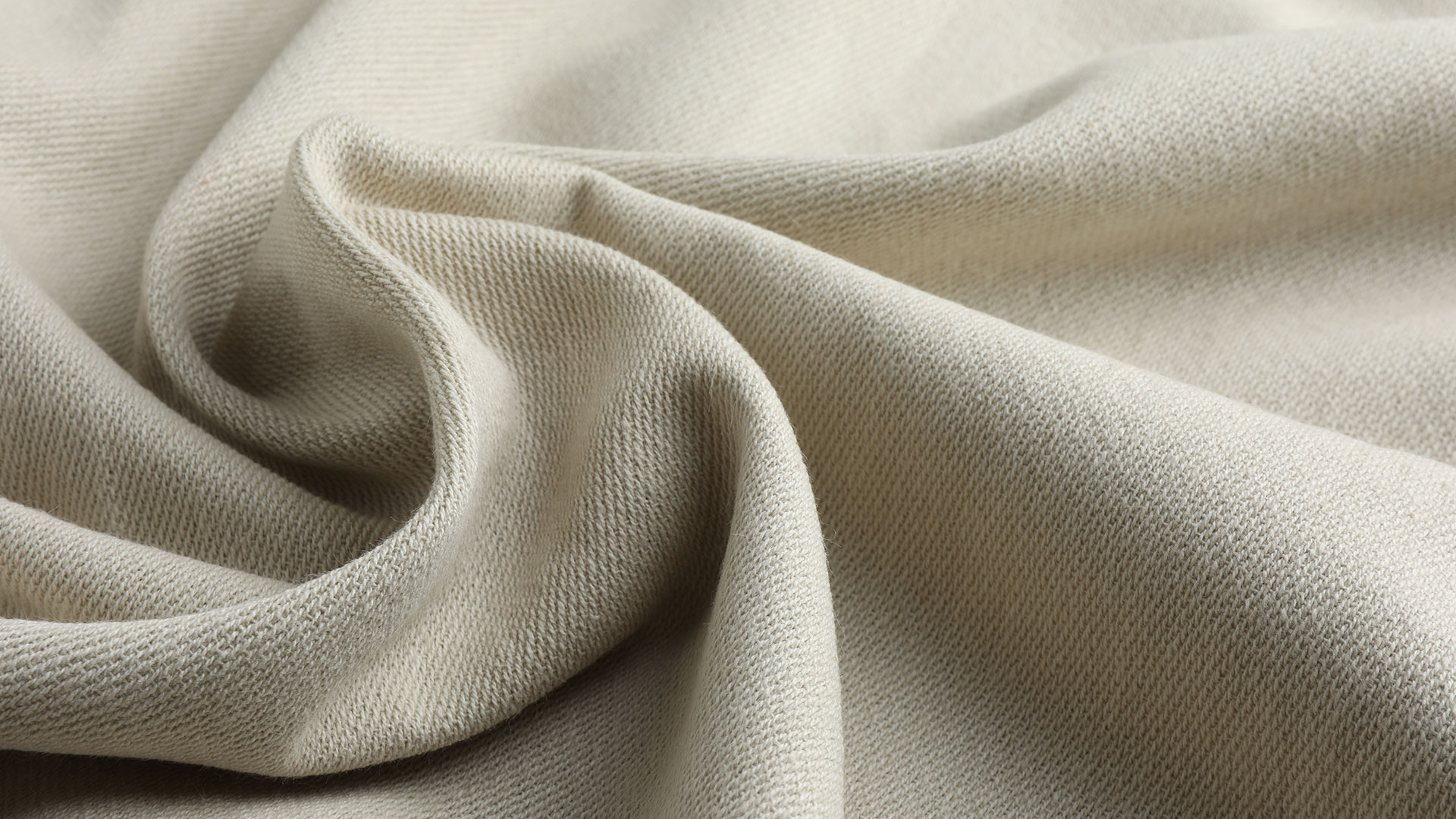
Cotton and spandex are the main components, knitted in an interlock construction in which two loop sets interlock so both faces read alike. The result is a fabric that feels soft and natural against the skin, resists stuffiness and keeps daily wear comfortable, while the interlock structure holds the cloth flat and stable instead of curling at the cut edge. With the right spandex content, the same construction adds stretch and shape retention without losing the true cotton touch.
- Solid dyed shades and matched repeats for programme continuity.
- Tubular or open-width presentation to suit tubular cutting or flat marker planning.
- Finishes ranging from soft and smooth to lightly peached or brushed hand.
- Stretch level tuned by end use: lighter extension for underwear and base layers, higher extension for yoga and loungewear.
Application Fit Across the Garment Categories We Supply
Cotton-spandex interlock suits programmes where comfort, breathability and next-to-skin softness matter more than a technical synthetic surface. Our customers place it in underwear, camisoles, base layers, yoga wear, loungewear and children's close-fitting clothing, and it also appears in home textiles and garment accessories where a soft stretch double knit is required.
Intimate apparelSkin-friendly and breathable for underwear and camisoles, with enough stretch to sit flat under clothing.
Base layersA cotton face for comfort in long-wear layers, with recovery that helps the garment keep its shape.
Yoga and light activewearFreedom of movement for everyday activity and home wear without a slick synthetic hand.
Loungewear and kidswearSoft handle and stable structure for relaxed sets and children's close-fitting styles.
Our Double-Knit and Interlock Range
Cotton-spandex interlock is one position in a wider double-knit and interlock range, so a programme can move between hand feels, fibre stories and cost points without changing the mill relationship.
| Fabric |
Character |
Where it fits |
| Cotton-Spandex Interlock Fabric |
Cotton face, soft natural hand, good stretch and recovery. |
Underwear, camisoles, base layers, yoga wear, loungewear, kidswear. |
| Polyester-Spandex Interlock Fabric |
Synthetic surface with dependable spandex recovery and easy care. |
Sportswear, activewear and styles needing a crisper hand. |
| Nylon-Spandex Interlock Fabric |
Smooth nylon face with a fine, compact appearance. |
Activewear, lingerie and smooth second-skin styles. |
| Double-Knit Fabric |
Parent family covering interlock and related double-knit structures. |
Garment programmes that need structure, opacity and stability. |
Interlock Construction, Stretch and Dimensional Behaviour
Interlock is a double-knit structure knitted on two needle beds, with one loop set forming the face and the second interlocking with it on the back. Compared with single jersey, the cloth is heavier, more opaque and far less prone to edge curl, which matters when panels are cut, sewn and washed in volume.
Spandex enters the structure as a plated or core-spun yarn, so extension is built into the knit rather than added by finishing. Recovery, growth and residual shrinkage depend on the spandex ratio, stitch density, relaxation and drying control. We agree the stretch and shrinkage targets with the customer before bulk and treat them as acceptance criteria rather than workshop preferences.
Specification Variables We Confirm Before Bulk
Each cotton-spandex interlock order is built from a short list of locked variables. These are the points that most often decide whether a garment performs on the shop floor and in the wash.
| Parameter |
What we lock in with you |
Effect on the garment programme |
| Fiber composition |
Cotton-to-spandex ratio for the target hand feel and recovery. |
Balances breathable cotton comfort against stretch and shape retention. |
| Yarn count and gauge |
Yarn specification and knitting gauge aligned to the required hand. |
Controls stitch density, opacity and surface smoothness. |
| Weight (GSM) |
Target weight band with tolerance for the weight class. |
Separates light underwear qualities from heavier outer and lounge weights. |
| Width and presentation |
Tubular or open width, opening width and usable width. |
Drives marker planning, cutting efficiency and fabric consumption per garment. |
| Stretch and recovery |
Extension direction and growth limits agreed against a test method. |
Keeps waistbands, cuffs, necklines and knee areas from bagging out. |
| Shrinkage |
Wash and relaxation shrinkage target for length and width. |
Protects finished measurements through home laundering. |
| Colour and fastness |
Shade reference, approval route and fastness requirement per market. |
Controls shade continuity and performance in wash, rub and perspiration. |
| Finish |
Soft, smooth, lightly peached or brushed surface treatment. |
Defines the tactile story of the finished garment for the end consumer. |
| Packing and delivery |
Roll length, inner and outer packing, shipping marks and documents. |
Protects the fabric in transit and matches warehouse handling on arrival. |
Quality Control, Testing and Acceptance
We run full-process quality management on knitted production: inspection follows each process, and the finished lot passes a final inspection against customer requirements and international standards. Our laboratory is equipped with the testing instruments needed to support these checks, and OEKO-TEX certified fabric options are available for programmes that specify them.
- Incoming yarn check before knitting, including count and appearance.
- In-process inspection after knitting, dyeing and finishing.
- Final inspection of the finished roll against the agreed specification and shipment quantity.
- Documented acceptance of composition, weight, width, stretch, recovery, shrinkage, shade and hand feel.
ODM/OEM Customization, Sampling and Repeat Supply
We provide flexible ODM/OEM customization, with small-batch sampling and quick re-orders built into the way we work. Development can start from a counter sample, a reference garment, a swatch or a written specification, and we return a knitted and finished sample that reflects the agreed composition, weight, width, shade and finish.
Once a quality is approved, the same construction and finishing route is held for repeat orders, so re-orders match the original hand and measurements rather than drifting between lots. Keqiao's industry cluster keeps yarn, dyeing and finishing resources within reach, which helps us respond quickly when a programme adds colours, sizes or delivery windows.
Information We Use to Configure Your Solution
A clear brief lets us propose the right cotton-spandex interlock build the first time. In practice we need:
- End use and garment type — underwear, base layer, activewear, loungewear or kidswear.
- Target composition, weight (GSM) and usable width, with any tolerance already fixed by your fit team.
- Stretch and recovery expectations, plus the test method your lab uses.
- Shrinkage target after washing and the care conditions it must survive.
- Colour reference and the fastness level required for the destination market.
- Finish direction — soft, smooth, peached or brushed — and packaging format.
- Order quantity, colour and size breakdown, delivery schedule and destination port.
Frequently Asked Questions
What garments is cotton-spandex interlock fabric used for?
It suits next-to-skin and comfort-led styles: underwear, camisoles, base layers, yoga wear, loungewear and children's close-fitting clothing. The cotton side keeps the fabric breathable and gentle, while the interlock structure and spandex give the stability and stretch these garments need.
Are you a factory or a trading company?
We are manufacturers. Maozan Textile operates a processing plant together with an international sales department, covering the full route from production through to export documentation.
Which parameters can be customized on our order?
Through ODM/OEM development we adjust composition ratio, yarn count and gauge, weight, width, tubular or open-width presentation, stretch and recovery level, shrinkage target, shade, surface finish and packing. Each of these is fixed in writing before bulk production begins.
How do you control quality and what do you inspect?
Full-process quality management applies: inspection after each production stage, then a final finished-goods inspection against customer requirements and international standards. Our laboratory carries the testing equipment for these checks, and lot results are recorded so acceptance can be traced back to the agreed specification.
Can you support small-batch sampling and repeat orders?
Yes. Small-batch sampling, quick re-orders and flexible cooperation models are part of our normal working method, which lets customers test a quality in production before scaling to larger programme volumes.
Are sustainable or certified options available?
We offer OEKO-TEX certified fabric options alongside our standard range, so programmes with restricted-substance requirements can be supplied from the same knitting and finishing route.