Stretch Single Jersey Supplied from Our Keqiao Knit Mill
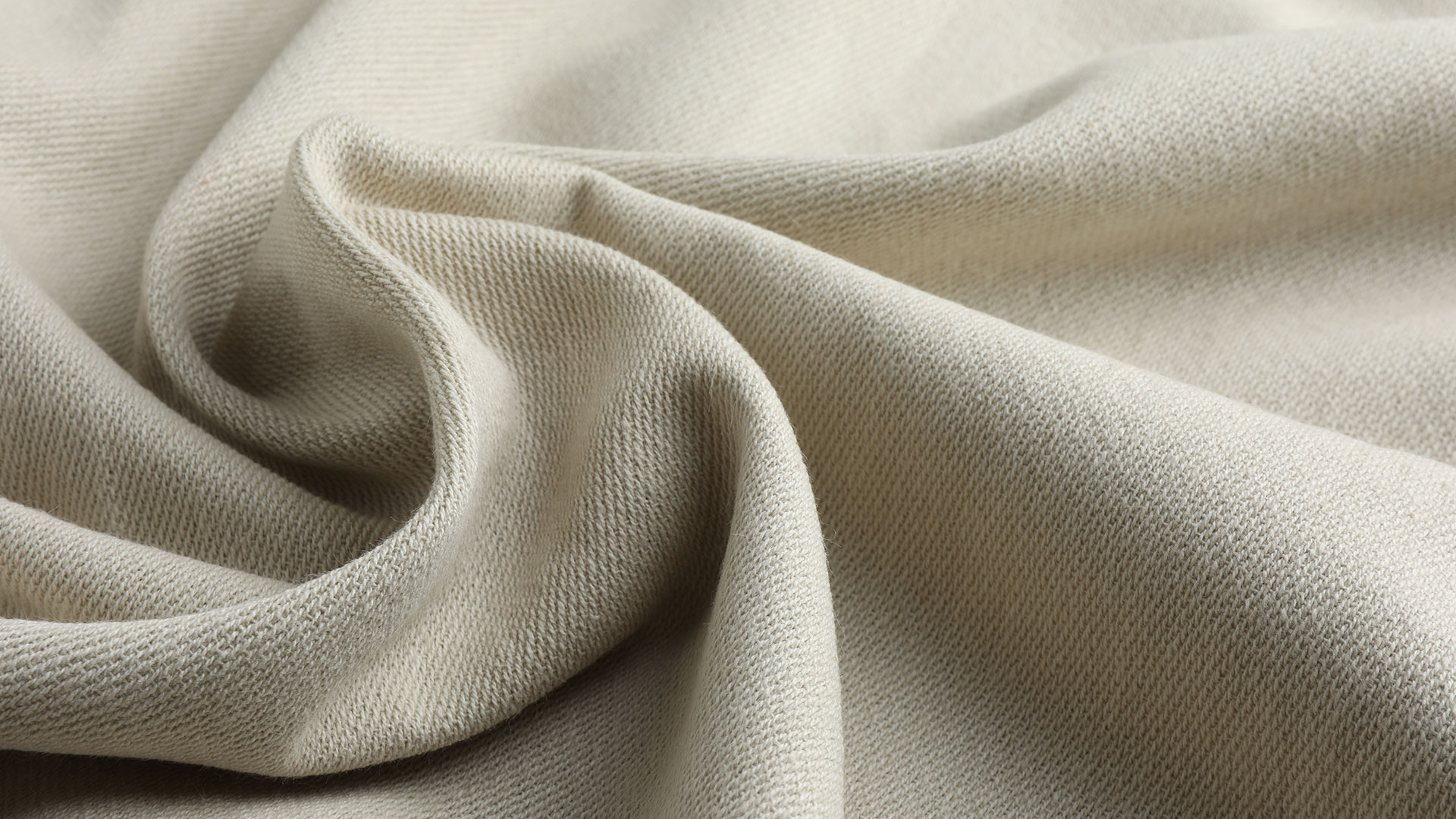
Shaoxing Keqiao Maozan Textile Co., Ltd. produces, processes and supplies knitted fabrics from Keqiao District, Shaoxing, in the industrial cluster around China Light & Textile Industry City. As a Stretch Single Jersey Supplier in China, we build plain-knit jersey on a fine-gauge base with elastane worked into the loop, so the fabric extends with the body and returns to shape rather than bagging out.
Our stretch qualities sit inside the wider Single Jersey family and serve apparel, home textile and garment-accessory programmes that need lightweight, breathable, soft fabric with a body-conforming fit: t-shirts, slim-fit tees, base layers, active-casual tops, children's wear and loungewear.
What Stretch Adds to a Plain Jersey Base
- Better extensibility and elastic recovery than rigid single jersey.
- More freedom of movement in fitted and slim-cut garments.
- Resistance to permanent deformation and knee or elbow bagging.
- Retained lightweight handle, breathability and natural drape.
Stretch jersey is a construction decision rather than a single recipe. The ground yarn carries the hand feel, moisture behaviour and print surface; the elastane content and how it is fed decide the stretch level and how much the garment grows after wear.
Our Knitted Fabric Range and Where Each Family Fits
| Fabric family |
Construction character |
Typical programme fit |
| Stretch Single Jersey |
Plain knit face, elastane in the loop, light to mid weight |
Tees, base layers, loungewear, children's wear |
| Non-Stretch Single Jersey |
Rigid plain knit, stable and dimensionally firm |
Print bases, boxy cuts, linings |
| Polyester Jersey |
Synthetic plain knit, faster drying |
Sportswear, sublimation and performance tops |
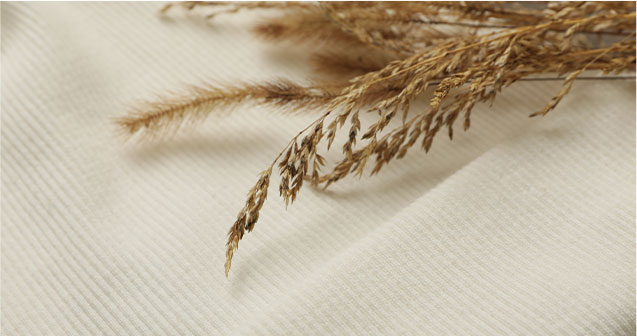
| Rib and Ribbed Stripe |
Alternating wales, high crosswise stretch |
Cuffs, collars, trims, body panels |
| Double-Knit and Interlock |
Two faces, heavier and more opaque |
Structured tops, leggings, uniform pieces |
| Ponte Roma |
Stable double construction with recovery |
Dresses, suiting-look knits, tailored shapes |
| Air-Layer Fabric |
Bonded or sandwiched airy mid-layer |
Warm-up knits, spacer-style panels |
Stretch Single Jersey Qualities We Quote
Our named stretch jersey qualities include Lenzing™ Viscose Stretch Jersey and Cotton Spandex Jersey Fabric, covering the two most common starting points: a soft, fluid viscose surface with a clean drape, and a cotton-rich surface with a drier, more natural touch. Fibre blends, polyester-containing grounds and higher-recovery constructions are configured around the garment's wear cycle.
Where a heavier, more compressive hand is needed, we move the same stretch concept into Cotton-Spandex Interlock Fabric. For quilted or padded looks with loft, Air-Layer Fabric offers a bonded alternative that keeps stretch while adding thickness.
Specifications We Fix Before Bulk Knitting
| Parameter |
What we lock in with you |
| Ground fibre |
Cotton, viscose, modal, polyester or a blend, plus yarn count |
| Elastane content and type |
Content percentage, bare or covered elastane, plated or inlaid |
| Weight |
Grams per square metre on the finished, relaxed fabric |
| Form |
Open width or tubular, and the delivered width tolerance |
| Stretch and recovery |
Directional stretch, growth after cycling, residual extension |
| Dimensional stability |
Shrinkage after the agreed wash routine, spirality allowance |
| Colour and surface |
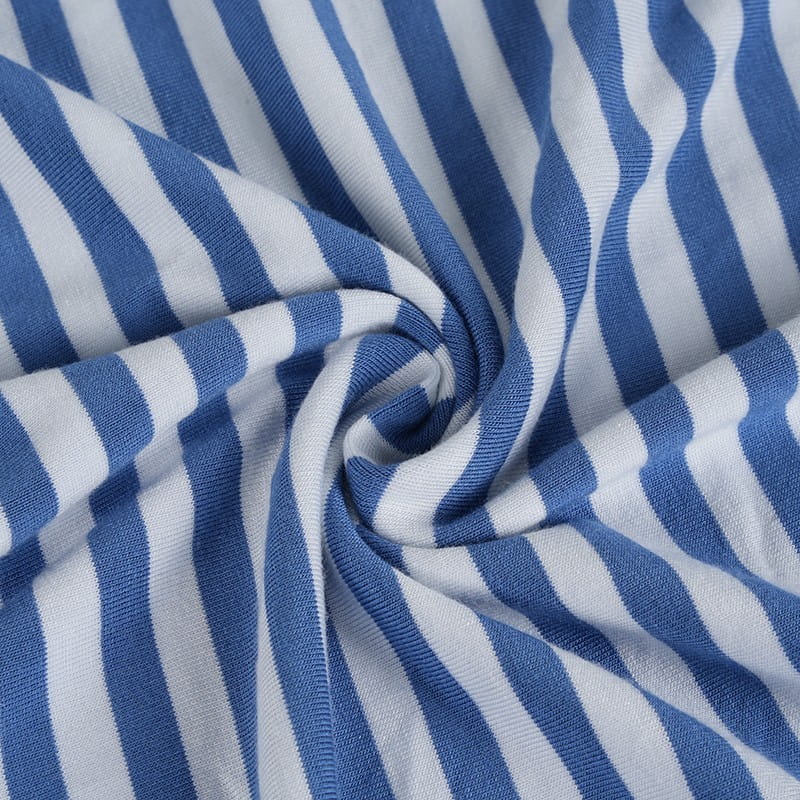
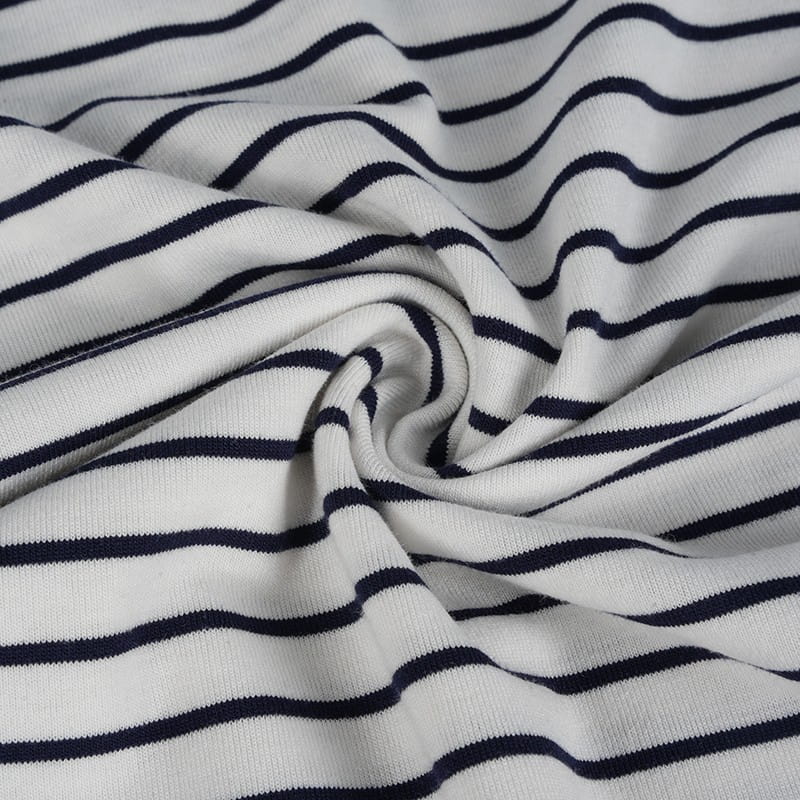
Solid shade or melange, slub, stripe, print-ready greige |
Elastane in fine-gauge stretch jersey is commonly placed in the low single digits to around a tenth of the fibre blend; the exact figure follows the garment's required stretch percentage, not a catalogue default. We agree it alongside the finishing route, because compacting and heat-setting change both recovery and final weight.
Finishing, Hand Feel and Surface Options
- Stentering and compacting to stabilise width and reduce residual shrinkage.
- Silicone or softener finishing to reduce surface friction for base-layer wear.
- Heat-setting for synthetic-rich grounds where dimensional control matters.
- Solid dyeing, yarn-dyed effects, slub and fine-stripe surface design.
- Brushed or peach-touch finishing where a warmer handle is required.
Quality Control, Testing and Acceptance
We run full-process quality management: inspection after each production step, then final inspection of the finished roll against the confirmed specification and the applicable international standard. Our laboratory is equipped for the routine knit-fabric checks that decide whether a stretch jersey ships — weight, width, stretch and recovery, growth, shrinkage, spirality, colourfastness and surface appearance.
Acceptance criteria are written into the order confirmation before knitting starts, so both sides measure the same way. OEKO-TEX certified fabric options are available across our range for programmes with restricted-substance requirements.
Information We Use to Configure Your Solution
- Garment type, cut and the stretch direction the pattern relies on
- Target finished weight and delivered width, open or tubular
- Ground fibre preference and elastane content expectation
- Reference sample, swatch or previous quality we should match
- Shade standard and colourfastness requirement
- Wash, dry and care routine the garment will carry
- Order quantity per quality and per colour, with repeat potential
- Packing form, roll length preference and shipping-mark details
Sampling, Customization and Repeat Supply
We provide OEM and ODM customization: we can develop from your garment brief or work from an existing swatch, and we support small-batch sampling so the hand feel, stretch and shade are proven before bulk. Confirmed qualities are held for quick re-orders, which suits programmes that run the same jersey across several colour stories.
Each order is documented with the agreed specification, inspection record and packing list, and we handle production through to export from our Keqiao base.
Frequently Asked Questions
Which fibres can the stretch single jersey be built on?
Cotton, viscose, modal and polyester grounds are all knitted with elastane in our stretch programme, individually or as blends. Lenzing™ Viscose Stretch Jersey and Cotton Spandex Jersey Fabric are two of the qualities we quote most often, and we select between them on the required hand feel, drape and wear cycle.
How do you decide the elastane content?
It follows the garment's stretch demand, the fabric weight and the finishing route. Fitted base layers and slim tees generally need higher recovery than loose loungewear, so we agree a stretch percentage and growth limit first and then set the elastane content and knitting parameters to reach it.
Can you match a shade or a previous quality we already buy?
Yes. Send a swatch, a garment reference or the previous specification, and we knit a development sample against it. Shade is matched to your standard under the agreed light source, and the matching record is kept with the order for the repeat run.
What inspection does a stretch jersey order carry?
Inspection is applied after each process step and again on the finished roll. Depending on the confirmed specification, checks cover weight, width, stretch and recovery, growth, shrinkage, spirality, colourfastness and visible surface defects, measured against the criteria in the order confirmation.
Do you support small development quantities?
We run small-batch sampling as part of our flexible service model, so a new stretch quality can be proven at development scale before a bulk commitment. Once the quality is signed off, we hold it for quick re-orders across later colour and size programmes.
How quickly do you respond to a stretch jersey enquiry?
Enquiries received on weekdays are answered within 12 hours. Sending the garment type, target weight, fibre preference and order quantity together lets us come back with a concrete construction proposal rather than a general reply.