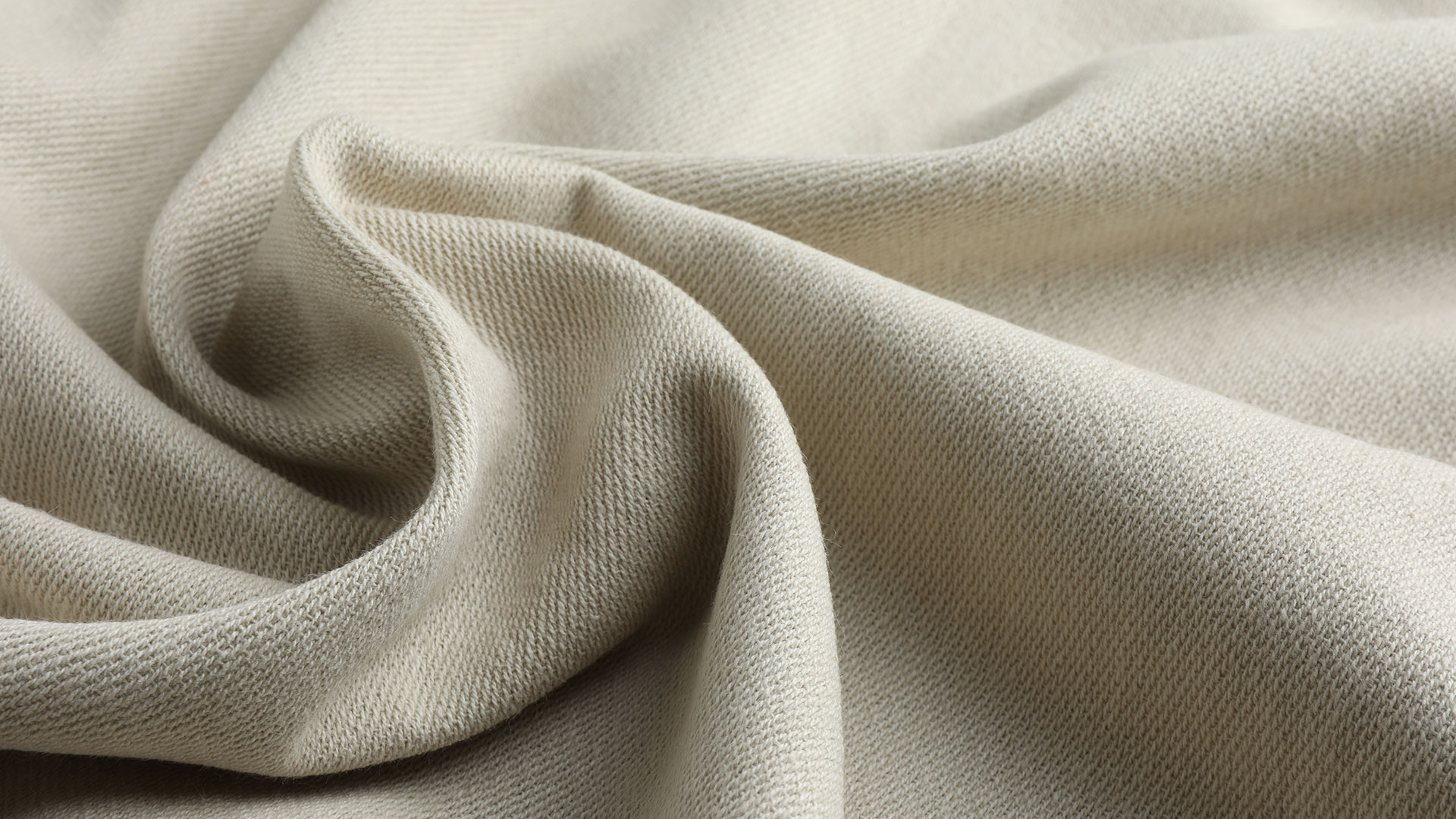
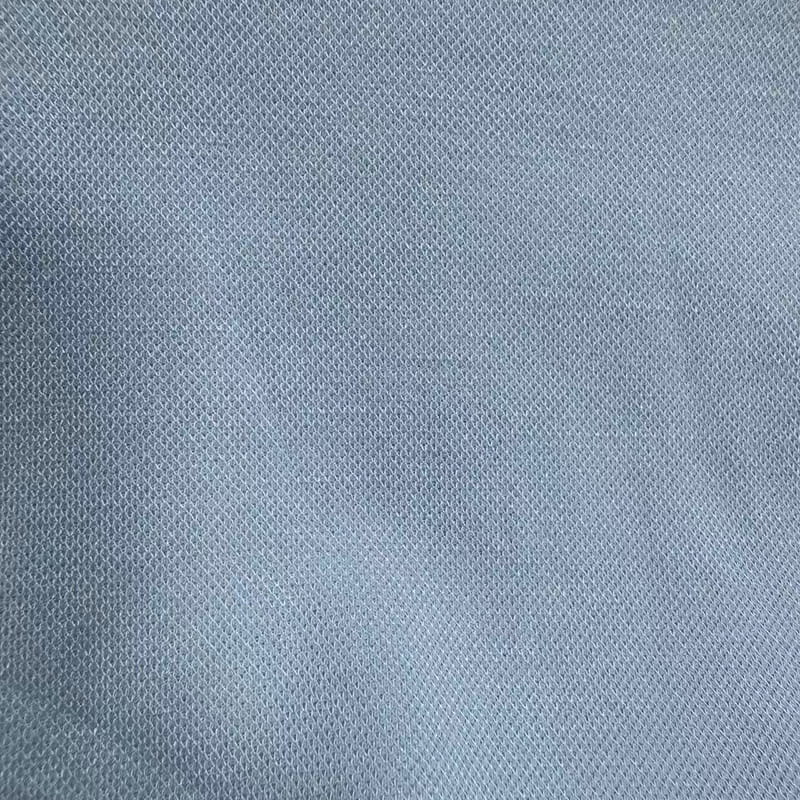
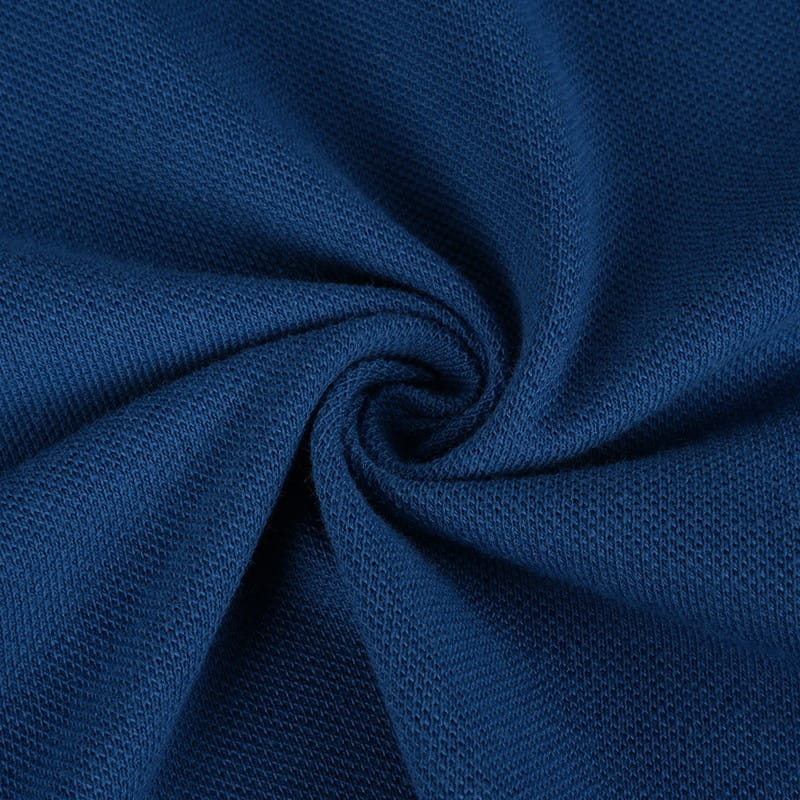
Pique is a type of knit fabric characterized by a textured surface featuring small, raised patterns; it offers a crisp, structured look. Its structure ensures good breathability—preventing a stuffy feel during wear—while providing excellent structural integrity, resulting in garments that maintain a clean, sharp silhouette.
Key advantages of this fabric include superior breathability, high structural stability, and a premium, textured appearance. Compared to standard single jersey, pique offers greater visual depth and resists sagging, effectively holding the garment's shape. With a dry, crisp hand-feel, it is ideal for spring and summer wear, as well as for daily commuting and casual settings.
Pique is commonly used for products such as polo shirts, casual T-shirts, business-casual tops, school uniforms, and team apparel. When used for polo shirts, it accentuates the collar and overall fit, giving the garment a structured, stylish look suitable for casual wear, office attire, and branded uniforms.
About Us
Shaoxing Keqiao Maozan Textile Co., Ltd.
We are a professional Pique Knit Fabric Manufacturer in China, specializing in the production, processing, and supply of a wide range of apparel fabrics and related textile materials. As a specialized Custom Stretch Pique Fabric Factory, we provide flexible ODM/OEM customization services to meet the diverse needs of our customers.
Our products are widely used in apparel, home textiles, garment accessories, and other textile applications. Located in Shaoxing Keqiao, home to China Textile City, we leverage the region’s strong textile industry cluster and well-established supply chain to provide reliable raw materials, quality finished products, and stable supply services to customers worldwide.
With a commitment to quality, flexibility, and customer satisfaction, we strive to build long-term partnerships by delivering tailored textile solutions that meet different market demands.
Direct Answer: What Defines a Good Knitted Fabric
A good knitted fabric is defined by a controlled loop structure, a stable finished weight and a verified response to washing and stretching. The visi...
Short Answer: How to Select Knitted Textile Fabrics For Apparel
The right knitted textile fabrics for apparel are chosen by matching four variables to the garment: structure, fiber blend, weight and ...
Direct Answer: Which Knitted Textile Fabrics Work for Apparel?
Single jersey, rib, interlock, pique and fleece cover most apparel programs, and the right choice depends on three decisions: the stretc...
The company focuses on the knitted textile sector, specializing in the production and processing of various knitted fabrics as well as the sale of raw materials. Its products are widely used in appare...
Pique fabric is a knitted textile with a small, raised pattern on the surface, usually in the form of diamonds or a fine honeycomb. The pattern is created by tuck stitches, in which a needle holds a loop and takes a second yarn before releasing both. This category page covers the piqu-fabric products used for polo shirts, sports shirts, school and work uniforms and casual tops. It describes the structure, the main types, breathability, weight selection for polo shirts, application points and the way custom development is organized.
Summary: pique knit is chosen for polo shirts because the textured surface holds its shape, resists edge curling and allows air to move through the fabric. Typical finished weights run from 160 to 260 GSM, and common fibers include cotton, cotton-polyester blends and polyester. A pique fabric for polo shirts manufacturer usually asks for four details at the start: fiber content, weight, pattern type and finish.
(1) Core Properties at a Glance
Textured surface that hides small marks and gives the garment a defined appearance.
Open structure at the tuck points, which supports airflow through the fabric.
Firm body with low edge curl, which suits collars, plackets and cuffs.
Moderate stretch, with recovery that improves when elastane is added.
2. Structure and Working Principle
Pique is knitted on circular machines with two sets of needles. In a plain jersey, every needle forms a new loop in every course. In pique, some needles skip the loop and hold the yarn instead, which is the tuck. The tucked yarn gathers the surrounding loops and lifts them slightly, and repeating this at regular positions forms the diamond or honeycomb pattern. The diagram below shows the surface pattern on the left and the arrangement of knit and tuck positions on the right.
The left panel shows the diamond pattern that gives pique its name for the textured surface. Each diamond is a small raised area, and the darker lines between the diamonds are the gathered rows between tuck points. The right panel shows how knit loops and tuck stitches alternate across wales and courses, with each tuck placed between knit loops in a staggered order. This staggered arrangement produces the diagonal pattern on the surface. The tucked yarn also takes up fabric width, so pique is firmer and a little thicker than jersey of similar yarn. The pattern repeat, the yarn count and the machine gauge set the size of the diamonds and the depth of the texture, and these values can be changed during development to produce finer or bolder surfaces.
(1) Yarn and Finishing
Combed cotton yarn gives a clean surface and an even pattern. Mercerizing, singeing and enzyme polishing improve luster, reduce surface fibers and lower pilling. For sports shirts, polyester yarn with a moisture transport finish is common, since it dries quickly and holds color.
3. Common Types and Features
Pique fabric is made in several constructions and fiber variants. The table below lists the types that appear most often in orders placed with a Custom Pique Fabric Factory. Values are typical ranges and can be adjusted during development.
Common pique knit types with fiber, typical weight, main feature and application.
Type
Typical Fiber
Typical GSM
Main Feature
Application
Single pique
Cotton or cotton blends
160 to 210
Lighter weight, fine texture
Summer polo shirts
Double pique
Cotton or cotton-polyester
200 to 260
Firm body, defined pattern
Uniforms, workwear polos
Polyester pique
Polyester
150 to 200
Quick drying, stable color
Sports shirts, team wear
Stretch pique
Cotton or polyester with 3 to 5 percent elastane
180 to 240
Added recovery
Fitted polos, golf shirts
Mercerized cotton pique
Treated cotton
190 to 240
Smoother surface, luster
Dress polos, business wear
The table shows that weight and use move together. Single pique at 160 to 210 GSM suits warm-weather polos, and double pique at 200 to 260 GSM suits uniforms that must keep a neat appearance after many washes. Polyester pique is the usual route for sports shirts, and stretch pique serves fitted styles. A buyer sending an inquiry to a pique knit fabric manufacturer for polo shirts should name the type, the fiber and the target weight together, since these three values narrow the options quickly.
4. Breathability and Wear Behavior
Polo shirts are worn for long periods, often outdoors or in warm indoor settings, so air movement through the fabric matters. The textured surface of pique lifts part of the fabric away from the skin, and the open areas at the tuck points allow air to pass. The horizontal bar chart below compares a relative air permeability index for five knit structures, where single jersey is set to 100.
The chart shows that pique reaches an index of 88, which places it close to single jersey and well above interlock, French terry and brushed fleece. Single jersey is the reference at 100 because it has a single thin layer with no tuck structure. The drop from 100 to 88 reflects the extra yarn held in the tuck points, which adds some resistance to airflow while keeping the fabric open. Interlock scores 72 because its two joined layers form a denser body, and fleece scores 45 because of its brushed pile. For a polo shirt worn in warm conditions, the position of pique near the top of the chart explains why it is used in place of heavier knits. Pique also keeps a firmer shape than single jersey, so the garment holds its collar and placket without extra interlining. A product team can use the chart as a first filter and then confirm the values with a test on the finished fabric.
(1) Moisture Handling by Fiber
Cotton pique absorbs moisture and feels natural on the skin, and it dries more slowly than polyester. Polyester pique moves moisture along the surface and dries quickly, which suits sports use. Cotton-polyester pique balances both effects, and it is a common choice for uniforms that need to keep their shape and dry within a reasonable time after washing.
5. Weight Selection for Polo Shirts
Weight shapes how a polo shirt hangs, how much it shows through and how well the collar holds its shape. A low weight suits warm weather and active use, and a higher weight suits uniforms and cooler seasons. The column chart below shows typical weight targets for five polo categories.
The chart shows a rise from 170 GSM for performance polos to 250 GSM for heavyweight polos, a difference of 80 GSM. Performance polos use polyester pique at the low end, since quick drying and low weight matter more than body. Standard cotton polos sit near 210 GSM, which balances airflow and shape. Uniform polos use 230 GSM, because they are washed often and need to keep a neat collar and placket. Heavyweight polos near 250 GSM suit cooler seasons and garments that need more structure. Product teams can use these values as a starting draft and adjust them after fit samples and wash tests, with attention to the climate of the target market.
(1) Width and Cutting
Pique is commonly supplied as tubular fabric or in open width at finished widths between 150 and 180 cm. Because the pattern has a visible direction, pattern pieces should be cut with the same orientation across the garment so that the diamonds line up at seams and across the chest.
6. Applications and Selection Points
(1) Polo Shirts
Polo shirts are the main use of pique knit. The fabric supports collars and plackets, and the textured surface keeps its appearance after wear. Selection points include shrinkage after washing, pilling grade, color fastness to washing and the match between body fabric and collar and cuff rib.
(2) Sportswear and Team Wear
Polyester and stretch pique are used for golf shirts, tennis shirts and team polos. Selection points include moisture transport, recovery after stretch and the behavior of printed logos on the textured surface.
(3) Uniforms and Workwear
School, hospitality and corporate uniforms use double pique or cotton-polyester pique because the fabric keeps its shape and hides small marks. Selection points include color consistency across lots, abrasion behavior and the ability to repeat the same fabric over several seasons.
(4) Selection Checklist
Name the garment, the season and the target market.
Choose the type: single pique, double pique, polyester pique, stretch pique or mercerized cotton pique.
State fiber content and any elastane share.
Set target GSM and finished width.
List test items for shrinkage, pilling and color change.
Confirm color references, sampling steps and the delivery window.
7. Customization and Supply Model
Custom development of pique starts with a brief that names the garment, the type, the fiber, the weight and the finish. The factory prepares a knitting plan, runs a trial, dyes and finishes the fabric, and sends a sample for approval. After approval, the same settings carry into bulk production, and records for each lot support repeat orders. A China ODM Pique Fabric Factory can also propose base fabrics from its own development library, which shortens the path from design idea to approved fabric.
(1) Shaoxing Keqiao Maozan Textile Co., Ltd.
Shaoxing Keqiao Maozan Textile Co., Ltd. produces, processes and supplies apparel fabrics and related textile materials, and it offers flexible ODM and OEM customization. The company is located in Shaoxing Keqiao, home to China Textile City, where yarn, dyeing, finishing and logistics services operate close to each other. Buyers who look for a Pique Fabric Manufacturer in China or a pique fabric supplier China can discuss type, fiber, weight and finishing in one conversation. The company also supplies fabrics for apparel, home textiles and garment accessories, so a brand can coordinate pique body fabric with rib collars and cuffs from one source.
(2) Why Location Supports Development Speed
A Pique fabric factory in China located inside a textile cluster can move a sample between knitting, dyeing and finishing partners in a short time. If a color needs a second lab dip or a finishing step needs a trial, the material travels in a day instead of a week. Steady yarn supply in the same area also helps keep color and weight consistent across lots, which supports repeat orders for uniform programs.
8. Cutting, Sewing and Care Guidance
(1) Cutting and Sewing
Relax the fabric on the cutting table for several hours before cutting, and spread it with low tension.
Keep the pattern direction consistent across all pattern pieces.
Use ballpoint needles and stretch stitches such as overlock or coverstitch for body seams.
Interline collars and plackets as the design requires, and match rib color to the body fabric under the same light.
Press with moderate heat and steam through a cloth to avoid flattening the texture.
(2) Washing and Storage
Machine washing at 30 to 40 degrees Celsius with similar colors is a common instruction for cotton and cotton-polyester pique garments. Turning garments inside out protects the surface, and drying at low heat or flat helps the fabric keep its dimensions. Rolls should be stored horizontally on racks, away from direct sunlight and damp areas, and kept in their wrapping until cutting.
9. Frequently Asked Questions About Pique Fabric
Q1: What is pique knit fabric?
Pique knit is a textured knitted fabric with a small diamond or honeycomb pattern made by tuck stitches. It is firmer than single jersey, resists edge curling and allows air to pass. It is used mainly for polo shirts, sports shirts and uniforms.
Q2: Which GSM suits polo shirts?
Polo shirts commonly use 170 to 250 GSM. Performance polos sit near 170 GSM, standard cotton polos near 210 GSM and heavyweight or uniform polos between 230 and 250 GSM. A fit sample in two weights shows how the collar and body hang before bulk planning.
Q3: How does pique differ from single jersey?
Single jersey has a smooth face and tends to curl at cut edges. Pique has a textured face, a firmer body and lower edge curl, so it supports collars and plackets more easily. Single jersey has a higher air permeability index, and pique stays close to it while holding shape better.
Q4: Can pique fabric be customized in color, pattern and blend?
Yes. Fiber blend, weight, pattern size, color and finish can be set during development. Color is matched through lab dips against a reference sample, and the pattern size is set by the knitting plan. Yarn-dyed stripes can be added for sports and fashion polos.
Q5: What information should an inquiry include?
An inquiry should name the garment, the pique type, fiber content, target GSM, finished width, color reference, estimated quantity and delivery window. A reference sample or photograph helps the factory match the surface pattern directly. Test items and limits can be listed at the same time so that sampling and testing follow one plan.
Q6: How should pique polo shirts be washed?
Wash at 30 to 40 degrees Celsius with similar colors, turn garments inside out, avoid bleach, and dry at low heat or flat. Press with moderate heat through a cloth. These steps help the fabric keep its texture, color and dimensions through repeated washing.