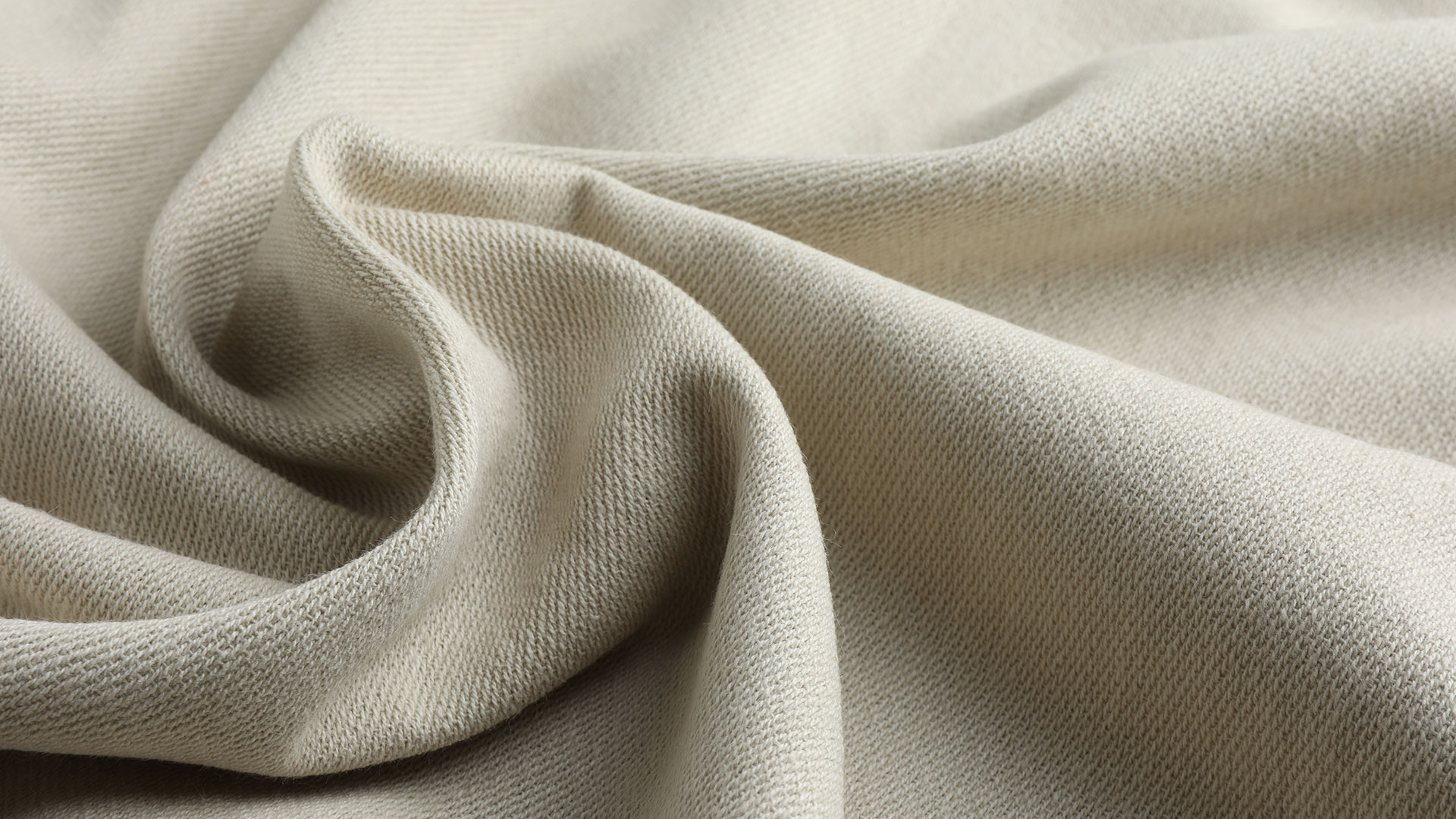
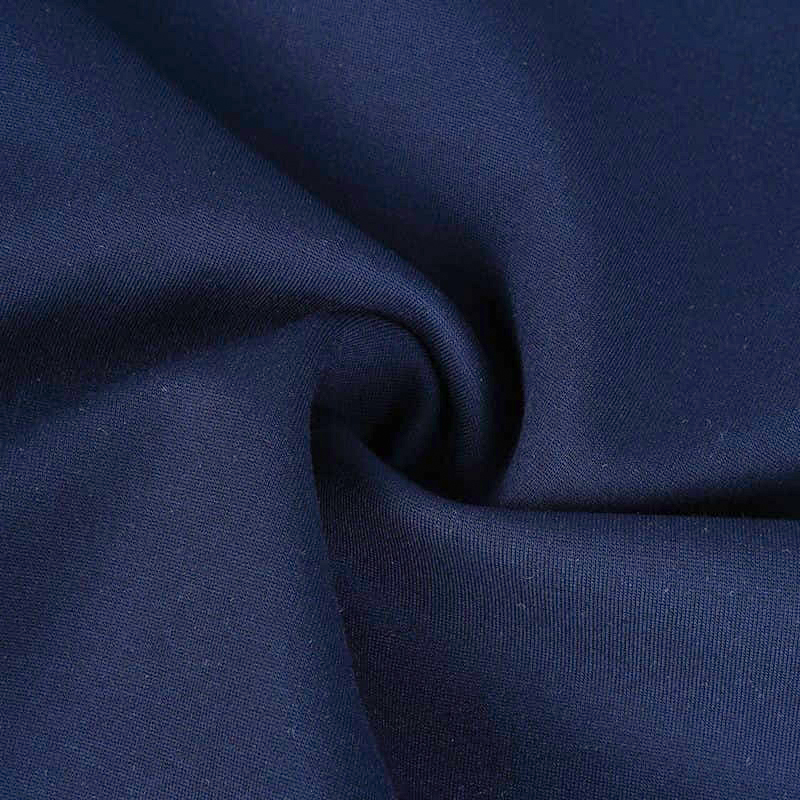
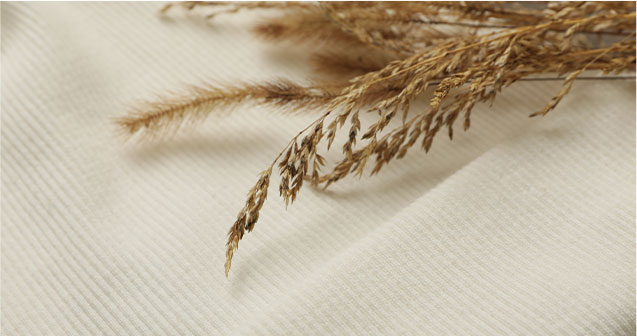
Ponte Roma Fabric (often simply called "Ponte") is a type of knit fabric characterized by a tight structure and a smooth surface, offering excellent structural integrity and support. Compared to standard knits, it feels more substantial and refined, with a smooth hand-feel; garments made from it resist sagging and effectively maintain their silhouette.
Key advantages of this fabric include excellent shape retention, wearing comfort, and versatility. It offers a degree of stretch, ensuring freedom of movement without feeling restrictive, while balancing good drape with structural stiffness—resulting in clean, sharp lines when tailored into trousers. Its smooth, fine texture ensures comfort for daily wear and makes it an ideal choice for garments where a premium look and feel are desired.
Ponte Roma Fabric is suitable for a variety of items, including casual trousers, straight-leg pants, wide-leg trousers, workwear/commuter pants, skirts, and smart-casual attire. When used for trousers, it enhances the fit and structure, giving the garment a crisp, well-defined look suitable for commuting, leisure, and everyday wear.
About Us
Shaoxing Keqiao Maozan Textile Co., Ltd.
We are a professional Roman Stretch Fabric Manufacturer in China, specializing in the production, processing, and supply of a wide range of apparel fabrics and related textile materials. As a specialized Ponte Roma Knit Fabric Factory, we provide flexible ODM/OEM customization services to meet the diverse needs of our customers.
Our products are widely used in apparel, home textiles, garment accessories, and other textile applications. Located in Shaoxing Keqiao, home to China Textile City, we leverage the region’s strong textile industry cluster and well-established supply chain to provide reliable raw materials, quality finished products, and stable supply services to customers worldwide.
With a commitment to quality, flexibility, and customer satisfaction, we strive to build long-term partnerships by delivering tailored textile solutions that meet different market demands.
Direct Answer: What Defines a Good Knitted Fabric
A good knitted fabric is defined by a controlled loop structure, a stable finished weight and a verified response to washing and stretching. The visi...
Short Answer: How to Select Knitted Textile Fabrics For Apparel
The right knitted textile fabrics for apparel are chosen by matching four variables to the garment: structure, fiber blend, weight and ...
Direct Answer: Which Knitted Textile Fabrics Work for Apparel?
Single jersey, rib, interlock, pique and fleece cover most apparel programs, and the right choice depends on three decisions: the stretc...
The company focuses on the knitted textile sector, specializing in the production and processing of various knitted fabrics as well as the sale of raw materials. Its products are widely used in appare...
1. Ponte-de-Roma and Ribbed Fabric Category Overview
Ponte-de-roma and ribbed fabric are two knitted structures that sit at opposite ends of the stretch and stability range. Ponte-de-roma is a double knit fabric with a firm body, a smooth face and low stretch, and it is widely used for dresses, skirts, trousers and jackets. Ribbed fabric is formed by alternating columns of loops on the face and the back, which gives vertical ridges and strong width-wise stretch, and it is used for fitted dresses, tops, cuffs and collars. This category page describes both structures so that product developers can compare them and decide which one fits a given garment.
Summary: ponte-de-roma suits dresses that need a held shape and a clean line, with typical weights from 240 to 380 GSM. Ribbed fabric suits dresses and tops that follow the body, with typical weights from 180 to 300 GSM and width-wise stretch that can exceed 100 percent under standard load. Buyers who contact a ponte roma fabric manufacturer or a rib knit fabric manufacturer usually start from the garment silhouette, since the silhouette points to one structure or the other.
The sections that follow cover structure, fiber types, stretch behavior, recovery after repeated use, weight selection, suitability for dress styles, customization and care. Several charts are included, and each chart is followed by a written explanation. The page is written for sourcing teams, fashion brands and garment factories that compare a ponte roma fabric for dresses supplier against technical requirements before they request samples.
Ribbed fabric: fitted midi dresses, bodycon dresses, knit sets, long sleeve tops, cuffs, neckbands and waistbands.
Combined use: a ponte body with rib trims, which pairs a stable panel with a stretch edge.
2. Structure and Working Principle
Ponte-de-roma is knitted on double jersey circular machines, and its structure is built on the interlock principle, in which two layers of loops are joined so that the face and the back look alike. The joined layers give the fabric thickness and a firm response when it is handled, and the surface stays flat and even. Yarn blends of viscose, polyester and a small share of elastane are common, and the blend sets the drape, the recovery and the surface finish.
Ribbed fabric is also a weft knit, but its loops are arranged in vertical columns called wales that alternate between the face and the back of the fabric. In a 1x1 rib, one face wale is followed by one back wale. In a 2x2 rib, two face wales are followed by two back wales. The alternating columns allow the fabric to draw together in its relaxed state and to open up when it is pulled across the width. The diagram below shows the surface pattern of both rib types.
The diagram shows how the wale sequence defines each rib type. The 1x1 rib on the left alternates one dark face wale with one light back wale, which gives a fine, even ridge. The 2x2 rib on the right groups two wales of each kind, which gives a wider ridge and a more defined texture. When the fabric is relaxed, the back wales sit partly behind the face wales, and the surface looks narrower than the width of the knitted loops. When the fabric is pulled across the width, the hidden wales open and the fabric extends. This mechanism explains why rib fabrics can extend by more than 100 percent and still return toward their original width.
(1) Stability of Ponte-de-Roma
The joined layers of ponte-de-roma limit how far the fabric extends and how much it distorts under load. Cutting is simple because the edges lie flat, and seams keep a clean line. This stability makes the fabric suitable for garments that carry darts, pleats, zips and lining, which are common in dresses and skirts.
(2) Elasticity of Ribbed Fabric
Ribbed fabric forms to the body and adjusts to movement without relying on darts or shaping seams. A small amount of elastane increases recovery and helps garments hold their measurements through wear. The vertical ridges also draw the eye along the length of the garment, which is a design choice for dresses and knit sets.
3. Common Types and Features
Both structures are produced in several variants, and the differences affect weight, drape and the way the fabric behaves during sewing. The table below lists the variants that appear most often in orders placed with a Custom Ponte-De-Roma Fabric Factory or a Custom Ribbed Fabric Factory. Weight ranges are typical and can be adjusted during development.
Common ponte-de-roma and rib knit variants with typical fiber, weight range, feature and use.
Variant
Typical Fiber
Typical GSM
Main Feature
Common Use
Standard ponte-de-roma
Viscose, polyester, elastane
280 to 340
Firm body, flat face
Dresses, skirts, trousers
Lightweight ponte
Polyester, viscose blends
240 to 280
Lower weight, fluid drape
Dresses, tops
Heavyweight ponte
Polyester, viscose, elastane
340 to 380
Structured body
Jackets, coats, trousers
1x1 rib
Cotton, viscose, polyester blends
180 to 240
Fine ridge, high stretch
Tops, fitted dresses
2x2 rib
Cotton or viscose with elastane
220 to 300
Wide ridge, strong recovery
Midi dresses, knit sets
Wide or jacquard rib
Blends with patterned yarn
240 to 320
Textured pattern
Fashion tops, cardigans
The table shows that ponte-de-roma occupies the middle and upper weight range, while rib fabrics sit lower. Weight alone does not decide the choice, since a 260 GSM rib and a 260 GSM ponte behave very differently under tension. A request sent to a China ODM Ponte-De-Roma Fabric supplier should therefore name the structure, the fiber blend and the weight together, and a request sent to a China ODM Ribbed Fabric Factory should name the rib type, the yarn count and the elastane content.
(1) Fiber Blends for Ponte-de-Roma
A blend of viscose, polyester and elastane is typical, with viscose adding drape, polyester adding shape retention and elastane adding recovery. Raising the polyester share improves wrinkle resistance and dimensional stability, while raising the viscose share increases the fluidity of the drape. Elastane content between 3 and 6 percent is common for garments that need some give at the waist and hip.
(2) Fiber Blends for Ribbed Fabric
Cotton, viscose and polyester blends all appear in rib programs. Cotton gives a natural look and good moisture absorption, viscose gives a smooth surface and a fluid drop, and polyester gives shape retention and fast drying. Elastane at 3 to 8 percent is a common addition for fitted dresses and tops, since it improves recovery and reduces bagging.
4. Width-wise Stretch Compared
Stretch is the property that separates ponte-de-roma from ribbed fabric most clearly. A designer who knows the stretch of each fabric can decide whether a garment needs zips and darts or can be pulled on. The lollipop chart below shows typical width-wise extension at a standard load for five fabrics, with each stem running from zero to the measured value.
The chart shows a wide separation between the two structures. Standard ponte-de-roma extends about 35 percent across the width, and adding elastane raises this to about 55 percent. The 1x1 rib reaches about 90 percent, and the 2x2 rib with elastane reaches about 125 percent, which is more than three times the value for standard ponte. A garment with set-in sleeves, a zipped back or a tailored waist suits the lower values on the chart, since the fabric holds the pattern shape. A garment that is pulled over the head or worn close to the body suits the higher values, since the fabric adapts to the body without extra openings. Product teams should state the required stretch in percent at a defined load so that the supplier can match the structure and the elastane content to the target.
5. Recovery After Repeated Stretching
Stretch tells a developer how far a fabric extends, and recovery tells a developer how well it returns. A fabric that stretches and does not return will bag at the elbows, the knees and the seat, and the garment will lose its measurements in a short time. The line chart below tracks recovery as a percentage of original width over repeated stretch cycles for ponte-de-roma, a plain rib and a rib with elastane.
The chart shows that all three fabrics lose some recovery in the first ten cycles and then decline more slowly. After 200 cycles the plain rib keeps about 91 percent of its original width, the ponte-de-roma keeps about 95 percent, and the rib with elastane keeps about 97 percent. The result for the plain rib reflects the large extension that this structure undergoes in each cycle, and the elastane addition limits the loss. Ponte-de-roma shows a gentler decline because it extends less in each cycle and returns from a smaller deformation. For dresses that are worn across a long day and washed repeatedly, the rib with elastane and the ponte-de-roma both hold their measurements better than the plain rib. A buyer can use the curve to choose a structure and an elastane level that match the expected wear pattern of the garment.
(1) Heat Setting and Recovery
Heat setting stabilizes both the width and the recovery of fabrics that contain elastane or polyester. If the setting temperature is too low, the fabric continues to relax in use, and if it is too high, elastane can lose strength. A knitted fabric factory records the setting temperature, the dwell time and the speed for each lot, and these records help repeat orders match the approved sample.
6. Weight Selection by Product
Fabric weight shapes how a garment hangs, how much it shows through and how much structure it carries. Dresses need enough weight to drape without clinging, and trousers and jackets need more weight to hold creases and seams. The grouped column chart below compares typical weights of ponte-de-roma and rib fabrics for five product groups.
The chart shows that ponte-de-roma is specified at a higher weight than rib in every product group. For dresses the typical values are 280 GSM for ponte and 230 GSM for rib, a difference of 50 GSM that reflects the firmer body of the double knit. Trousers carry the highest values, with 340 GSM for ponte, since the fabric must hold a crease and resist bagging at the seat. Tops use the lowest values, with 260 GSM for ponte and 200 GSM for rib, because lighter weights suit upper-body garments. The difference between the two structures narrows for knit sets, where both fabrics are used for matching tops and bottoms. A product team can use these values as a first draft and adjust them after fit samples and wash tests.
7. Suitability for Dress Styles
Dress design depends on the relationship between the fabric and the body. Some silhouettes need a fabric that holds its own shape, and others need a fabric that follows the body closely. The heat map below rates the suitability of three fabrics for six dress styles on a scale from 1 to 5, where darker cells indicate a closer match. The ratings are illustrative and based on common design practice.
The heat map shows that ponte-de-roma has the highest rating for sheath and A-line dresses, which depend on a clean line and a held shape. It also rates 4 for wrap dresses and shirt dresses, where collars, ties and plackets need structure. The 1x1 rib has the highest rating for knit midi dresses, since the vertical ridges lengthen the line and the fabric follows the body. The 2x2 rib with elastane has the highest rating for bodycon dresses, since its strong recovery keeps the garment close to the body through wear. Shirt dresses are rated lowest for rib fabrics because collars and buttoned plackets need more stability than rib offers. For a brand that plans a dress range with several silhouettes, the map supports a mixed program that uses ponte-de-roma for structured styles and rib for fitted styles. A buyer looking for custom ponte roma fabric for dresses can match each silhouette to a base fabric and then refine weight, color and finish.
8. Application Scenarios and Selection Points
The same two structures appear in many product groups, and each group has its own technical priorities. The notes below summarize how each fabric is used and what a buyer should specify.
(1) Dresses and Skirts
Ponte-de-roma holds pleats, darts and seams cleanly, and it can be cut with a lining or without one. A ponte roma fabric for dresses supplier normally lists weight, fiber blend, elastane percentage and color range. Selection points include wrinkle recovery, surface pilling grade, color fastness to washing and the match between the fabric and any trim.
(2) Trousers, Blazers and Workwear
Trousers and blazers made from ponte-de-roma look like tailored garments but feel like knitwear in wear. Heavier weights from 320 to 380 GSM hold a crease and resist bagging. Selection points include seat and knee recovery, seam strength and the behavior of the fabric under pressing.
(3) Fitted Tops, Knit Sets and Trims
Rib fabric is used for fitted tops, matching sets, cuffs, collars and waistbands. A rib knit fabric manufacturer supplies full-width fabric for bodies and narrower tubular rib for trims. Selection points include relaxed width, stretched width, recovery after stretching and color match between body fabric and trim.
(4) Selection Checklist
Name the garment, its silhouette and the target season.
Choose the structure: ponte-de-roma, 1x1 rib, 2x2 rib or a patterned rib.
State fiber content and elastane share.
Set the target GSM, finished width and tolerance.
Define stretch and recovery targets at a stated load.
List test items for shrinkage, pilling and color change.
Confirm sampling steps, minimum quantities and the delivery window.
9. Customization and Supply Model
Custom development begins with a brief that states the garment, the structure, the fiber, the weight and the surface. The factory converts the brief into a knitting plan, runs a trial, adjusts the settings and sends a sample for approval. After approval, the same settings are carried into bulk knitting, dyeing and finishing, with records kept for each lot. Many buyers split programs into two paths: a development path for new styles and a repeat path for approved fabrics that return each season.
(1) ODM Development
In an ODM model the factory proposes structures, yarns and finishes from its own development library and adapts them to the buyer's design direction. A China ODM Ponte-De-Roma Fabric partner can offer several weights, blends and surfaces for one dress concept, and a China ODM Ribbed Fabric Factory can offer several rib widths and elastane levels. This model shortens the time from concept to approved fabric because the base structures already exist and only need adjustment.
(2) Shaoxing Keqiao Maozan Textile Co., Ltd.
Shaoxing Keqiao Maozan Textile Co., Ltd. supplies apparel fabrics and related textile materials and offers flexible ODM and OEM customization. The company is based in Shaoxing Keqiao, an area known as China Textile City, where yarn, dyeing, finishing and logistics services operate in close range. Buyers who search for a ponte-de-roma fabric factory in China or a ribbed fabric factory in China can discuss structure, fiber, weight and finishing with the company in one conversation. The same team handles development for dresses, tops, sets and trims, so a brand can coordinate a ponte body and a rib trim from one source and keep color and hand feel aligned.
(3) Matching Body Fabric and Trim
When a garment combines ponte-de-roma and rib, the two fabrics should be dyed in the same lot or checked under the same light sources, since fiber differences can produce small shade changes. A custom rib knit fabric factory and a Custom Ponte-De-Roma Fabric Factory that work from one dye house or one finishing partner reduce this risk. Sending a color standard with the first inquiry also gives the factory a single reference for both fabrics.
10. Cutting, Sewing and Care Guidance
The two structures behave differently on the cutting table and in the sewing room. The guidance below helps garment factories keep dimensions and surface quality through production.
(1) Ponte-de-Roma Handling
Allow the fabric to rest before cutting, and spread it with light tension.
Use sharp needles and moderate stitch length to avoid skipped stitches in dense fabric.
Press seams with steam and a pressing cloth, and check the fiber content before setting the temperature.
Finish hems with a stretch stitch or a blind hem to keep the line of the garment flat.
(2) Rib Fabric Handling
Relax rib fabric on the table for several hours, since it contracts after spreading.
Measure and cut in the relaxed state, and place pattern pieces along the wale direction.
Sew with ballpoint needles and stretch stitches such as overlock or coverstitch.
Avoid pulling the fabric while feeding, since this stretches the loops and distorts seams.
(3) Washing and Storage
Machine washing at 30 to 40 degrees Celsius with similar colors is a common instruction for both structures. Garments with elastane benefit from low heat drying or flat drying, and strong bleach or high heat can affect elastane and color. Rolls should be stored horizontally and kept in their wrapping until cutting, and rib rolls in particular should not be hung vertically for long periods because the weight can stretch the lower end.
11. Frequently Asked Questions About Ponte-de-Roma and Ribbed Fabric
Q1: What is ponte-de-roma fabric?
Ponte-de-roma is a double knit fabric built on the interlock principle, with a smooth face, a firm body and low to moderate stretch. It is usually made from a blend of viscose, polyester and elastane. The fabric is used for dresses, skirts, trousers and jackets that need a held shape.
Q2: How does ribbed fabric differ from ponte-de-roma?
Ribbed fabric has alternating face and back wales, which give vertical ridges and strong width-wise stretch. Ponte-de-roma has joined layers, a flat surface and a firmer response. Rib suits fitted dresses, tops and trims, and ponte suits structured dresses, skirts and trousers.
Q3: Which weight suits dresses?
Ponte-de-roma dresses commonly use 260 to 300 GSM, and rib dresses commonly use 220 to 260 GSM. Lighter weights give more drape, and heavier weights give more structure. A fit sample on a model shows how each weight hangs before bulk planning begins.
Q4: Can the fabric be customized in color, weight and elastane content?
Yes. A custom ponte roma fabric for dresses or a custom rib knit fabric can be developed in solid colors, yarn-dyed stripes, jacquard patterns and several finishes. Weight, width and elastane share are set during the knitting trial, and color is matched through lab dips against a reference sample. Patterned versions need a longer sampling period.
Q5: What information should be included in an inquiry?
An inquiry should name the garment, the structure, the fiber content, the target GSM, the finished width, the stretch target, the color reference, the estimated quantity and the delivery window. A reference sample or a photograph shortens the matching process. Test items and limits can be listed in the same message so that sampling and testing follow one plan.
Q6: How should garments from these fabrics be washed?
Wash at 30 to 40 degrees Celsius with similar colors, avoid bleach, and dry at low heat or flat. Press ponte-de-roma garments with a cloth at moderate temperature, and avoid hanging rib garments for long periods when wet. These steps help the fabric keep its width, shape and surface through repeated washing.