Shaoxing Keqiao Maozan Textile Co., Ltd. is a knitted fabric manufacturer based in Keqiao, Shaoxing, China, operating within the supply cluster around China Light & Textile Industry City. We produce, process and supply cotton waffle fabric as one of the core structures in our knit range, alongside a wider group of knitted apparel and home textile fabrics. Our cotton waffle is developed for base layers, long-sleeve tees, loungewear, children's tops and casual sets, and is supplied through OEM and ODM programmes that include sampling, colour development and repeat bulk orders.
- Cotton-dominant waffle knits with a clear, raised grid on the face
- Plain and stretch versions, including elastane-containing constructions
- Blend options across cotton, CVC and polyester waffle families
- Sampling, lab dip approval and flexible repeat supply
- OEKO-TEX certified fabric options for programmes with restricted-substance requirements
Waffle Structure and Fabric Character
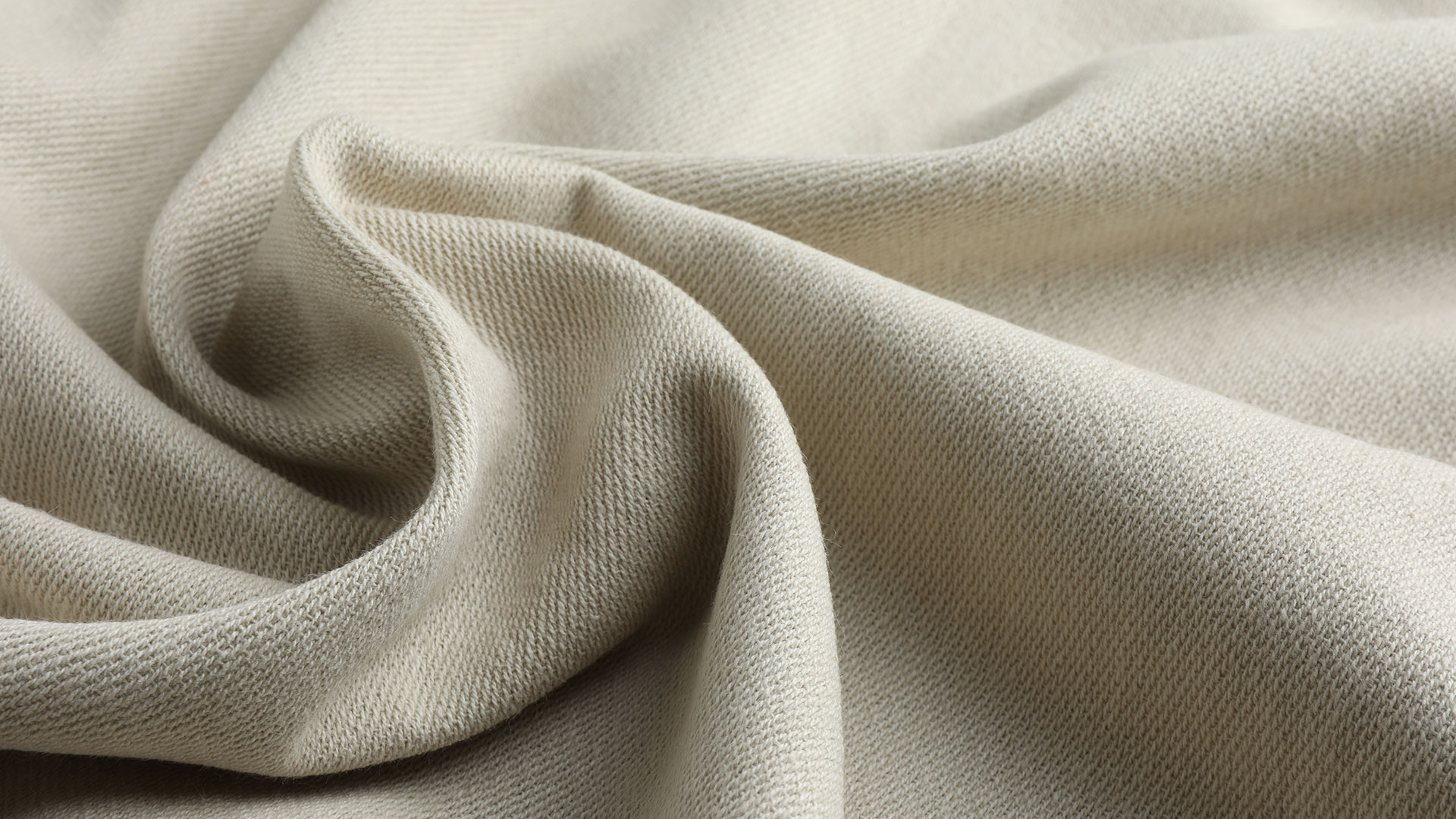
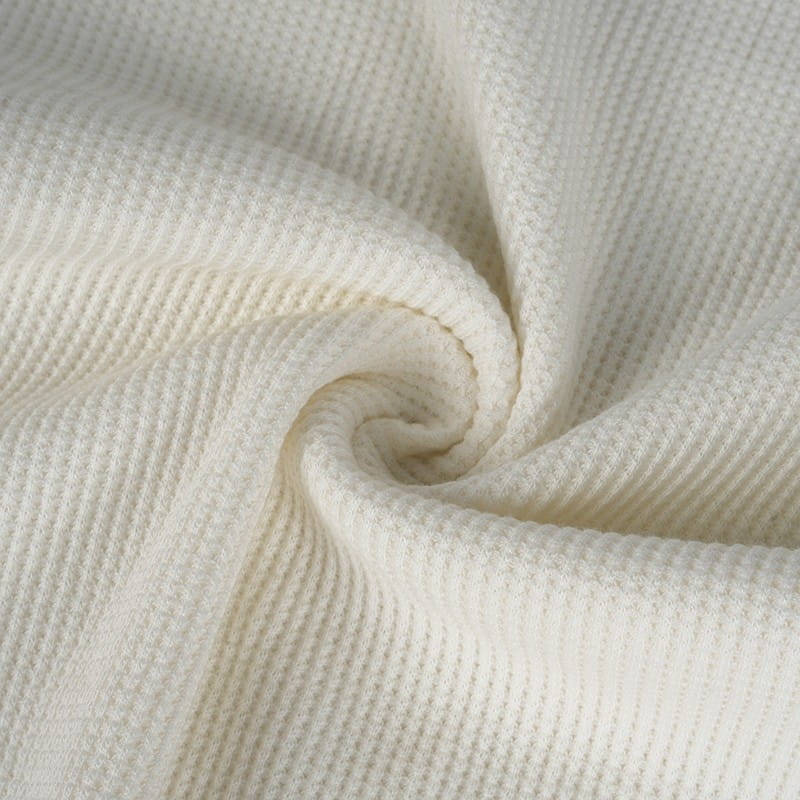
Cotton waffle fabric is knitted from cotton as the main fibre into a waffle structure, so the surface carries a natural grid-like texture rather than a flat face. The concave and convex cells hold a small amount of air between fabric and skin, which is why the hand feel stays soft and comfortable while the cloth still breathes and feels cool and airy in wear.
Cotton contributes the skin-friendly, moisture-absorbent side of the performance, while the waffle grid adds visual depth and a degree of thickness. That combination gives garments a naturally structured look without rigidity, and keeps simple styles visually interesting without printing or heavy finishing.
Our Waffle Range and Where Each Type Fits
Cotton waffle is the cotton-led member of a broader waffle family we run for different price points, care requirements and end uses. The table below shows how we position each type within the range.
| Range |
Fibre direction |
Structure and hand feel |
Typical application fit |
| Cotton Waffle Fabric Supplier |
Cotton-dominant |
Soft cotton face, breathable, clear grid, lightly structured |
Base layers, long-sleeve tees, loungewear, children's tops, casual sets |
| Chunky Cotton Waffle Stretch |
Cotton with elastane |
Bolder cell scale, more body, recovery for close-fit styles |
Cardigans, hoodies, casual layering pieces, sets |
| CVC Waffle Fabric |
Chief value cotton blend |
Cotton-led touch with improved dimensional stability |
Tops, loungewear, childrenswear, volume programmes |
| 100% Polyester Waffle Fabric |
Polyester |
Crisp structure, easy care, quick drying |
Home textiles, throws, accessories, sportswear |
| Custom waffle constructions |
Cotton blends, elastane, viscose blends |
Cell size, weight and finish set per programme |
Private-label ranges and seasonal developments |
Application Fit Across Apparel and Home Textiles
Waffle knits perform best where breathability, texture and a relaxed hand feel matter more than high compression or a smooth, flat surface. We steer construction choices by the end use:
- Base layers and inner wear: cotton-led structures that stay skin-friendly and breathable for daily wear and transitional seasons.
- Long-sleeve tees and casual tops: mid-weight waffle with an even grid that holds shape at the shoulder and hem.
- Loungewear and sleepwear: softer hand feel with air space in the cells for comfort during long wear.
- Children's tops: lightweight, pliable waffle that keeps its natural texture after repeated washing.
- Home textiles and accessories: heavier or polyester-based waffle for throws, towels, cushion and trim applications.
Specifications We Lock In Before Production
Each cotton waffle order is built from a confirmed specification sheet rather than a catalogue number alone. We agree the following points before knitting begins, and they become the reference for sampling, bulk inspection and repeat orders.
| Parameter |
What we confirm |
Effect on the garment |
| Fibre composition |
Cotton content, cotton blend ratio, elastane percentage where stretch is required |
Drives hand feel, absorbency, recovery and cost position |
| Knit structure and cell scale |
Grid size and depth of the raised cells within the waffle repeat |
Sets the visual texture and the air space between fabric and skin |
| Fabric weight |
Weight agreed against the garment type and season |
Determines drape, warmth and whether the piece reads as inner or outer layer |
| Usable width |
Tubular or open-width supply, with usable width stated on the order sheet |
Affects marker planning and cutting efficiency |
| Stretch and recovery |
Plain cotton or cotton with elastane, recovery behaviour checked on finished rolls |
Keeps cuffs, necklines and fitted styles in shape after wear and wash |
| Colour |
Reference submitted as Pantone/TCX or a physical standard, with lab dip approval before bulk |
Supports colour continuity between lots and across repeat seasons |
| Surface finish |
Softness level and how much crisp structure is retained on the face |
Separates a structured cardigan fabric from a soft base-layer fabric |
| Roll form and packing |
Roll length, roll form, bagging and shipping marks |
Simplifies container loading, warehouse handling and lot identification |
Customisation and Flexible Order Models
We work as a Cotton Waffle Fabric Supplier with in-house production and processing, and we take on both OEM and ODM briefs. Beyond the standard cotton, CVC and polyester waffle types, we adjust composition, cell scale, weight, width, stretch and finish to match a target garment, then verify the result through a physical sample before bulk commitment.
Cooperation models are kept deliberately flexible: small-batch sampling for new developments, approved-sample bulk runs, and quick re-orders on styles already in production. Working from Keqiao gives us direct access to yarn, dyeing and finishing resources in the same industrial cluster, which shortens the path from a confirmed brief to a producible fabric.
Quality Control and Acceptance
Quality management runs across the whole process rather than at the end of it. Inspection takes place after each production stage, and finished rolls are inspected against the customer's own requirements and the applicable international standards before packing. Our laboratory is equipped for the routine testing needed to confirm the parameters agreed on the specification sheet.
- Approved sample and specification sheet act as the acceptance reference for bulk
- Stage-by-stage inspection during knitting, processing and finishing
- Final roll inspection for weight, width, colour and surface appearance
- OEKO-TEX certified fabric options available for restricted-substance requirements
- Lot identification retained so a shipment can be traced back to its production batch
Information We Use to Configure Your Solution
To prepare an accurate cotton waffle proposal, we work from the following inputs. The more precisely the end use is described, the more directly we can recommend a construction and sampling plan.
- Garment or product type, and whether it sits against the skin or as a layering piece
- Composition preference, including any cotton content or blend requirement
- Target weight, usable width and whether stretch is needed
- Colour reference in Pantone/TCX or a physical swatch for lab dip
- Order quantity, expected repeat volume and delivery schedule
- Roll length, packing format and shipping marks
- Certification needs such as OEKO-TEX, and any customer test protocol
- Shipping destination and documentation requirements
Packing, Documentation and Delivery Scope
Roll form, roll length, bagging and shipping marks are confirmed per order, and each lot is identified so the same batch can be recognised through packing and delivery. We supply the commercial and shipping documentation required for export orders, and staged delivery can be arranged where a programme calls for it.
Frequently Asked Questions
What is cotton waffle fabric mainly used for?
Our cotton waffle is most often used for base layers, long-sleeve tees, loungewear, children's tops and casual sets. The grid structure keeps it breathable and lightly structured, which suits simple essentials that need texture rather than print.
Can you produce custom weights, colours and widths?
Yes. Weight, usable width, cell scale and finish are set per programme, and colour is matched from a Pantone/TCX reference or a physical standard through lab dip approval. Custom development is handled through our OEM and ODM service.
Do you offer stretch versions of waffle fabric?
We knit cotton waffle with elastane where recovery and a closer fit are needed, including heavier chunky cotton waffle stretch constructions. Plain cotton waffle remains available for styles that should keep a firmer, more structured drape.
How is quality controlled on waffle orders?
Inspection is carried out after each production stage, and finished rolls are checked against the approved sample, the customer's requirements and international standards. Our laboratory supports the testing needed to confirm the agreed specification before shipment.
Are OEKO-TEX certified options available?
We offer OEKO-TEX certified fabric options within our knitted range. Where a programme has restricted-substance requirements, we confirm availability at the quotation stage alongside composition and construction.
How do we start a cotton waffle development?
Send the end use, target composition and weight, width, stretch requirement, colour reference, quantity and packing preference. We review the brief, propose a construction, and move to sampling once the specification is confirmed.