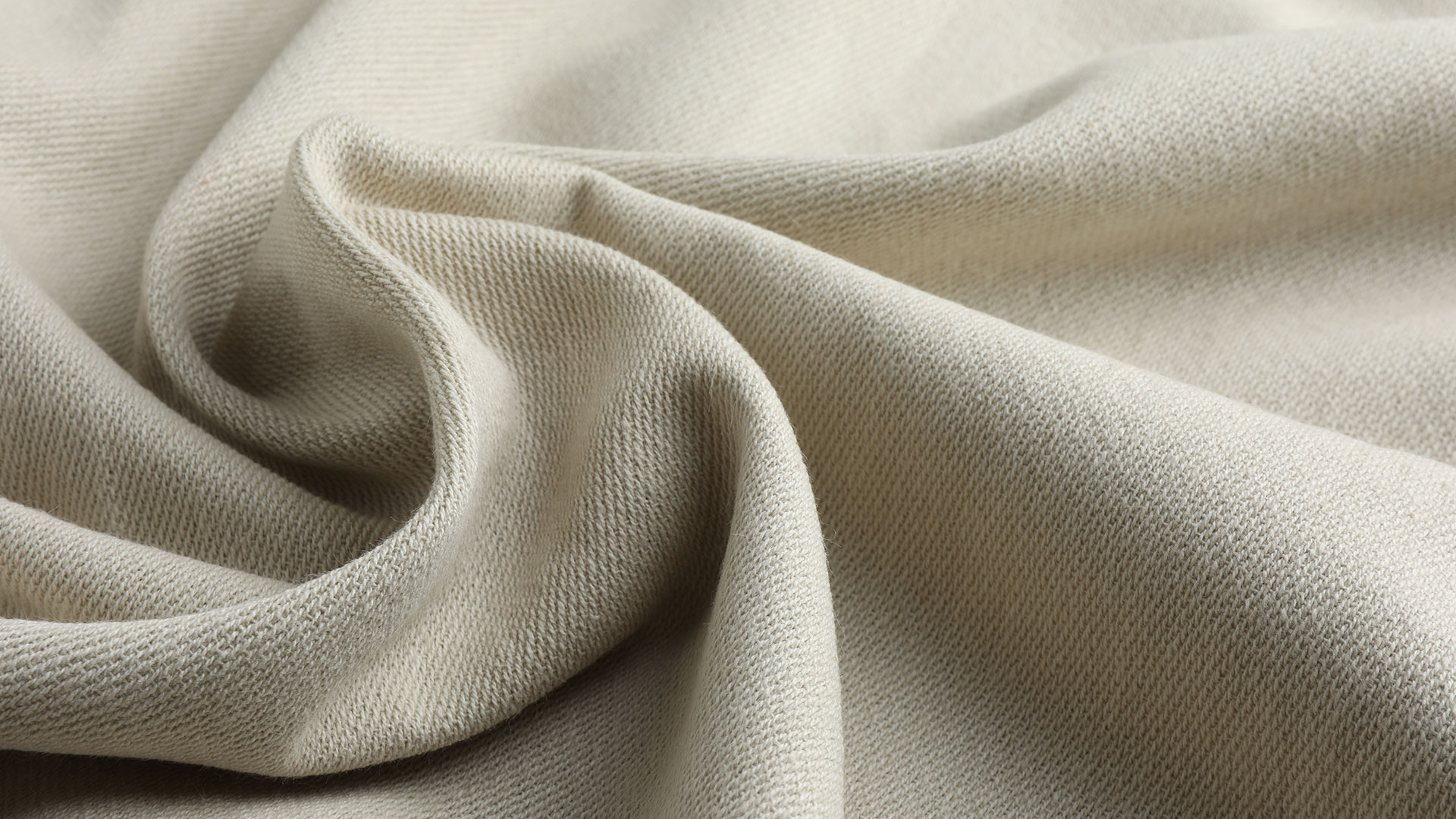

Used in apparel, home textiles & garment accessories.
Dedicated to in-depth expertise and continuous innovation in knitted textiles.
Content
The right knitted textile fabrics for apparel are chosen by matching four variables to the garment: structure, fiber blend, weight and finishing. A T-shirt usually needs a cotton or cotton-blend single jersey at 140 to 180 GSM. A pair of leggings needs a nylon or polyester blend with 8 to 20 percent elastane. A hoodie needs a brushed fleece at 260 to 320 GSM. A dress that must drape needs a viscose or modal blend jersey at 150 to 200 GSM. When these four variables are specified together and confirmed by lab testing, bulk fabric behaves like the approved sample, garments fit consistently and return rates fall.
Apparel brands and garment factories often lose time because the fabric request is too general. A message such as "soft stretch jersey" can describe dozens of different fabrics. This guide gives sourcing teams a more precise way to describe what they need, using data on stretch recovery, drying time, shrinkage, development timelines and quality claims. It also explains how to evaluate a knitted fabric supplier so that sampling, certification and bulk production stay aligned.
Knitted fabrics are built from interlocking loops of yarn. Each loop can open and close under load, which allows the fabric to extend, follow body movement and return toward its original shape when the load is removed. A woven fabric made without elastane may extend only 3 to 8 percent in each direction before the yarns lock, while a typical cotton single jersey can extend 40 to 70 percent across the width and rib structures can extend even further. This difference explains why knitted textile fabrics for apparel dominate categories in which comfort, fit and movement are the primary requirements.
Production efficiency is a second reason. A circular knitting machine can convert yarn directly into tubular fabric, and a flat or warp machine can produce shaped panels or wide stable fabrics in a single step. Fewer processing stages mean that a knitted textile fabrics manufacturer can respond to color changes, yarn changes and small trial quantities more flexibly than many other fabric routes. For brands that run frequent seasonal updates, this flexibility supports faster sampling and a more accurate match between forecast and stock.
The loop structure traps a thin layer of air, which gives knitted apparel a soft, insulating feel without heavy weight. Garments can be cut with fewer darts and seams because the fabric adapts to curves, and this reduces pressure points on the skin. For underwear, baby clothing and loungewear, fewer and flatter seams are a practical advantage that buyers can verify on a fit model.
A single mill can supply jersey, rib, interlock, pique, fleece and jacquard from the same yarn base. Designers can then build a coordinated collection in which tops, trims, sweatshirts and accessories share color and hand feel. This coordination lowers the number of suppliers a brand must manage and simplifies shade approval across components.
Every garment category places different demands on the fabric. Underwear needs softness and gentle stretch. Activewear needs moisture control and strong recovery. Outerwear layers need warmth and shape retention. The table below translates these demands into practical starting specifications that a buyer can use for the first round of sampling.
| Garment | Suggested Structure | Fiber Blend | GSM Range | Key Requirement |
|---|---|---|---|---|
| T-shirt | Single jersey | 100% combed cotton or 60/40 cotton-polyester | 140 to 180 | Soft hand, low shrinkage |
| Leggings and sports tops | Plain or interlock jersey | Polyester or nylon with 8 to 20% elastane | 170 to 260 | Recovery, moisture control |
| Dress and blouse | Fine single jersey or rib | Viscose, modal or viscose-elastane | 150 to 200 | Drape, smooth surface |
| Kidswear and sleepwear | Interlock or 1x1 rib | 100% cotton, certified | 180 to 240 | Chemical safety, stability |
| Polo and uniform | Pique | Cotton-polyester blend | 180 to 240 | Shape retention, durability |
| Hoodie and sweatshirt | Brushed fleece or terry | Cotton or cotton-polyester | 260 to 320 | Warmth, anti-pilling |
The table shows that the same GSM figure can mean different things in different categories. A 200 GSM viscose jersey drapes softly, while a 200 GSM polyester-elastane interlock feels firm and supportive. This is why a purchase request should always state structure, fiber blend and weight together. Within the table, kidswear and sleepwear carry the strictest chemical requirements, so certification should be confirmed before sample approval rather than after bulk production.
Fiber content determines how a garment feels, how long it lasts and how it behaves in the wash. No single fiber leads on every property, so most apparel programs use blends to balance strengths. The radar chart compares four common fiber options across five properties, scored from 1 (low) to 5 (high), to show where each one is strongest.
The chart shows that cotton leads in moisture absorption, polyester leads in quick drying and durability, viscose leads in softness, and the cotton-elastane blend leads in stretch recovery. No single fiber covers every property, which is why blends such as 60 percent cotton with 40 percent polyester, or 95 percent cotton with 5 percent elastane, appear so often in knitted textile fabrics for apparel. A buyer should rank the properties that matter most for the garment, then select the blend whose strongest corners match that ranking.
Combed cotton has shorter fibers removed before spinning, which produces a smoother and stronger yarn with fewer neps. In a jersey made from 30 to 40 count combed yarn, this shows up as a cleaner surface, better dye uniformity and lower pilling. For T-shirts, innerwear and baby garments, combed yarn is a sensible specification because the fabric sits directly on the skin and any surface irregularity is easy to feel.
Regenerated cellulose fibers such as viscose and modal give a smooth, cool surface and a flowing drape that suits dresses, wide-leg trousers and loungewear sets. They are weaker when wet, so the knit density, the finishing process and the care label need attention. Blending with a small share of elastane or polyester can improve shape retention without removing the soft handle.
Recycled polyester can replace virgin polyester in many jersey and fleece constructions, and its performance in the finished garment is close to that of the virgin fiber when the yarn quality is controlled. Brands that make recycled-content claims should request transaction documents for the yarn lot so that the claim is traceable to the fabric they receive.
Stretch alone does not make a good knitted fabric for clothing. A fabric that stretches easily but does not return to its original size will bag at the knees, sag at the waist and lose its shape after a few hours of wear. Recovery, the ability to return after being stretched, is the more useful measure. Elastane is the main tool for improving recovery, and the line chart below shows how recovery after 30 percent extension typically improves as elastane content rises in cotton-based and polyester-based jersey.
Both lines rise steeply between 0 and 5 percent elastane and flatten after 8 percent. For cotton-based jersey, recovery improves from about 88 percent with no elastane to 96 percent at 5 percent elastane, a gain of 8 points. Moving from 8 to 12 percent adds only about one more point. This pattern has a practical meaning for sourcing teams: for everyday tops, 3 to 5 percent elastane delivers most of the available recovery benefit, while higher levels, such as 12 to 20 percent, are mainly justified in compression and performance garments where body support is a design goal.
Elastane performance depends heavily on heat setting. If the fabric is set at too low a temperature, the elastane does not stabilize and the garment grows or shrinks unpredictably. If the temperature is too high, the elastane can lose strength and the fabric can yellow. A knitted fabric factory should record setting temperature, dwell time and fabric speed for each lot so that recovery and width are repeatable in bulk.
Comfort depends on how a fabric handles sweat and humidity. Fabrics that absorb moisture but dry slowly feel pleasant at first and then become heavy and cold in long activity. Fabrics that move moisture quickly to the surface and release it feel drier during exercise but may feel less soft at rest. The bar chart below compares typical drying times after the same amount of moisture is added, which gives sourcing teams a clear way to choose between fabric families for casual and active use.
The chart shows a spread of 35 to 140 minutes, which means the slowest fabric dries four times more slowly than the fastest. Polyester wicking jersey and nylon-elastane blends lead because synthetic fibers hold very little water inside the fiber and the knit channels moisture along the surface. Cotton fleece takes the longest because both the fiber and the raised pile hold water. A cotton-polyester blend sits in the middle and is a practical compromise for polos, uniforms and everyday sportswear where moderate moisture control and a natural look are both needed.
A hydrophilic finish applied to polyester improves wicking, and the effect should be tested after several washes to confirm durability. For cotton jersey, enzyme and softening treatments can improve hand feel but may slightly alter water uptake, so wicking requirements should be tested on the finished fabric rather than on the greige fabric. The table below summarizes common finishing options and their typical effect in knitted apparel.
| Finish | Main Effect | Typical Garment |
|---|---|---|
| Enzyme polishing | Smoother surface, lower pilling | T-shirts, innerwear |
| Compacting | Lower shrinkage, stable width | All cotton-rich knits |
| Brushing or raising | Soft pile, added warmth | Hoodies, sweatshirts |
| Moisture-wicking finish | Faster moisture transport | Sportswear, base layers |
| Anti-pilling finish | Surface stays cleaner after wear | Fleece, blended jersey |
Most claims on knitted garments come from a short list of causes. Understanding the proportion of each cause helps sourcing and quality teams decide where to place inspection effort. The donut chart below shows an illustrative distribution of quality claims reported on knitted apparel orders across a typical season.
The chart shows that shrinkage, skewing and color problems together account for 55 percent of claims. These issues are largely controlled before bulk production by lab testing, loop length control, relaxation and compacting, and by agreeing color tolerance with a standard light source. Pilling and weight deviation each account for 15 percent, and both can be addressed by yarn quality selection and by tracking GSM at roll level. Visual defects such as holes and needle lines account for 10 percent and are caught by inspection of rolls on a lighted table before cutting.
Skewing, also called spirality, is the twisting of side seams after washing. It is linked to yarn twist, loop shape and the tension used during finishing. A skew of more than 5 percent is visible in a finished T-shirt. Using tubular fabric with balanced twist, choosing plied yarn or treating the fabric in open width with controlled overfeed reduces the effect. Garment makers can also cut panels in a way that places seams along the fabric direction so that minor skew stays hidden.
Shade variation between rolls, or between the front and back panels of a garment, comes from dye lot differences and from uneven fabric absorption. Requesting a shade card for each lot, cutting from rolls in sequence and approving a lab dip under at least two light sources will reduce mismatch. For dark colors, ask for colorfastness results to washing and to perspiration, since dark shades expose rubbing and washing loss more clearly.
Retail buyers and consumers expect clear evidence of chemical safety and responsible sourcing. For knitted textile fabrics for apparel, OEKO-TEX certification is one of the most practical forms of evidence because it tests the finished textile against a list of regulated substances, such as certain azo dyes, formaldehyde, extractable heavy metals and pesticide residues. Limits differ by product class, with the strictest limits applied to articles for babies and for items that touch the skin for long periods.
When reviewing a certificate, check that it names the same fabric article as the sample, that the certificate number can be verified with the issuing institute, and that the validity period covers the production date. Certificates should be requested at sampling stage because a fabric that has already been dyed and finished is difficult to change if the certificate does not match.
Shaoxing Keqiao Maozan Textile Co., Ltd. focuses on the field of needle textiles and is mainly engaged in the production, processing and raw material sales of various types of needle textiles. As a reliable supplier and factory of sustainable knitted fabrics, the company offers OEKO-TEX certified fabric options to meet the growing demand for quality and sustainability. Its products are widely used in clothing, home textiles, clothing accessories and other scenarios. Relying on the industrial cluster advantages of Shaoxing Keqiao China Light Textile City, the company provides customers with stable textile raw material and finished product supply services.
For apparel brands and garment factories, the value of a cluster-based supplier lies in short distances between spinning, knitting, dyeing, finishing and trading functions. A change in yarn lot, a new color request or an additional finishing step can be arranged with nearby partners, which supports shorter sampling loops and steadier replenishment. Buyers who work with a knitted textile fabrics supplier in such a cluster can also compare several fabric options during a single visit or sampling round.
Responsible practices include selecting dye houses with wastewater treatment, using recycled or certified fibers where the product allows, minimizing waste through accurate cutting plans, and packing rolls in recyclable materials. Documenting these practices in a supplier file helps the brand answer retailer questionnaires and consumer questions with specific facts rather than general statements.
A clear timeline protects the delivery date. Many delays come from approvals that wait in an inbox, from yarn lots ordered late or from lab results that arrive after cutting has started. The chart below shows a typical schedule for a custom knitted textile fabrics project, from the first color submission to shipment booking, with each stage drawn on a seventy-day scale.
The schedule shows that bulk knitting and dyeing takes about 30 of the 70 days, which is the largest single block, and that the three sampling stages together take about 27 days. Brands that approve lab dips within a week and confirm yarn at the same time can save several days at the front of the schedule. Running the wash test on the fit sample in parallel with pattern correction, rather than after it, also shortens the middle of the chain. Replenishment orders for approved fabrics skip the sampling stages and can move to bulk production faster.
Minimum quantities are normally set per color and per construction because each dye lot and each machine setup has fixed costs in time and material. A trial order of a few hundred meters lets a new brand test hand feel, color and wash results before committing to a larger run. Ask the supplier how stock fabrics, ready-to-ship colors and made-to-order lots are handled, so that planning matches the launch plan.
A written checklist keeps teams aligned and shortens the back-and-forth that often slows an inquiry. The following steps can be used by designers, merchandisers and quality managers as a common reference when working with a wholesale knitted fabric supplier or a direct factory partner.
A complete inquiry for knitted textile fabrics for apparel names the garment type, target GSM, fiber composition, preferred structure, color references, finishing needs, required certificates, estimated quantity per color and the delivery window. Attaching a photograph or a physical reference sample shortens the match process, because the supplier can compare the loop size, surface and drape directly instead of relying on a description.
Knitted fabric should be spread with minimal tension and allowed to relax before cutting. Fine jersey is sensitive to stretching on the table, and a short rest of several hours lets the fabric return to its natural dimensions. During sewing, ballpoint needles reduce the risk of broken loops, and stretch stitches such as overlock or coverstitch keep seams flexible. Matching the seam type to the fabric structure prevents puckering and seam breakage in use.
A single jersey made from combed cotton or a cotton-polyester blend at 140 to 180 GSM suits most T-shirts. Lighter weights suit warm climates and layering, while heavier weights give a more structured look. Specify shrinkage targets and compacting at the time of the request so that the garment keeps its size after washing.
For everyday tops and dresses, 3 to 5 percent elastane gives most of the available recovery benefit. For leggings, compression wear and fitted sportswear, 8 to 20 percent is common. Confirm the heat setting process, because poor setting reduces recovery and changes the width of the fabric.
Twisting, or skewing, results from yarn twist, loop shape and tension during finishing. Using balanced yarn, plied yarn or open-width finishing with controlled overfeed reduces skew. Request a test report that includes skew percentage after washing, and aim for a value below 5 percent.
It is not required in every market, but many brands and retailers prefer certified fabric because it gives documented evidence of testing for harmful substances. It is most important for baby clothing, sleepwear and underwear. Always check that the certificate covers the exact fabric article and is valid on the production date.
A typical project, from lab dip to shipment booking, takes about 60 to 70 days, including roughly 27 days for sampling and about 30 days for bulk knitting and dyeing. Prompt approvals, early yarn confirmation and parallel testing can reduce the total. Repeat orders for approved fabrics move faster because sampling stages are already complete.
Check the clarity of the specification sheet, the availability of lab test reports, the validity of certificates, the control of lot consistency, the handling of minimum quantities and the speed of sample response. A supplier who can quote loop length, relaxed width and tested shrinkage for each article usually has stronger process control than one who describes quality in general terms.
 Related Products

Dedicated to in-depth expertise and continuous innovation in knitted textiles.
Quick Links
Products
Contact Us
Tel: (86)-15988227526
Tel: (86)-15005828876
E-mail: peng@maozante.com
Add: 2nd Floor, Building 2, Baiyang Village, Anchang Street, Keqiao District, Shaoxing City, Zhejiang Province