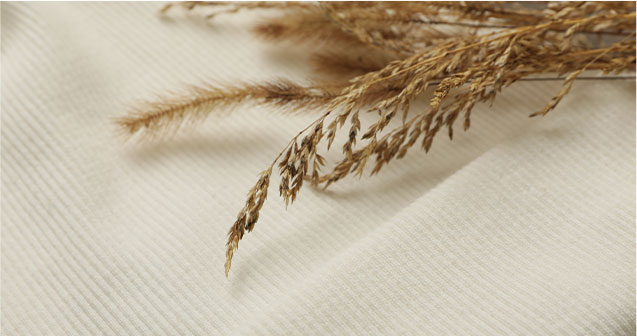
Shaoxing Keqiao Maozan Textile Co., Ltd. is a knitted fabric manufacturer in Keqiao District, Shaoxing, Zhejiang, working alongside China Light & Textile City. As a Knitted Textile Fabrics For Apparel Supplier, we keep the range deliberately narrow: weft-knitted fabrics for apparel, together with the home textile and garment accessory programs that run on the same knitting and finishing lines.
Our work is organised around eleven fabric families rather than a flat stock list. Garment factories, brand sourcing teams, converters and distributors order from us by fabric family, fibre blend, weight, stretch direction and finish, and we quote from the construction you specify.
Where We Sit in the Knitted Apparel Fabric Chain
We are a production and processing company, not a trading desk. The business combines knitting, dyeing and finishing coordination, raw material sourcing and an export sales department, so a fabric program moves from yarn selection to packed rolls under one commercial relationship.
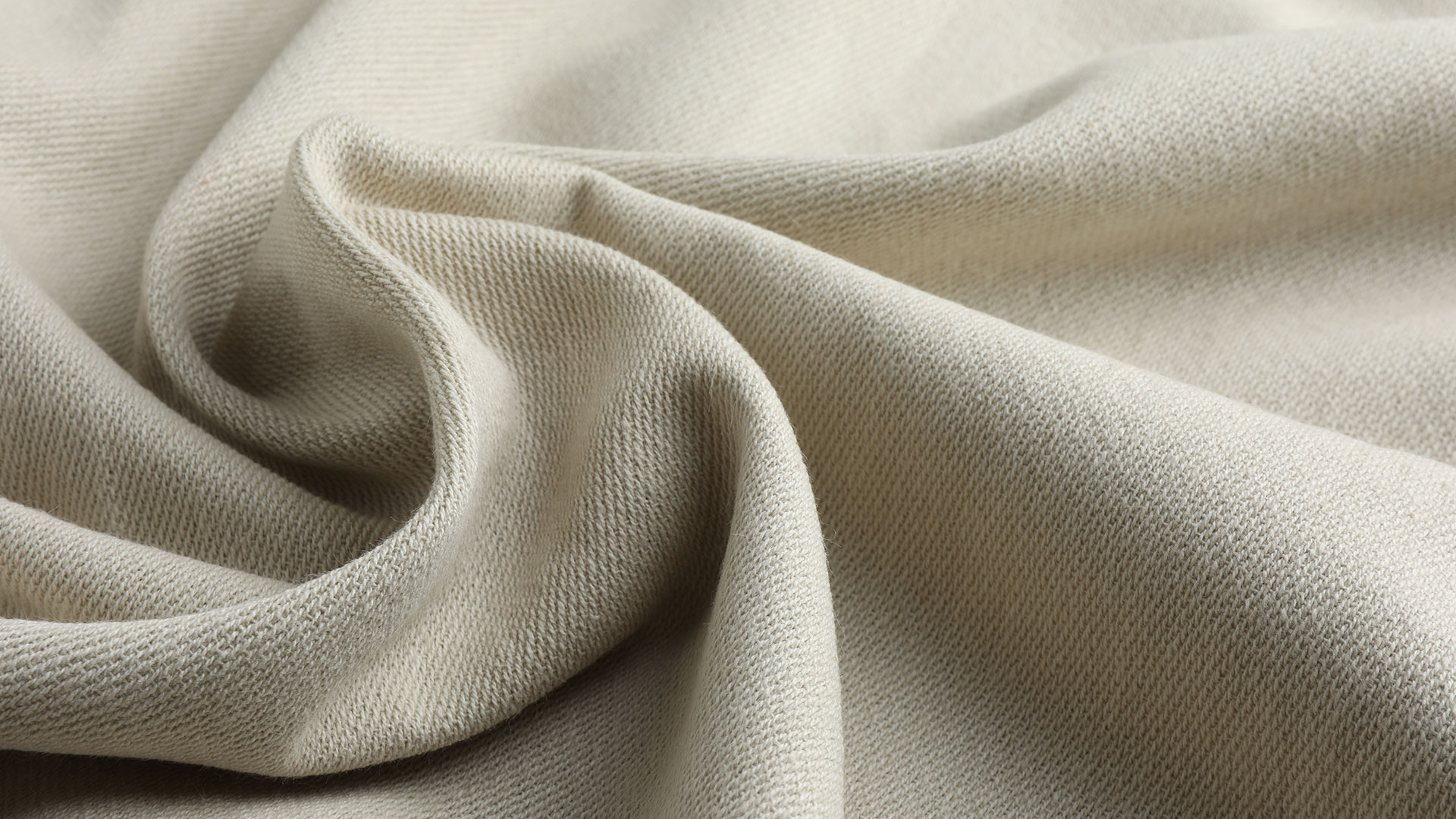
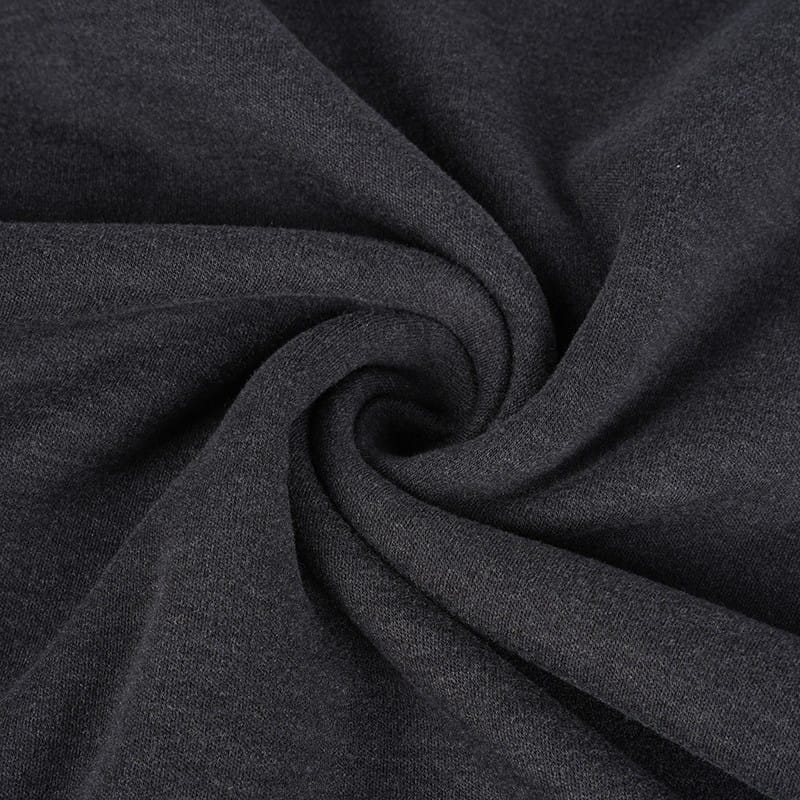
Our specialisation is knitted structure: plain single-face jersey, rib and interlock, spacer-type air-layer constructions, textured pique and waffle surfaces, looped terry, brushed fleece, crepe and open mesh. Each structure carries its own behaviour in cutting, sewing, drape and recovery, and that behaviour decides which garment category it serves.
- Apparel: tops, dresses, trousers, sweatshirts, outerwear shells and liners, polo shirts, loungewear, sportswear and childrenswear.
- Home textiles: the same knits converted into bedding accents, throws and soft furnishing components.
- Garment accessories: cuffs, collars, waistbands, trims and bindings produced from rib and jersey structures.
Our Knitted Fabric Range
The table below maps each family we supply to its knit construction and its normal garment fit. Sub-types shown in the last column are the working options we develop most often within that family.
| Fabric family |
Construction and character |
Typical apparel fit |
Working options |
| Air-Layer Fabric |
Three-dimensional knit with trapped air pockets; structure and support with light weight |
Sweatshirts, jackets, jogger sets, casual and wide-leg trousers |
Polyester-viscose, TENCEL™ Modal, polyester-Tencel, slub, polyester-spandex |
| Ponte Roma Fabric |
Dense double-knit with elastane; firm hand, high shape retention |
Dresses, tailored trousers, skirts, structured knitwear |
TR Ponte Roma, NR Ponte Roma |
| Double-Knit Fabric |
Two interlocked faces, balanced two-way stretch, stable edges |
Tops, dresses, leggings, sports and swim-adjacent separates |
Polyester-spandex, nylon-spandex, cotton-spandex interlock |
| Ribbed Fabric |
Alternating wales; strong crosswise stretch and recovery |
Cuffs, collars, waistbands, fitted tops and trims |
1x1, 2x2 and 4x2 rib, vertical-striped rib |
| Single Jersey |
Single-face plain knit; soft drape, light body, printable surface |
T-shirts, dresses, linings, childrenswear, printed programs |
Stretch, non-stretch, polyester jersey |
| Pique Fabric |
Raised cell texture; breathable, dimensionally stable |
Polo shirts, knit tops, sportswear and uniform programs |
Double-knit pique, single-knit pique |
| Waffle Fabric |
Honeycomb grid with bulk and air; textured both sides |
Sweaters, loungewear, robes, textured casual tops |
Cotton, CVC, 100% polyester waffle |
| Terry Cloth Fabric |
Looped pile on one or both faces; absorbent and soft |
Hoodies, sweatshirts, towelling, kidswear |
Cotton terry, rayon terry |
| Crepe Fabric |
Creped surface from textured or high-twist yarn; dry hand |
Blouses, dresses, soft separates and layering pieces |
Bubble crepe, textured crepe |
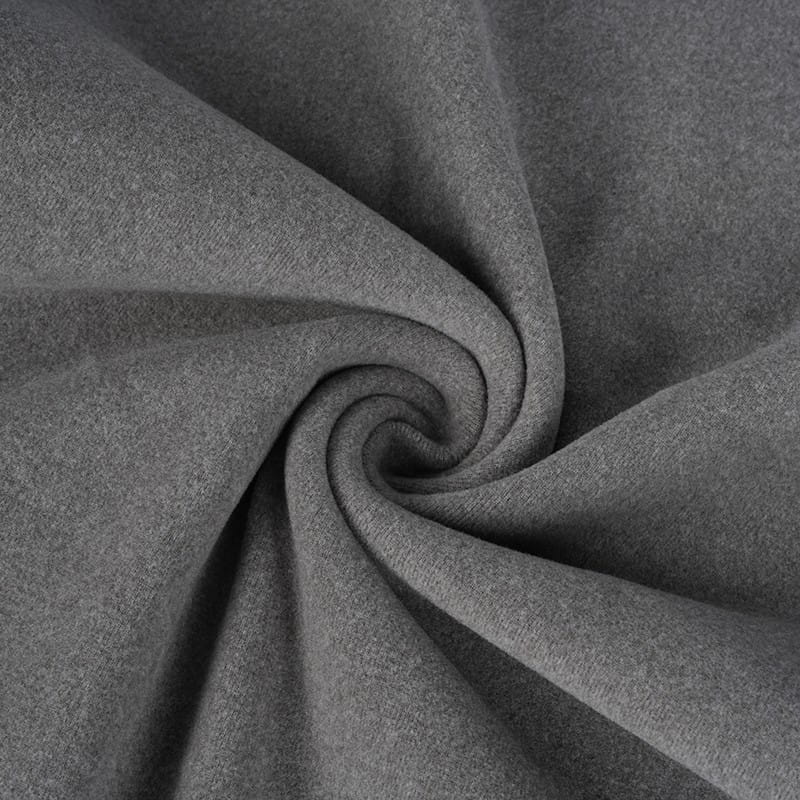
| Fleece Fabric |
Raised or brushed knit pile for warmth and loft |
Hoodies, outerwear linings, warm casualwear |
Rayon suede fleece, polyester spandex fleece |
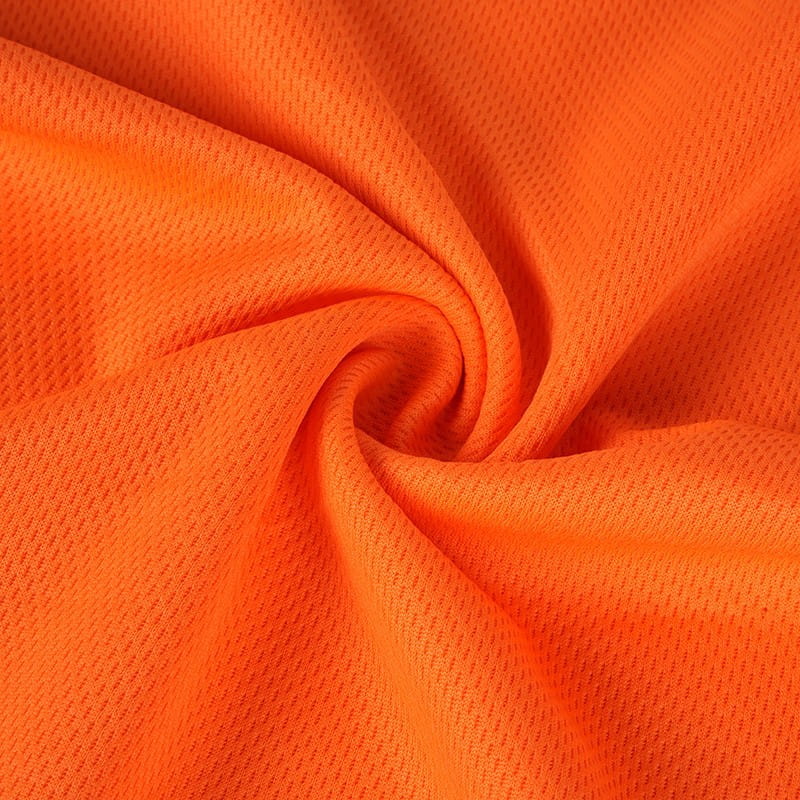
| Mesh Fabric |
Open-hole structure; airflow, low weight, technical appearance |
Sportswear panels, linings, mesh trims |
Polyester mesh knit |
Air-Layer, Ponte Roma and Double-Knit: Structured Knits
These three families carry garment silhouette. The air-layer knit fabric range uses a spacer-style construction that holds a defined surface without the weight of a compact knit, which is why it appears in sweatshirts, jackets and wide-leg trousers where drape and shape are both required. Fibre choice shifts the result: viscose and Modal versions read softer and more premium, while polyester-spandex versions bias towards resilience and recovery.
Ponte Roma and interlock are dense double-face structures. They resist edge curl, cut cleanly on automated spreading tables and hold a seam line on trousers and dresses. When a buyer needs a knit that behaves more like a stable woven in the sewing room, this is the family we recommend first.
Jersey, Rib and Pique: Everyday Knit Programs
Single jersey is the base of most volume apparel programs. We supply stretch and non-stretch versions and polyester jersey, covering the range from soft cotton-blend t-shirts to print-ready polyester bases for sublimation.
Ribbed fabric covers cuffs, collars, neckbands and waistbands, where recovery after repeated stretching is the specification that matters most. Rib count, yarn composition and elastane percentage are set together, because a cuff that loses tension fails the garment even when the body fabric is correct.
Pique sits between the two: a textured face for polo shirts and uniforms, with enough body to hold a placket and enough airflow for warm-weather wear.
Waffle, Terry, Fleece, Crepe and Mesh: Surface and Function
This group is specified by hand feel and function rather than by silhouette. Waffle brings three-dimensional texture and warmth for loungewear and robes; terry provides looped absorbency for hoodies and towelling; fleece adds brushed loft for outerwear linings. Crepe gives a dry, textured surface for blouses, and mesh supplies ventilation for sports panels and linings.
Because the appearance of these fabrics comes from finishing rather than from the knit alone, we agree the reference sample before bulk. Brushing depth, loop height, crepe development and mesh aperture are locked during sampling so bulk matches the approved hand.
Specifications We Fix Before Bulk Production
- Fibre and blend: cotton, polyester, viscose, Modal, TENCEL™, nylon, spandex and their ratios, including CVC and TR blends.
- Weight and width: grams per square metre and usable width, with tolerance ranges agreed in writing.
- Stretch behaviour: direction of stretch, growth and recovery targets relevant to the cutting and sewing method.
- Colour: lab dip approval, colour standard reference and fastness requirements for washing, rubbing, perspiration and light.
- Hand and surface: reference swatch for softness, bulk, peach or brushed finish, and surface appearance.
- Dimensional stability: shrinkage and residual shrinkage limits after the laundering route the finished garment will follow.
- Certification scope: OEKO-TEX certified options are available across part of the range; the applicable certificate is named on the order confirmation.
ODM/OEM Customisation and Sample Development
We run flexible ODM and OEM programs. Development usually starts from one of three inputs: a physical swatch, a tech pack with construction and test requirements, or a reference garment that we reverse into a knit structure. From there we propose fibre blend, knit construction, weight and finishing route, then produce a sample for hand, colour and stretch approval.
Small-batch sampling and quick re-orders are part of the model. Programs that begin with a seasonal development sample can move into repeat production using the same approved construction, so the second order does not restart the specification discussion.
Quality Control, Inspection and Documentation
Quality management runs through the whole process rather than at the end of it. Incoming yarn and raw materials are checked, each production stage is inspected after it completes, and finished fabric is inspected against the customer's requirements and the applicable international standards before packing.
Our laboratory equipment supports in-house testing of the parameters that decide acceptance on a knit: weight, stretch and recovery, shrinkage and colour fastness. Inspection findings, test results and the approved colour and hand references stay with the order record, and fabric is packed to the roll length, labelling and shipping mark format agreed for the shipment.
Information We Use to Configure Your Solution
A workable proposal needs the commercial target and the technical target together. The following inputs let us select the family, set the construction and return a firm specification.
| Project input |
What we do with it |
| End garment, category and season |
Shortlists the fabric family and the weight band |
| Fibre content and blend preference |
Defines yarn selection, hand feel and cost drivers |
| Target GSM, width and stretch direction |
Sets knitting parameters and machine gauge |
| Colour standard, lab dip and fastness limits |
Drives dyeing recipe and approval sequence |
| Sample swatch, tech pack or reference garment |
Forms the basis of counter-sample development |
| Quantity, delivery window and repeat plan |
Determines order structure and re-order continuity |
| Roll put-up, packing and shipping marks |
Shapes final packing and delivery scope |
Frequently Asked Questions
Are you a manufacturer or a trading company?
We are a manufacturer with our own processing plant and an international sales department, providing full process service from production through export.
Which knitted fabrics do you supply for apparel?
Air-layer, ponte roma, double-knit and interlock, ribbed, single jersey, pique, waffle, terry cloth, crepe, fleece and mesh, in cotton, polyester, viscose, Modal, TENCEL™, nylon and spandex blends. The same fabrics also serve home textiles and garment accessories.
Can you develop a fabric from our sample or tech pack?
Yes. We work from a swatch, a written tech pack or a reference garment, propose the construction and finishing route, then develop a sample for hand, colour and stretch approval before bulk.
How is minimum order quantity handled?
MOQ depends on the fabric family, yarn composition, colour and finishing. We support small-batch sampling and repeat orders, and confirm the applicable quantity with the firm specification at quotation stage.
How do you control quality on a bulk order?
Full-process quality management: each production stage is inspected after completion, and finished fabric is finally inspected against your requirements and international standards. Our laboratory carries the testing equipment needed to verify weight, stretch, shrinkage and colour fastness.
How quickly will we receive a response to an inquiry?
We respond to inquiries within 12 hours on weekdays. Sending the end use, fibre preference, target weight and any reference swatch lets us reply with a concrete fabric recommendation rather than a general reply.